
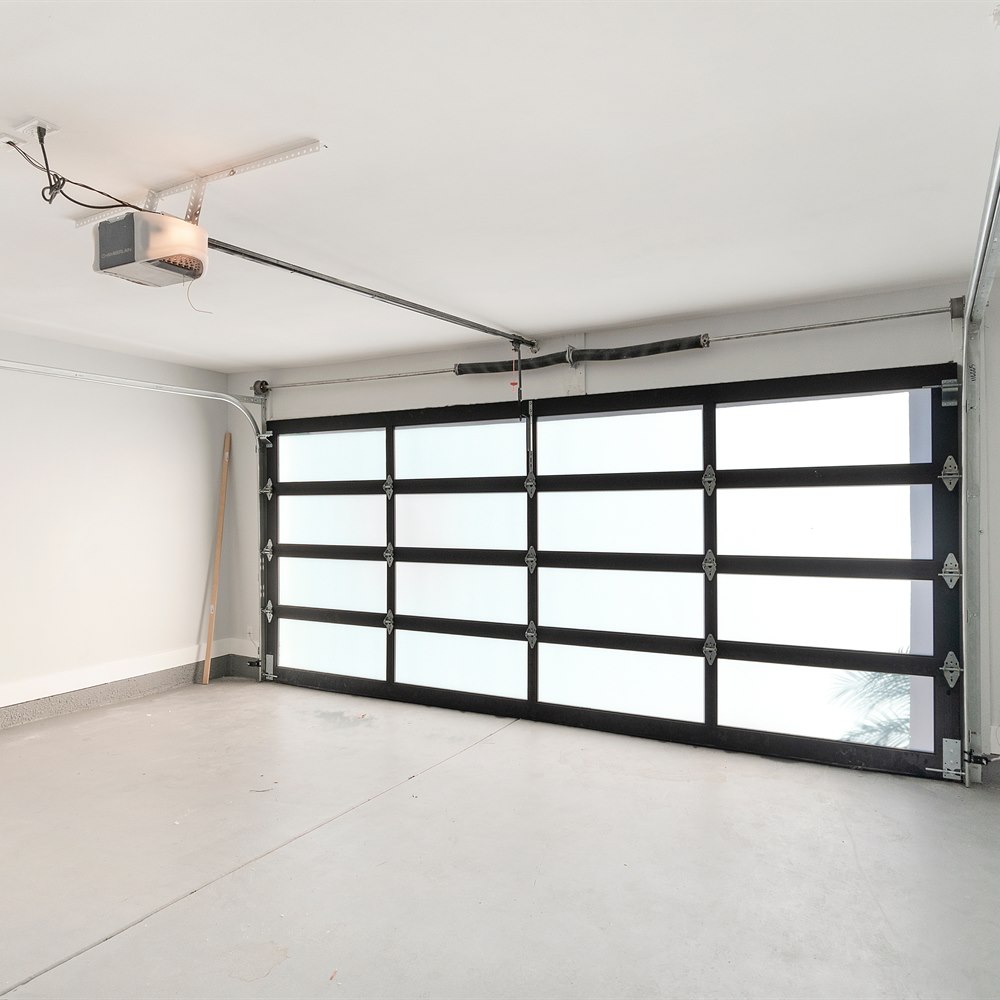
How Do You Choose the Right Garage Door Opener?
The garage door opener is used multiple times per day and is expected to function flawlessly for 10 to 15 years. These are the factors that matter most.
Drive Type: Chain, Belt, or Direct Drive
Chain-drive: reliable, affordable, noisier. Belt-drive: quieter (significant advantage in attached garages), same reliability, a modest premium. Direct-drive (jackshaft): mounts on the wall beside the door rather than on the ceiling, ideal when ceiling clearance is limited (a low-clearance garage, RV garage, or sloped ceiling). Direct-drive models: $800 to $950 installed. For most attached residential garages: a belt-drive is the correct choice. For a detached garage where noise in an adjacent room is not a concern: chain-drive provides equal reliability at lower cost. (For more on this, see Questions to Ask Before Buying a Garage Door Opener.)
Horsepower Rating
1/2 HP: appropriate for standard single-layer doors up to 18 feet wide. 3/4 HP: appropriate for heavier doors — insulated double-layer or three-layer doors, carriage-house wood doors, or any door over 16 feet wide. 1 HP and above: appropriate for very heavy doors (solid wood, all-glass, or oversize commercial-style doors). Choosing too low a horsepower for a heavy door causes the motor to work near its maximum capacity on each cycle, reducing service life. When in doubt: choose the next horsepower step up. (For more on this, see How to Choose the Best Garage Door Opener.)
Smart Features
The most useful smart feature: remote monitoring (an alert when the door has been left open). Secondary useful features: remote operation from the app, and temporary access codes for delivery or guests. If smart features are desired: choose a brand with an established app ecosystem (Chamberlain/LiftMaster with MyQ, or Genie with Aladdin Connect) rather than an unknown brand that may discontinue app support within a few years of purchase. (For more on this, see Chain vs. Belt vs. Smart Garage Door Opener: Which Is Right?.)
Working With a Contractor on This Project
Getting the right outcome on any home services project starts before the work begins. A few consistent practices make the difference between a smooth project and a frustrating one.
Get at least two or three quotes. A single quote gives you no basis for comparison. Two or three quotes reveal the market rate for the work, expose scope differences between bidders, and let you assess contractor communication quality before any commitment is made. The lowest bid is not automatically the best value if the scope is thin or the materials are underspecified.
Ask for licenses and insurance before work starts. Verify current general liability insurance and, for any work involving workers on your property, workers compensation coverage. Licensing requirements vary by state and trade; confirm the specific requirements in your jurisdiction. A licensed contractor who carries appropriate insurance protects both parties if something goes wrong during the project.
Get the scope in writing. A written proposal that specifies materials, labor scope, timeline, what is included (permits, cleanup, disposal), and warranty terms is the foundation of a professional engagement. Verbal agreements on any of these points invite misunderstanding. For any project over $500, written scope is non-negotiable.
Clarify the payment schedule upfront. A reasonable payment schedule ties major payments to project milestones: a deposit at signing, a payment at material delivery or project start, and a final payment at completion after a walkthrough confirms satisfaction. A contractor who requires full payment upfront before work begins is a red flag in any trade.
Making a Confident Decision
The information in this article is designed to help you ask better questions of the professionals you work with, evaluate their answers with more confidence, and understand the decisions involved in this type of home services project. It is not a substitute for professional assessment of your specific home.
Every home is different. Roof slopes, local weather, tree exposure, soil conditions, and existing system condition all affect what the right solution is for your specific situation. The general principles here apply broadly, but a professional who assesses your home in person will give you guidance that accounts for the details that general articles cannot.
When you are ready to move forward, getting at least two or three quotes from licensed, insured, local contractors is the most important practical step. It lets you compare approaches, assess contractor quality, and confirm that the solution proposed matches your specific situation and budget.
Garage Door Opener Cost at a Glance
| Cost Factor | Typical Range | Notes |
|---|---|---|
| Basic chain-drive opener installed | $325 to $550 | |
| Belt-drive or quieter model installed | $350 to $600 | |
| Smart or premium opener with app control | $600 to $1,200 | |
| Overall range | $325 to $1,200 | installed, averaging $525 for a mid-range opener |
Cost figures on this page were checked against published pricing on August 23, 2026. How we source cost data.