How Do You Choose the Right Interior Paint Colors?
Paint color selection is one of the most consequential and reversible interior design decisions. Here is a systematic approach that produces good results.
Test Before You Commit
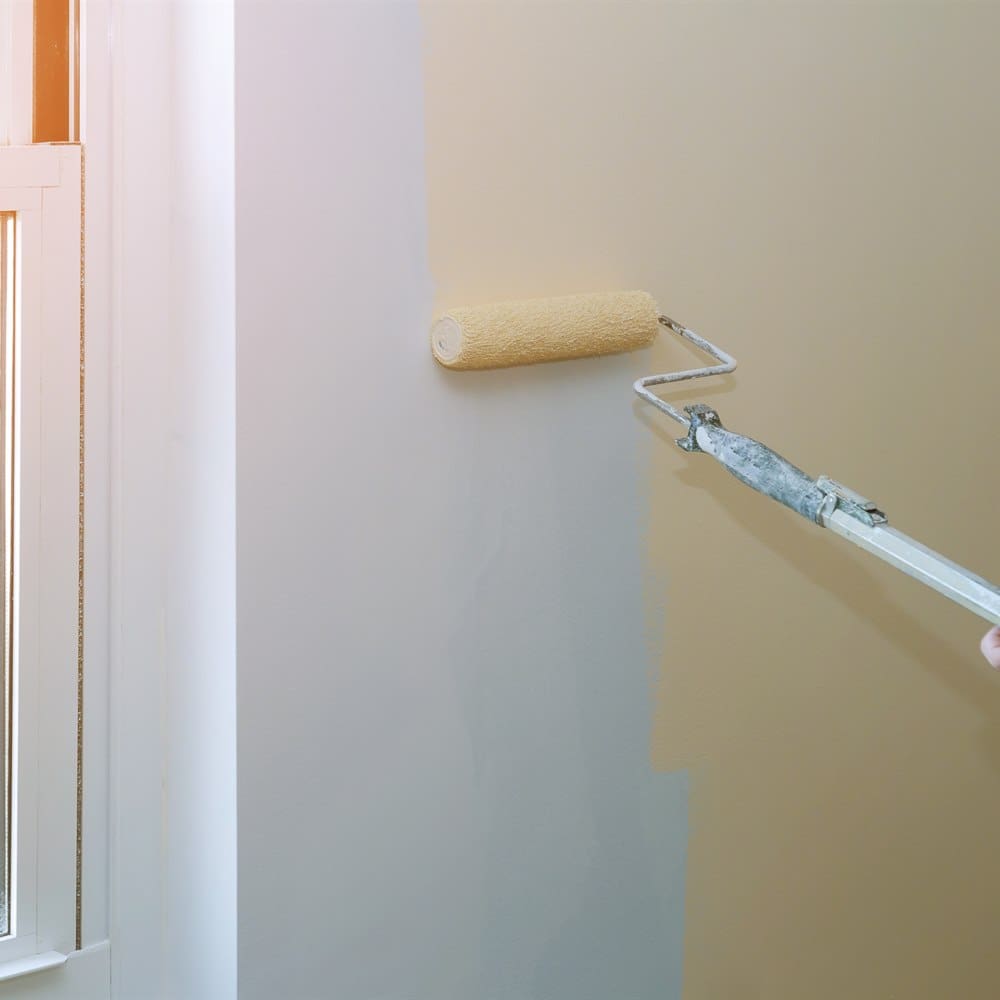
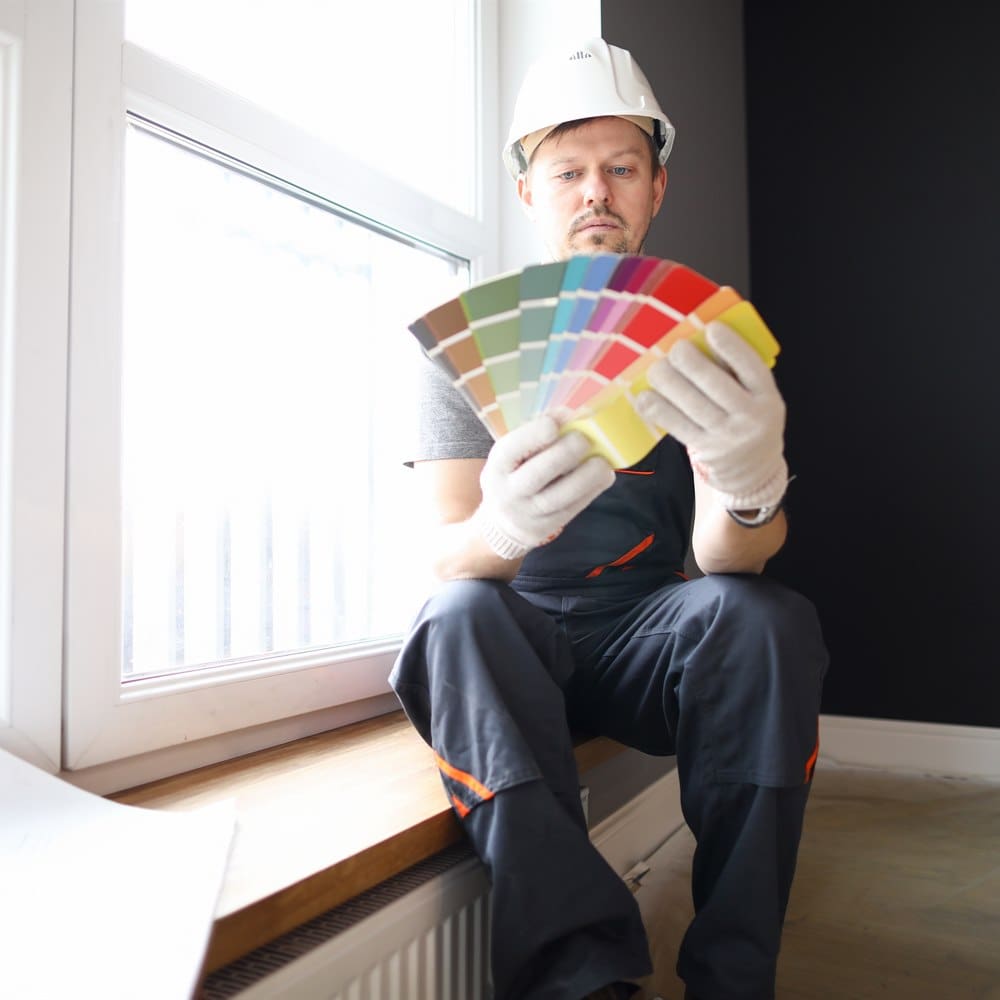
The most important rule: never choose a paint color from a small chip in the paint store. Colors look dramatically different in different lighting conditions and next to different materials. Buy a sample pot ($4 to $8) of each candidate color and paint a 12×12-inch section directly on the wall (not on paper or cardboard — these change the color). Live with the sample for 24 to 48 hours, observing how it looks in morning light, afternoon light, and evening artificial light. Many colors that look perfect in the store look pink, green, or orange on the actual wall because of the undertones interacting with the room’s light conditions. (For more on this, see Choosing the Right Paint Finish and Color for Each Room.)
Consider the Light Source
Natural light (north-facing room vs. south-facing room): a north-facing room receives indirect, cooler light — cool paint colors (grays, blues) can feel cold and stark; warm neutrals perform better. A south-facing room receives warm, direct light — most colors perform well, and the room can handle cooler tones. Artificial light: incandescent and warm LED light (2700K) enhances warm tones and warms cool tones. Cool LED (5000K): makes warm tones look more neutral and cold tones look starker. Paint the test patch in the actual room and observe it under the actual lighting conditions the room uses. (For more on this, see Interior Painting Prep: Why It Matters More Than the Paint.)
Choose a Consistent Undertone
Open-plan homes with visible sightlines between rooms benefit from a consistent undertone across the palette — all warm-based neutrals, or all cool-based neutrals. Mixing warm and cool undertones in adjacent spaces creates visual discord. A simple approach: choose one anchor color for the main living spaces and pull complementary tones from the same manufacturer’s curated palette (Benjamin Moore and Sherwin-Williams both publish curated whole-home palettes based on their most popular anchor colors).
Working With a Contractor on This Project
Getting the right outcome on any home services project starts before the work begins. A few consistent practices make the difference between a smooth project and a frustrating one.
Get at least two or three quotes. A single quote gives you no basis for comparison. Two or three quotes reveal the market rate for the work, expose scope differences between bidders, and let you assess contractor communication quality before any commitment is made. The lowest bid is not automatically the best value if the scope is thin or the materials are underspecified.
Ask for licenses and insurance before work starts. Verify current general liability insurance and, for any work involving workers on your property, workers compensation coverage. Licensing requirements vary by state and trade; confirm the specific requirements in your jurisdiction. A licensed contractor who carries appropriate insurance protects both parties if something goes wrong during the project.
Get the scope in writing. A written proposal that specifies materials, labor scope, timeline, what is included (permits, cleanup, disposal), and warranty terms is the foundation of a professional engagement. Verbal agreements on any of these points invite misunderstanding. For any project over $500, written scope is non-negotiable.
Clarify the payment schedule upfront. A reasonable payment schedule ties major payments to project milestones: a deposit at signing, a payment at material delivery or project start, and a final payment at completion after a walkthrough confirms satisfaction. A contractor who requires full payment upfront before work begins is a red flag in any trade.
Making a Confident Decision
The information in this article is designed to help you ask better questions of the professionals you work with, evaluate their answers with more confidence, and understand the decisions involved in this type of home services project. It is not a substitute for professional assessment of your specific home.
Every home is different. Roof slopes, local weather, tree exposure, soil conditions, and existing system condition all affect what the right solution is for your specific situation. The general principles here apply broadly, but a professional who assesses your home in person will give you guidance that accounts for the details that general articles cannot.
When you are ready to move forward, getting at least two or three quotes from licensed, insured, local contractors is the most important practical step. It lets you compare approaches, assess contractor quality, and confirm that the solution proposed matches your specific situation and budget.
Interior Painting Cost at a Glance
Interior painting projects run $500 to $8,000 overall, averaging about $3,800, from a single room to a full-house repaint. Per room, walls only: small bedroom (10×10, 8-foot ceilings) $300 to $600. Standard bedroom (12×12, 9-foot ceilings) $400 to $800. Living or dining room (15×20) $800 to $1,600. Kitchen walls $500 to $1,200. Full bathroom $200 to $400. Ceilings, trim, and doors are quoted separately from walls, at $1 to $3 per sq ft for ceilings, $1 to $3 per linear ft for trim, and $75 to $150 per door side. Whole-house interior, walls only: $4,500 to $6,000 for a 1,500 sq ft home and $7,500 to $10,000 for a 2,500 sq ft home. Premium paint (Benjamin Moore Aura, Sherwin-Williams Emerald) adds roughly $200 in materials on a four-bedroom repaint but requires fewer coats and extends the repaint cycle. (For more on this, see Best Interior Paint Brands: What Professionals Use.)
Cabinet painting (door removal, sanding, priming, two coats of enamel): $2,500 to $7,000 for most kitchens, averaging about $4,900. Wallpaper removal before painting: $1 to $3 per sq ft additional. Prep is the largest labor line and the first thing a cheap quote leaves out: routine drywall patching runs $50 to $300 and major patching $200 to $800. Get itemized quotes specifying the paint brand, product line, finish, and number of coats before comparing bids.
Cost figures on this page were checked against published pricing on August 29, 2026. How we source cost data.
Frequently Asked Questions
Buy sample pots and paint 12x12-inch patches directly on the wall. Observe in morning, afternoon, and evening light. Choose colors with a consistent undertone across adjacent spaces. Start with a neutral base in shared, high-visibility spaces and add personality in less-central rooms.
Benjamin Moore White Dove (warm white), Benjamin Moore Revere Pewter (warm gray-beige), Sherwin-Williams Accessible Beige (warm taupe), Sherwin-Williams Agreeable Gray (gray with warm undertones), and Benjamin Moore Simply White (clean warm white) are consistently among the top-selling neutral paint colors. These colors are popular because they have versatile undertones that work in most lighting conditions and complement most furniture and flooring.
Look at the color next to a pure white, pure gray, and pure beige. Where it pulls (pink, green, yellow, purple, or blue) is the undertone. A gray that looks slightly purple next to pure white has a purple undertone. An undertone that is not visible in the store becomes more apparent on the wall, especially in certain lighting conditions. This is why testing on the actual wall is essential.
Not necessarily, but they should have consistent undertones for visual flow. Open-plan spaces benefit from a consistent color throughout. Separate rooms can be different colors without visual conflict. A simple whole-home approach: one neutral throughout the main living areas, white ceilings throughout, and accent or personality colors in bedrooms and bathrooms where each room is visually separate.
Flat white: the most common and universally appropriate ceiling color. It makes the ceiling recede visually and maximizes the light bouncing from the ceiling into the room. A ceiling painted the same color as the walls (in a flat finish): makes the room feel cozier and more enveloped -- appropriate for a formal dining room or a study. A colored ceiling: used as an accent in bathrooms and bedrooms for a designer effect. Generally: leave ceilings white unless deliberately choosing a cozy or accent effect.