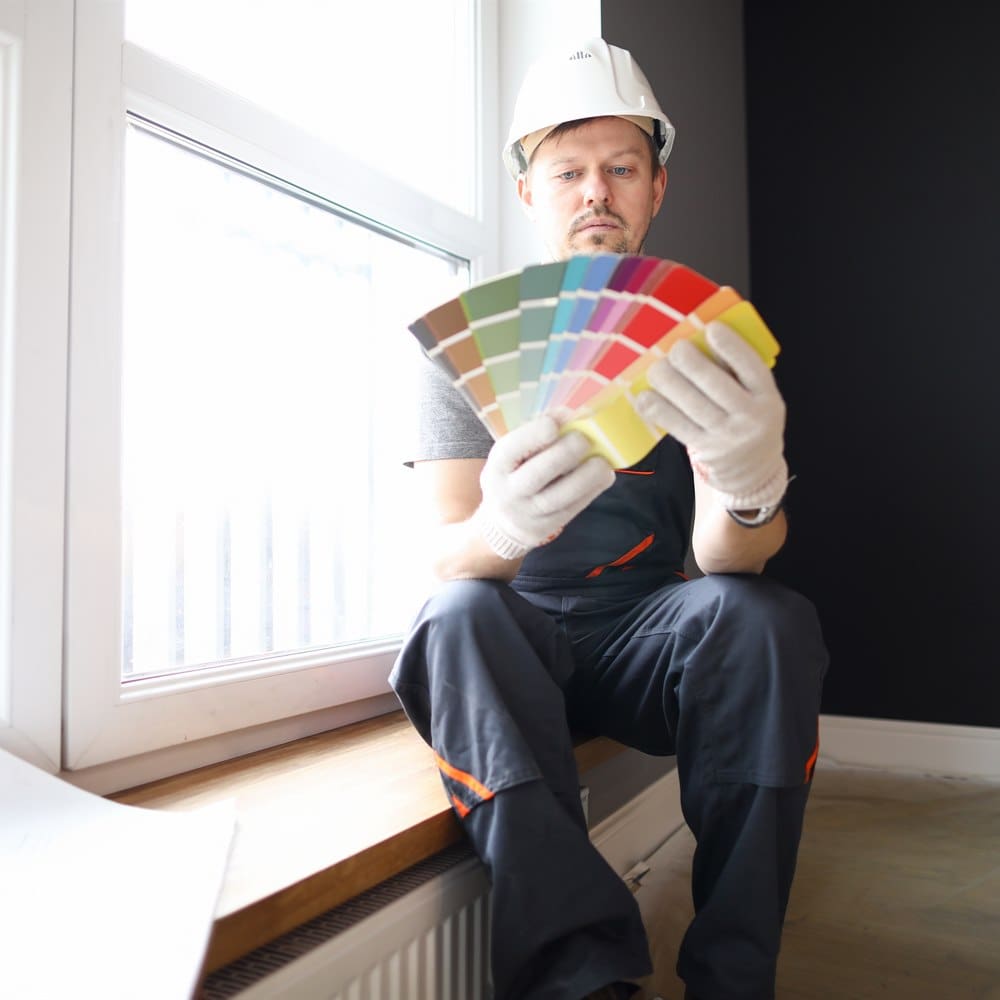

How Do You Choose Paint Finishes and Colors?
Beyond the paint itself, two choices, the finish (sheen) and the color, greatly affect how a painted room looks and performs. Choosing the right finish for each room’s use and the right colors for your space makes a big difference. Understanding finishes and color considerations helps you make choices you’ll love. Here’s how to choose.
Understanding Paint Finishes
Paint comes in different finishes or sheens, from flat (matte) to high-gloss, and each has different looks and properties. Flat/matte has no shine, hides imperfections well, but is less washable. Eggshell has a slight sheen, is more washable, and is popular for living areas. Satin has a soft sheen, is durable and washable, good for higher-traffic areas. Semi-gloss and gloss are shiny, very durable and washable, ideal for trim, doors, kitchens, and bathrooms. The finish affects both appearance (how much shine) and practicality (durability and washability), so choosing the right sheen for each room matters. (For more on this, see Interior Paint Types: Matte, Eggshell, Satin, or Semi-Gloss?.)
Matching Finish to Room Use
Match the finish to how each room is used. For low-traffic rooms like bedrooms and living rooms, flat or eggshell offers a nice look and hides wall imperfections. For higher-traffic areas like hallways and kids’ rooms, eggshell or satin balances looks and washability. For kitchens and bathrooms, where moisture and cleaning matter, satin or semi-gloss resists moisture and wipes clean. For trim, doors, and cabinets, semi-gloss provides durability and a crisp look. Matching the finish to each room’s traffic, moisture, and cleaning needs, higher sheen where durability and washability matter, lower sheen where you want to hide imperfections, gets both the look and performance you want.
The Trade-Off: Sheen vs. Hiding Imperfections
A key trade-off with finishes is that higher sheens are more durable and washable but show wall imperfections more, while flatter finishes hide imperfections but are less washable. Glossy paint reflects light and highlights any bumps, patches, or unevenness in the wall, while flat paint conceals them. So for walls in less-than-perfect condition, a flatter finish hides flaws, while for walls you want to be able to clean, a higher sheen helps but reveals imperfections. Balancing washability against imperfection-hiding, based on your walls’ condition and the room’s cleaning needs, is part of choosing the right finish.
Choosing Colors
Color dramatically affects a room’s feel. Light colors make a room feel larger, brighter, and more open; dark colors feel cozy, dramatic, or intimate but can make a space feel smaller. Warm colors (reds, yellows, oranges) feel energizing and cozy; cool colors (blues, greens) feel calm and serene. Consider the mood you want, the room’s light (a dark room may need lighter colors; a bright room can handle darker), and how the color works with your furnishings and other rooms. Choosing colors that create the feel you want and suit the space is a big part of a successful paint job.
Testing Colors Before Committing
Always test colors before committing to a whole room, since colors look different in your space and light than on a small chip. Paint samples on the wall (or use large sample swatches) and observe them at different times of day and in different light, natural and artificial, since color appears different under varying conditions. A color that looks perfect on a chip or in the store can look quite different on your walls. Testing colors in your actual space, in your lighting, before painting the whole room prevents the disappointment of a color that doesn’t look as expected, an important step for a color you’ll live with.
Coordinating Colors Across Your Home
Consider how colors flow and coordinate across your home, especially in open floor plans and connected spaces. Colors that work together, whether a cohesive palette, complementary tones, or a consistent neutral with accent variations, create a harmonious feel, while clashing or jarring color changes between connected rooms can feel disjointed. Think about how each room’s color relates to adjacent spaces and the overall flow. Coordinating your color choices across the home, so the spaces work together while allowing individual room character, creates a cohesive, pleasing result rather than a patchwork. This whole-home coordination is part of choosing colors thoughtfully. (For more on this, see Accent Walls and Bold Colors: How to Use Color in Your Home.)
Making the Choice
Choose paint finishes by matching the sheen to each room’s use (higher sheen for durability and moisture, lower for hiding imperfections), and choose colors by considering mood, light, and coordination, testing them in your space first. That approach gets you finishes and colors you’ll love that perform well. When you’re ready to plan and complete your painting project, connect with a local pro below. (For more on this, see How to Choose Interior Paint Colors.)
Frequently Asked Questions
Match the finish to the room's use: flat or eggshell for low-traffic bedrooms and living rooms (nice look, hides imperfections); eggshell or satin for higher-traffic hallways and kids' rooms (balancing looks and washability); satin or semi-gloss for kitchens and bathrooms (moisture-resistant, wipeable); and semi-gloss for trim, doors, and cabinets (durable, crisp). Higher sheen where durability and cleaning matter, lower where you want to hide imperfections.
Flat/matte has no shine, hides imperfections well, but is less washable. Eggshell has a slight sheen, is more washable, popular for living areas. Satin has a soft sheen, durable and washable, good for higher-traffic areas. Semi-gloss and gloss are shiny, very durable and washable, ideal for trim, doors, kitchens, and bathrooms. The finish affects both appearance (shine) and practicality (durability and washability).
Yes, it's a key trade-off. Higher sheens are more durable and washable but show wall imperfections more, since glossy paint reflects light and highlights bumps, patches, or unevenness, while flatter finishes hide imperfections but are less washable. For walls in less-than-perfect condition, a flatter finish hides flaws, while for walls you want to clean, a higher sheen helps but reveals imperfections. Balance washability against imperfection-hiding.
Consider the mood you want (light colors feel larger and brighter, dark feel cozy but smaller; warm colors energize, cool colors calm), the room's light (a dark room may need lighter colors), and how the color works with your furnishings and other rooms. Then test colors in your actual space before committing, since they look different in your light than on a chip. Choosing colors that create the feel you want and suit the space is key.
Yes, always. Colors look different in your space and light than on a small chip, so paint samples on the wall (or use large swatches) and observe them at different times of day and in different light, natural and artificial. A color that looks perfect on a chip can look quite different on your walls. Testing colors in your actual space, in your lighting, before painting the whole room prevents the disappointment of a color that doesn't look as expected.