
How Do You Find a Quality Interior Painter?
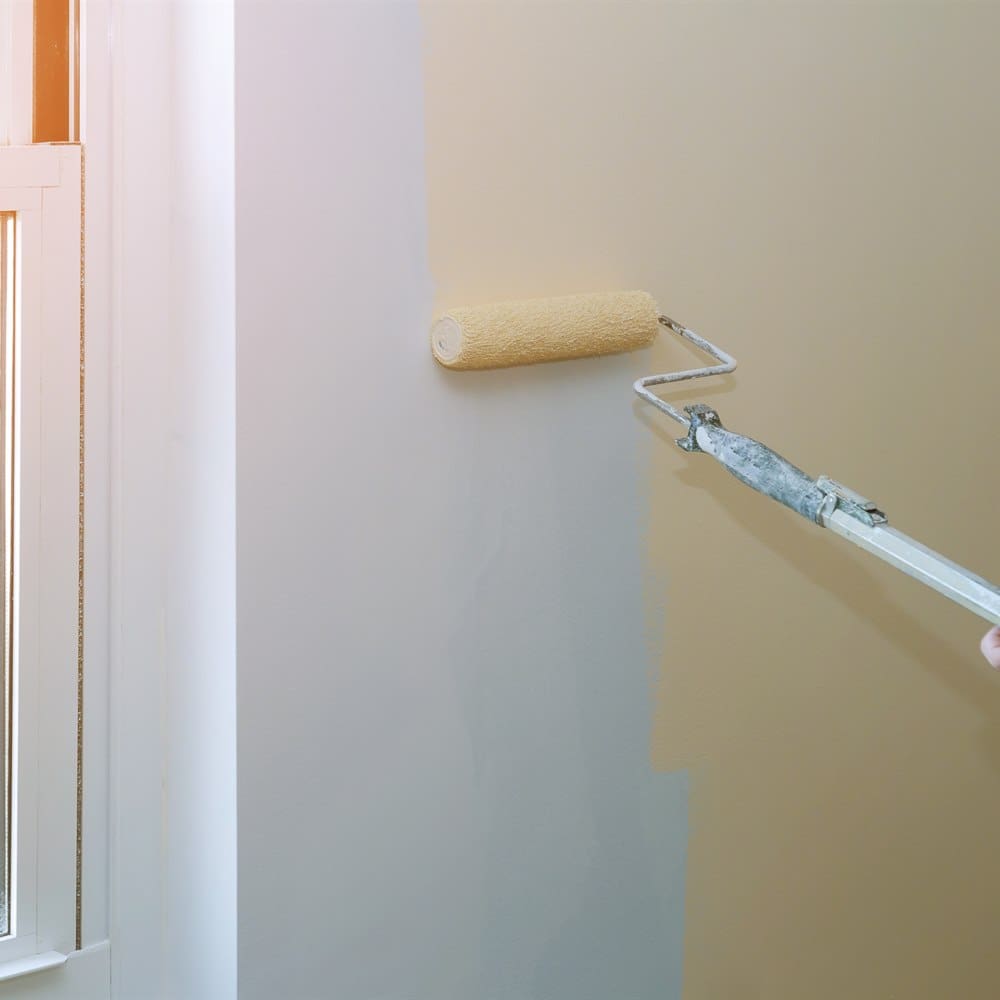
Get 3 quotes and judge painters on prep, not paint brand: ask each one to walk you through filling, sanding, priming patches, and cutting in at trim. A great interior painter is distinguished by prep quality, cut-in precision, and clean job-site practices. Bids in most markets spread 30 to 50 percent, so require the specific product in writing and check references at 12 to 24 months, when weak work starts to show.
Ask Specifically About the Prep Process
“Walk me through how you prepare the walls before painting.” A quality answer describes: filling holes and sanding, priming patches, cleaning greasy or glossy surfaces, and their approach to cutting in at trim. A contractor who says “we just paint” without describing prep: is likely delivering a lower-quality result regardless of what they say about paint quality. Ask specifically: “Do you prime every patched area?” and “Do you sand between coats on trim?” The answers reveal how they think about quality.
Require Paint Product Specification in the Quote
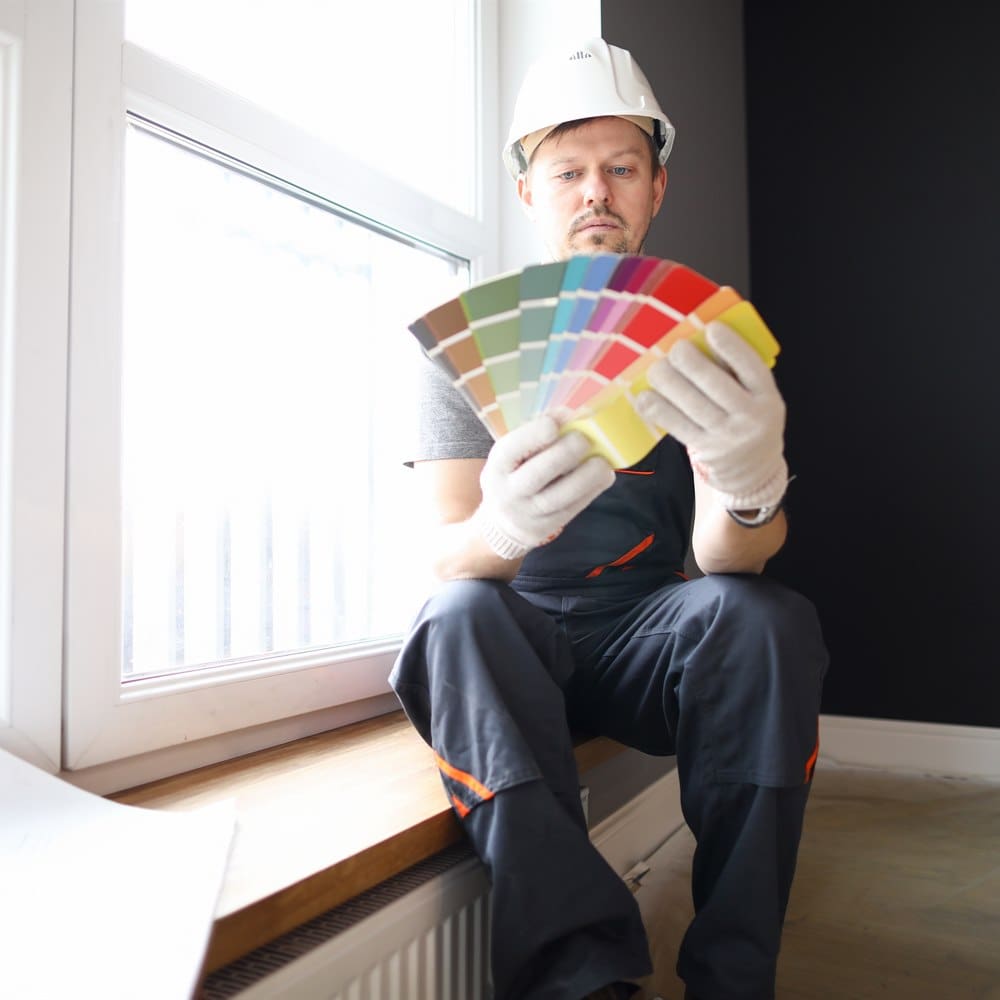
A quote that says “2 coats of interior latex paint” without specifying the brand and product line is not comparable to a quote that says “2 coats of Benjamin Moore Aura, eggshell.” A painter who substitutes a lower-quality paint than discussed without telling you has not violated the letter of a vague quote. Require the specific product in writing. Premium paint (Sherwin-Williams Emerald, Benjamin Moore Aura, PPG Diamond): worth specifying — it covers in 2 coats, is more washable, and produces a better sheen. (For more on this, see Interior Painting Prep: Why It Matters More Than the Paint.)
Check References at 12 to 24 Months
A fresh paint job looks good from almost any painter. The quality difference shows at 12 to 24 months: does the paint hold up at the trim edges (where a poor cut-in job chips)? Is the sheen even throughout the room (or are there areas that look different where the roller technique varied)? Are the trim lines still crisp or have they bled? Ask for references from jobs completed 12 to 24 months ago and ask the reference specifically about the long-term quality, not just the initial experience. (For more on this, see Questions to Ask an Interior Painter.)
Working With a Contractor on This Project
Getting the right outcome on any home services project starts before the work begins. A few consistent practices make the difference between a smooth project and a frustrating one.
Get at least two or three quotes. A single quote gives you no basis for comparison. Two or three quotes reveal the market rate for the work, expose scope differences between bidders, and let you assess contractor communication quality before any commitment is made. The lowest bid is not automatically the best value if the scope is thin or the materials are underspecified.
Ask for licenses and insurance before work starts. Verify current general liability insurance and, for any work involving workers on your property, workers compensation coverage. Licensing requirements vary by state and trade; confirm the specific requirements in your jurisdiction. A licensed contractor who carries appropriate insurance protects both parties if something goes wrong during the project.
Get the scope in writing. A written proposal that specifies materials, labor scope, timeline, what is included (permits, cleanup, disposal), and warranty terms is the foundation of a professional engagement. Verbal agreements on any of these points invite misunderstanding. For any project over $500, written scope is non-negotiable.
Clarify the payment schedule upfront. A reasonable payment schedule ties major payments to project milestones: a deposit at signing, a payment at material delivery or project start, and a final payment at completion after a walkthrough confirms satisfaction. A contractor who requires full payment upfront before work begins is a red flag in any trade.
Making a Confident Decision
The information in this article is designed to help you ask better questions of the professionals you work with, evaluate their answers with more confidence, and understand the decisions involved in this type of home services project. It is not a substitute for professional assessment of your specific home.
Every home is different. Roof slopes, local weather, tree exposure, soil conditions, and existing system condition all affect what the right solution is for your specific situation. The general principles here apply broadly, but a professional who assesses your home in person will give you guidance that accounts for the details that general articles cannot.
When you are ready to move forward, getting at least two or three quotes from licensed, insured, local contractors is the most important practical step. It lets you compare approaches, assess contractor quality, and confirm that the solution proposed matches your specific situation and budget.
Interior Painting Cost at a Glance
Interior painting projects run $500 to $8,000 overall, averaging about $3,800, from a single room to a full-house repaint. Per room, walls only: small bedroom (10×10, 8-foot ceilings) $300 to $600. Standard bedroom (12×12, 9-foot ceilings) $400 to $800. Living or dining room (15×20) $800 to $1,600. Kitchen walls $500 to $1,200. Full bathroom $200 to $400. Ceilings, trim, and doors are quoted separately from walls, at $1 to $3 per sq ft for ceilings, $1 to $3 per linear ft for trim, and $75 to $150 per door side. Whole-house interior, walls only: $4,500 to $6,000 for a 1,500 sq ft home and $7,500 to $10,000 for a 2,500 sq ft home. Premium paint (Benjamin Moore Aura, Sherwin-Williams Emerald) adds roughly $200 in materials on a four-bedroom repaint but requires fewer coats and extends the repaint cycle. (For more on this, see Best Interior Paint Brands: What Professionals Use.)
Cabinet painting (door removal, sanding, priming, two coats of enamel): $2,500 to $7,000 for most kitchens, averaging about $4,900. Wallpaper removal before painting: $1 to $3 per sq ft additional. Prep is the largest labor line and the first thing a cheap quote leaves out: routine drywall patching runs $50 to $300 and major patching $200 to $800. Get itemized quotes specifying the paint brand, product line, finish, and number of coats before comparing bids.
Cost figures on this page were checked against published pricing on August 29, 2026. How we source cost data.
Frequently Asked Questions
Walk me through your prep process. What specific paint product will you use (brand, line, and finish)? Do you prime patched areas? How do you cut in at trim (tape or freehand)? What is included: prep, primer, coats of paint, cleanup? Get 3 quotes with product specifications in writing.
At minimum 3. The range between painter pricing in most markets: 30 to 50 percent between the highest and lowest qualified bids. Compare the prep process and the paint quality being offered -- a lower price that uses a lower-quality paint or less prep is not a better value. A higher price for premium paint and thorough prep often produces better long-term results.
Most painters prefer to supply the paint (they know how the product performs and are accountable for coverage). Some homeowners buy the paint (using a discount store account or a contractor's price) and have the painter apply it. If you supply the paint: confirm the painter is comfortable with that product and will honor the same warranty. Mixing paint supply responsibility can create ambiguity about who is responsible if coverage is inadequate.
A quality interior painter warranties their work for 1 to 2 years against peeling, cracking, or visible coverage failure. The warranty covers the workmanship (application quality) but not normal wear and tear, damage from cleaning, or changes to the substrate (new moisture behind the wall causing paint to bubble). A painter who offers no warranty has low confidence in the quality of their work.
Not continuously, but being available (at home or reachable by phone) during the first day allows you to: confirm the paint color before the crew starts (to catch color mistakes before all walls are painted), address any scope questions as they arise, and confirm the quality of the prep work before it is covered by paint. Check in at the end of each day to review the progress and address any concerns before the next day's work begins.