What Should You Ask a Blown-In Insulation Contractor?
Ask what your current R-value is and what the target R-value will be after installation, whether air sealing is included, whether baffles will be installed at the eaves, and how the installed depth is verified. Blown-in insulation is a relatively straightforward project, but those four answers separate an installation that delivers the expected energy benefit from one that does not.
What Is My Current R-Value and What Will the Final R-Value Be?
Ask the contractor to measure the existing insulation depth (not estimate from square footage) and tell you the current R-value and the target R-value after installation. DOE climate zone recommendations provide the target confirm that the contractor is proposing to reach the correct level for your climate. A contractor who cannot answer this question is not professionally assessing the project. (For more on this, see What to Expect During Blown-In Insulation Installation.) The Department of Energy publishes recommended R-values by climate zone and where insulation pays back fastest.
Is Air Sealing Included?
This is the most important question for energy effectiveness. Air sealing the attic floor before blowing in insulation maximizes the performance of the new insulation. If not included, ask what it would add to the scope and cost. The answer should include a description of what would be sealed (plumbing and electrical penetrations, framing bypasses, attic hatch) and the estimated cost.
Will You Install Baffles at the Eaves?
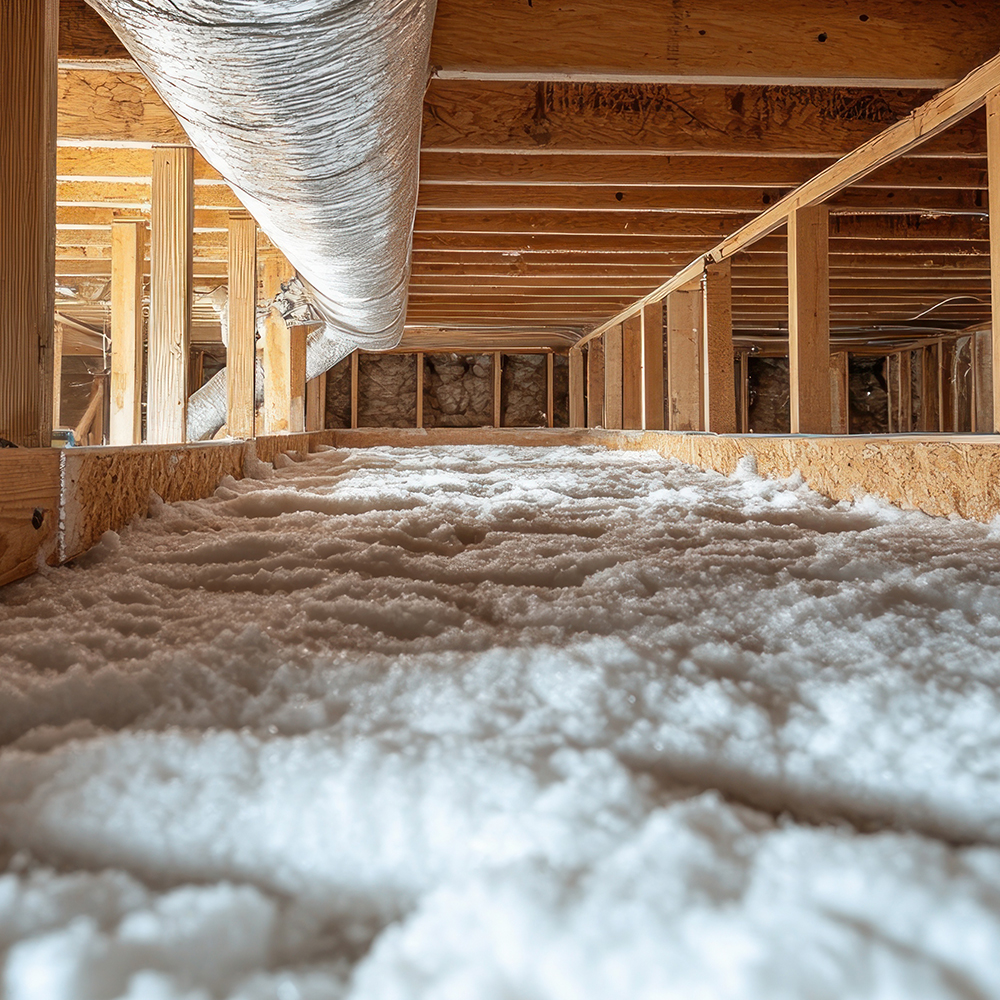
Soffit-to-ridge ventilation must be maintained. Baffles at each rafter bay ensure that blown-in material does not cover soffit vents. Confirm that baffle installation is part of the scope. Without baffles, blown-in insulation covers soffit vents, blocks ventilation, and creates moisture risk in the roof assembly. (For more on this, see Common Blown-In Insulation Problems and How to Avoid Them.)
How Will You Verify the Installed Depth?
Ask whether depth indicator gauges will be placed before installation and checked after. A contractor who does not use depth gauges cannot verify that the target depth and therefore the target R-value was achieved uniformly across the attic floor.
Working With a Contractor on This Project
Getting the right outcome on any home services project starts before the work begins. A few consistent practices make the difference between a smooth project and a frustrating one.
Get at least two or three quotes. A single quote gives you no basis for comparison. Two or three quotes reveal the market rate for the work, expose scope differences between bidders, and let you assess contractor communication quality before any commitment is made. The lowest bid is not automatically the best value if the scope is thin or the materials are underspecified.
Ask for licenses and insurance before work starts. Verify current general liability insurance and, for any work involving workers on your property, workers compensation coverage. Licensing requirements vary by state and trade; confirm the specific requirements in your jurisdiction. A licensed contractor who carries appropriate insurance protects both parties if something goes wrong during the project.
Get the scope in writing. A written proposal that specifies materials, labor scope, timeline, what is included (permits, cleanup, disposal), and warranty terms is the foundation of a professional engagement. Verbal agreements on any of these points invite misunderstanding. For any project over $500, written scope is non-negotiable.
Clarify the payment schedule upfront. A reasonable payment schedule ties major payments to project milestones: a deposit at signing, a payment at material delivery or project start, and a final payment at completion after a walkthrough confirms satisfaction. A contractor who requires full payment upfront before work begins is a red flag in any trade.
Making a Confident Decision
The information in this article is designed to help you ask better questions of the professionals you work with, evaluate their answers with more confidence, and understand the decisions involved in this type of home services project. It is not a substitute for professional assessment of your specific home.
Every home is different. Roof slopes, local weather, tree exposure, soil conditions, and existing system condition all affect what the right solution is for your specific situation. The general principles here apply broadly, but a professional who assesses your home in person will give you guidance that accounts for the details that general articles cannot.
When you are ready to move forward, getting at least two or three quotes from licensed, insured, local contractors is the most important practical step. It lets you compare approaches, assess contractor quality, and confirm that the solution proposed matches your specific situation and budget.
Blown-In Insulation Cost at a Glance
| Cost Factor | Typical Range | Notes |
|---|---|---|
| Cellulose or fiberglass | $0.50 to $1.50 per sq ft | material, $1.50 to $3.00 per sq ft installed |
| Blowing existing wall cavities | $1.70 to $3.70 per sq ft | installed; drilling and patching costs more than an open attic floor |
| Professional installation | $1.50 to $3.00 per sq ft | installed for a complete job |
| Overall range | $1,000 to $3,500, averaging $2,000 |
Cost figures on this page were checked against published pricing on August 23, 2026. How we source cost data.