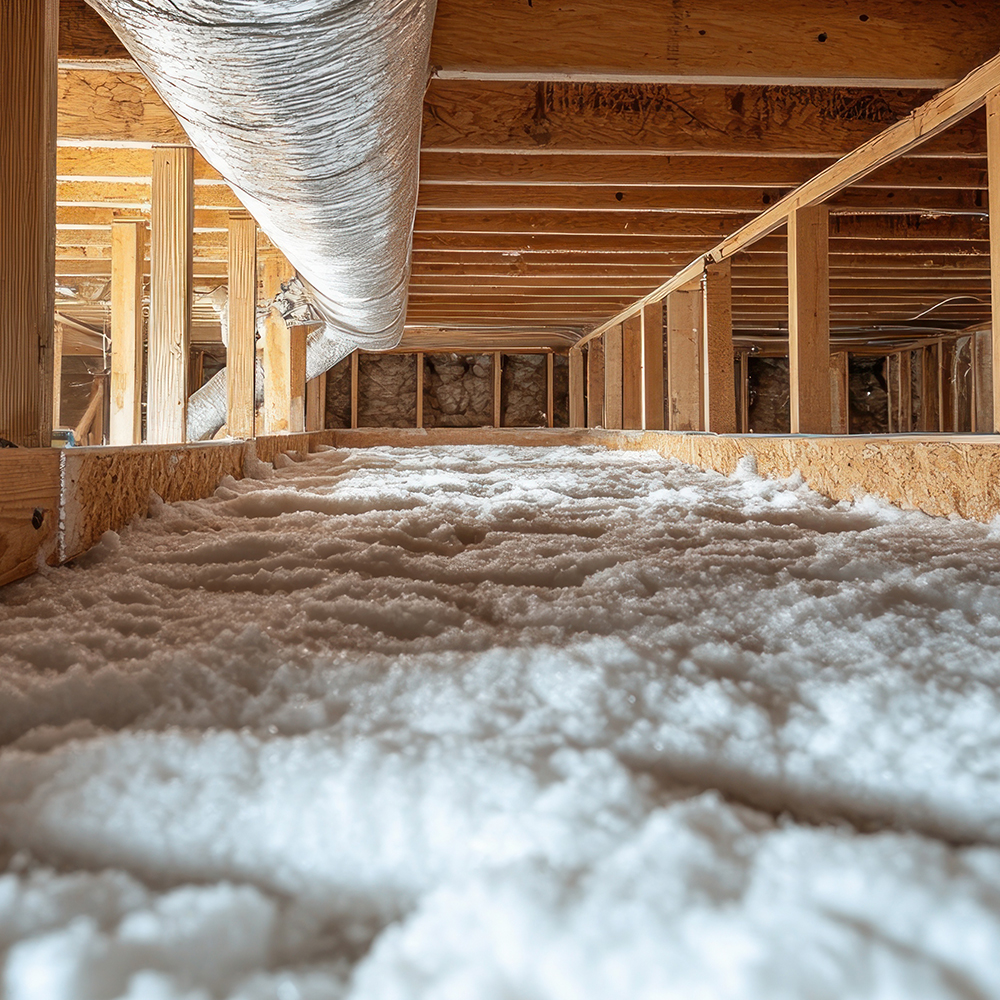

What Are the Most Common Blown-In Insulation Problems?
The most common and most consequential blown-in error is burying the soffit vents, which blocks attic ventilation and lets moisture accumulate until the roof sheathing rots. Blown-in insulation problems are usually preventable with correct installation — here is what goes wrong most often.
Blocked Soffit Vents
The most common and most consequential installation error: blown-in material covers soffit vents at the eaves, blocking attic ventilation. Without ventilation, moisture accumulates in the attic and the roof sheathing, causing rot and mold over time. Prevention: baffles at every rafter bay adjacent to soffit vents, installed before blowing begins. Identifying this problem after installation requires checking the soffit vents from outside the home (looking for blocked ventilation openings) or accessing the attic to verify baffles are in place.”),
(For more on this, see What to Expect During Blown-In Insulation Installation.)
Insufficient Depth (Below Target R-Value)
Installing insufficient material resulting in a depth below the target R-value is a common quality problem, particularly in DIY projects where depth gauges are not used. An inch short across a 1,000-square-foot attic represents a meaningful R-value reduction and permanently limits the project’s energy benefit. Prevention: place depth gauge cards throughout the attic before installation and verify depth at multiple points after blowing is complete.
Missing Air Sealing Under New Insulation
Installing blown-in insulation without first sealing attic bypasses is technically correct but energy-inefficient. The insulation performs at 30 to 50 percent below its rated R-value due to air convection through the loose fill material above unsealed penetrations. Prevention: air sealing before insulation in the correct sequence. The Department of Energy publishes recommended R-values by climate zone and where insulation pays back fastest.
Moisture Accumulation After Installation
If the attic ventilation is inadequate (blocked soffits, insufficient ridge ventilation, or a power vent failure), moisture accumulates in the insulation over time, reducing R-value and promoting mold in cellulose. Prevention: verify adequate ventilation before installation and maintain soffit clearance with baffles. An attic inspection every 3 to 5 years detects moisture accumulation before it becomes severe. (For more on this, see How to Prepare Your Attic for Blown-In Insulation.)
Working With a Contractor on This Project
Getting the right outcome on any home services project starts before the work begins. A few consistent practices make the difference between a smooth project and a frustrating one.
Get at least two or three quotes. A single quote gives you no basis for comparison. Two or three quotes reveal the market rate for the work, expose scope differences between bidders, and let you assess contractor communication quality before any commitment is made. The lowest bid is not automatically the best value if the scope is thin or the materials are underspecified.
Ask for licenses and insurance before work starts. Verify current general liability insurance and, for any work involving workers on your property, workers compensation coverage. Licensing requirements vary by state and trade; confirm the specific requirements in your jurisdiction. A licensed contractor who carries appropriate insurance protects both parties if something goes wrong during the project. (For more on this, see Questions to Ask a Blown-In Insulation Contractor.)
Get the scope in writing. A written proposal that specifies materials, labor scope, timeline, what is included (permits, cleanup, disposal), and warranty terms is the foundation of a professional engagement. Verbal agreements on any of these points invite misunderstanding. For any project over $500, written scope is non-negotiable.
Clarify the payment schedule upfront. A reasonable payment schedule ties major payments to project milestones: a deposit at signing, a payment at material delivery or project start, and a final payment at completion after a walkthrough confirms satisfaction. A contractor who requires full payment upfront before work begins is a red flag in any trade.
Making a Confident Decision
The information in this article is designed to help you ask better questions of the professionals you work with, evaluate their answers with more confidence, and understand the decisions involved in this type of home services project. It is not a substitute for professional assessment of your specific home.
Every home is different. Roof slopes, local weather, tree exposure, soil conditions, and existing system condition all affect what the right solution is for your specific situation. The general principles here apply broadly, but a professional who assesses your home in person will give you guidance that accounts for the details that general articles cannot.
When you are ready to move forward, getting at least two or three quotes from licensed, insured, local contractors is the most important practical step. It lets you compare approaches, assess contractor quality, and confirm that the solution proposed matches your specific situation and budget.
Blown-In Insulation Cost at a Glance
| Cost Factor | Typical Range | Notes |
|---|---|---|
| Cellulose or fiberglass | $0.50 to $1.50 per sq ft | material, $1.50 to $3.00 per sq ft installed |
| Blowing existing wall cavities | $1.70 to $3.70 per sq ft | installed; drilling and patching costs more than an open attic floor |
| Professional installation | $1.50 to $3.00 per sq ft | installed for a complete job |
| Overall range | $1,000 to $3,500, averaging $2,000 |
Cost figures on this page were checked against published pricing on August 23, 2026. How we source cost data.