
What Drives Blown-In Insulation Costs?
Blown-in insulation costs from $1,000 to $3,500 are primarily determined by the area to be insulated, the target R-value, and the material chosen. Here is what moves the number.
Area and Existing Insulation Level
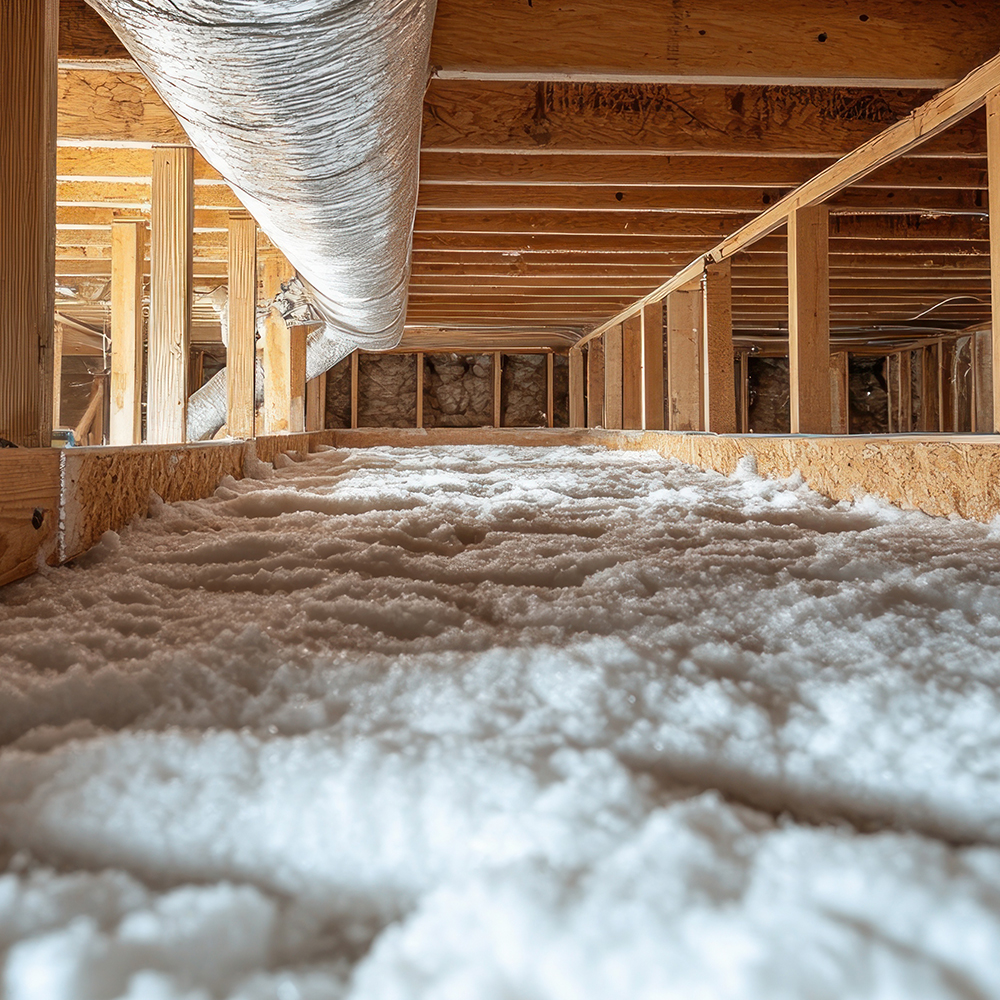
The amount of blown-in material needed depends on the total area and the depth of insulation needed to reach the target R-value. If the attic already has 4 inches of existing insulation (approximately R-11 to R-15), reaching DOE-recommended R-49 requires adding 8 to 12 more inches of blown-in material over the existing. If the attic is bare, the full target depth must be installed. More depth over more area means more material and more cost the relationship is direct. (For more on this, see How Much Does Blown-In Insulation Cost?.)
Material Choice
Cellulose is the most affordable material per R-value it has a higher R-value per inch than fiberglass and costs less per bag. Fiberglass loose-fill is competitive with cellulose on cost but requires more depth to achieve equivalent R-values. Mineral wool provides the highest fire resistance and moisture tolerance at the highest cost. For a straight insulation project without fire resistance requirements, cellulose is typically the best value.
Attic Access and Conditions
Easy attic access (a full stair or pull-down ladder, adequate clearance, no obstructions) makes installation efficient. Difficult access small hatch, steep pitch, knee walls, limited headroom adds labor time and cost. Very low-slope attics where workers cannot stand require more time for equipment setup and installation. Access difficulty adds 10 to 30 percent to the labor cost for the same volume of material.
Whether Air Sealing Is Included
The most common cost addition for blown-in attic insulation is the inclusion of attic air sealing before the insulation is blown in. Adding air sealing to a blown-in project adds $200 to $600 to the scope but maximizes the energy benefit insulation installed without prior air sealing performs below its rated R-value. Combined air sealing and insulation projects are the most cost-effective energy improvement for most homes. The Department of Energy publishes recommended R-values by climate zone and where insulation pays back fastest.
Blown-In Insulation Cost at a Glance
| Cost Factor | Typical Range | Notes |
|---|---|---|
| Cellulose or fiberglass | $0.50 to $1.50 per sq ft | material, $1.50 to $3.00 per sq ft installed |
| Blowing existing wall cavities | $1.70 to $3.70 per sq ft | installed; drilling and patching costs more than an open attic floor |
| Professional installation | $1.50 to $3.00 per sq ft | installed for a complete job |
| Overall range | $1,000 to $3,500, averaging $2,000 |
Cost figures on this page were checked against published pricing on August 23, 2026. How we source cost data.
Planning Your Project Budget
The cost ranges in this article are based on industry data and are intended as planning benchmarks, not fixed prices. The actual cost for your project depends on your specific home, your local labor market, the current price of materials, and the scope the contractor confirms after a site inspection.
Always get at least two written quotes on equivalent defined scope before committing to any home services project. Wide price variation between quotes usually reflects differences in material quality, scope completeness (what is included and what is not), or contractor overhead and experience level rather than simple price competition.
Use the cost data in this article to ask better questions during the quoting process: What material is included? What does that per-square-foot or per-linear-foot rate include and exclude? Are permits, cleanup, and disposal included? What is the warranty on labor? These questions turn a quote into a comparable basis for decision-making. (For more on this, see Questions to Ask a Blown-In Insulation Contractor.)
Working With a Contractor on This Project
Getting the right outcome on any home services project starts before the work begins. A few consistent practices make the difference between a smooth project and a frustrating one.
Get at least two or three quotes. A single quote gives you no basis for comparison. Two or three quotes reveal the market rate for the work, expose scope differences between bidders, and let you assess contractor communication quality before any commitment is made. The lowest bid is not automatically the best value if the scope is thin or the materials are underspecified.
Ask for licenses and insurance before work starts. Verify current general liability insurance and, for any work involving workers on your property, workers compensation coverage. Licensing requirements vary by state and trade; confirm the specific requirements in your jurisdiction. A licensed contractor who carries appropriate insurance protects both parties if something goes wrong during the project.
Get the scope in writing. A written proposal that specifies materials, labor scope, timeline, what is included (permits, cleanup, disposal), and warranty terms is the foundation of a professional engagement. Verbal agreements on any of these points invite misunderstanding. For any project over $500, written scope is non-negotiable.
Clarify the payment schedule upfront. A reasonable payment schedule ties major payments to project milestones: a deposit at signing, a payment at material delivery or project start, and a final payment at completion after a walkthrough confirms satisfaction. A contractor who requires full payment upfront before work begins is a red flag in any trade.