
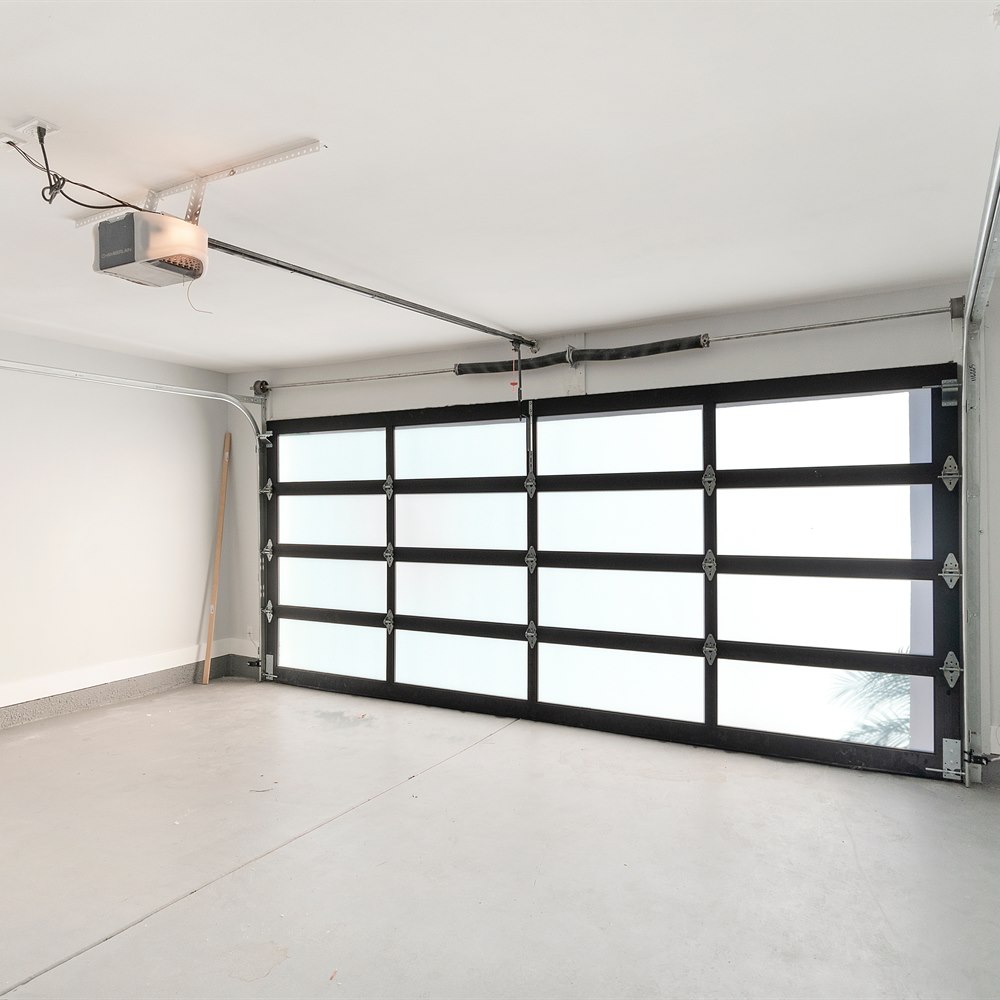
What Should You Know About Garage Door Opener Safety?
Test your garage door opener’s auto-reverse and photo-eye sensors every month. Place a 2×4 flat where the door closes and confirm the door reverses on contact, then wave a hand through the beam while the door is closing. A garage door is the largest moving piece of equipment in most homes, and its safety systems only stay effective if they are checked. Here is what each system does and how to verify it works.
Auto-Reverse: The Primary Safety Feature
Auto-reverse (also called obstruction reversal) requires the door to reverse direction when it encounters an obstruction during closing. Federal law requires this feature on all openers manufactured after 1993. The system works through pressure sensing in the motor drive when the door meets resistance exceeding the preset force, it reverses. Test monthly: place a 2×4 flat on the floor where the door closes. The door should reverse immediately when it contacts the board. If the door does not reverse, the force setting is too high and requires adjustment by a professional. (For more on this, see DIY vs. Professional Garage Door Opener Installation.)
Photo-Eye Sensors: The Beam Interruption Safety
Photo-eye sensors mounted on each side of the door at approximately 4 to 6 inches from the floor emit and receive an infrared beam across the door opening. If anything interrupts the beam while the door is closing, the door reverses immediately. Test monthly: wave your hand or foot through the beam while the door is closing. The door should reverse. If it does not reverse, check sensor alignment (both LEDs should glow steady), clean the sensor lenses, and check for wiring faults. If the problem persists, call a professional for repair.
Manual Release: For Emergencies
The red release handle hanging from the opener rail disconnects the door from the drive mechanism, allowing manual operation during a power outage or opener failure. Pull the handle down and the door can be opened or closed by hand. Re-engage by pulling the handle toward the motor (away from the door) until the trolley clicks back into the carriage. Ensure all household members know where the release handle is and how to use it. (For more on this, see Garage Door Opener Maintenance: How to Keep It Running.)
Openers That Lack Modern Safety Features
Openers manufactured before 1993 may not have auto-reverse or photo-eye sensors. These units pose a safety risk, particularly for households with children and pets. Replacing an older opener that lacks these features is a safety investment that also provides a significant quality upgrade in noise, speed, and reliability. (For more on this, see Garage Door Opener Safety Features: What Every Homeowner Should Know.)
Working With a Contractor on This Project
Getting the right outcome on any home services project starts before the work begins. A few consistent practices make the difference between a smooth project and a frustrating one.
Get at least two or three quotes. A single quote gives you no basis for comparison. Two or three quotes reveal the market rate for the work, expose scope differences between bidders, and let you assess contractor communication quality before any commitment is made. The lowest bid is not automatically the best value if the scope is thin or the materials are underspecified.
Ask for licenses and insurance before work starts. Verify current general liability insurance and, for any work involving workers on your property, workers compensation coverage. Licensing requirements vary by state and trade; confirm the specific requirements in your jurisdiction. A licensed contractor who carries appropriate insurance protects both parties if something goes wrong during the project.
Get the scope in writing. A written proposal that specifies materials, labor scope, timeline, what is included (permits, cleanup, disposal), and warranty terms is the foundation of a professional engagement. Verbal agreements on any of these points invite misunderstanding. For any project over $500, written scope is non-negotiable.
Clarify the payment schedule upfront. A reasonable payment schedule ties major payments to project milestones: a deposit at signing, a payment at material delivery or project start, and a final payment at completion after a walkthrough confirms satisfaction. A contractor who requires full payment upfront before work begins is a red flag in any trade.
Making a Confident Decision
The information in this article is designed to help you ask better questions of the professionals you work with, evaluate their answers with more confidence, and understand the decisions involved in this type of home services project. It is not a substitute for professional assessment of your specific home.
Every home is different. Roof slopes, local weather, tree exposure, soil conditions, and existing system condition all affect what the right solution is for your specific situation. The general principles here apply broadly, but a professional who assesses your home in person will give you guidance that accounts for the details that general articles cannot.
When you are ready to move forward, getting at least two or three quotes from licensed, insured, local contractors is the most important practical step. It lets you compare approaches, assess contractor quality, and confirm that the solution proposed matches your specific situation and budget.
Ranges here are national ballpark figures, not quotes. Actual pricing varies by region, home condition, materials, and contractor. How we source cost data.