Should You Fertilize Your Lawn Yourself?
Fertilization is one of the more DIY-accessible lawn services, since products are widely available and application isn’t physically demanding. But it’s also one where mistakes are consequential and where professional knowledge has real value. Here’s an honest comparison to help you decide.
The Case for DIY
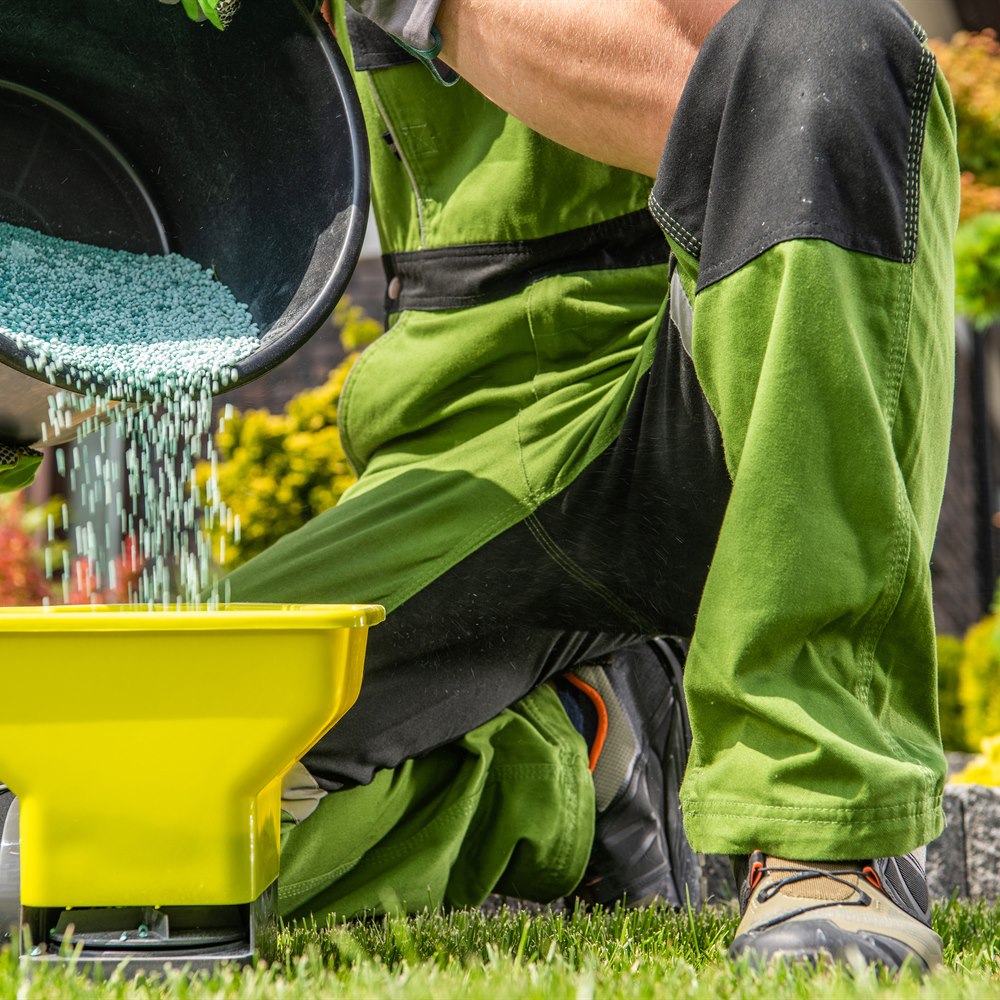
DIY fertilization can cost meaningfully less than a professional program, since you’re paying for product rather than product plus labor, expertise, and overhead. Equipment needs are modest, a broadcast spreader for granular products or a hose-end or pump sprayer for liquids, and both last years. Application itself is quick on a typical lawn. For homeowners willing to learn what their grass type needs and when, and to apply carefully at the correct rate, DIY produces good results at lower cost, which is why many homeowners handle it themselves successfully. (For more on this, see Questions to Ask a Lawn Fertilization Company.)
Where DIY Goes Wrong
The common DIY failures are rate errors, timing errors, and inconsistency. Applying too much burns turf, sometimes leaving visible streaks or dead patches that take a season to recover. Uneven spreading produces striping where overlapping passes doubled the rate and pale strips where coverage was missed. Applying at the wrong time for the grass type wastes product and can harm the lawn. And many DIY programs start strong in spring and fade, missing the applications that matter most, which produces worse results than a consistently executed program.
What Professionals Bring
Professional programs bring knowledge of what your grass type needs and when, calibrated equipment that applies at consistent rates, access to products and formulations not sold at retail, and the discipline of a scheduled program that doesn’t depend on your remembering. Technicians also observe the lawn each visit and can identify problems, disease, insect damage, soil issues, weed patterns, early. For homeowners who want results without becoming amateur agronomists, that combination is what the price buys.
Regulatory and Safety Considerations
Applying pesticides, including many weed and insect control products, is regulated, and commercial applicators are typically licensed and trained in proper handling, application, and record-keeping. Homeowner products are formulated for consumer use, but misapplication still carries risks to plants, pets, and waterways. Following label directions exactly is a legal as well as practical requirement, and labels are detailed for good reason. Homeowners uncomfortable handling these products carefully are better served by a licensed professional.
The Middle Ground
Many homeowners split the work. Some handle straightforward fertilization themselves while hiring out weed and insect control, which involves the more regulated products and the most judgment about identification and timing. Some do their own applications but pay for a soil test to guide product selection. Others hire a professional program for a season or two to establish a healthy lawn, then maintain it themselves. These hybrid approaches capture much of the savings while getting professional input where it matters most. (For more on this, see How to Budget and Pay for Lawn Fertilization.)
Making the Call
DIY makes sense if you’re willing to learn your grass type’s needs, apply at correct rates with properly calibrated equipment, follow a consistent seasonal schedule, and handle products responsibly. Professional programs make sense if you want reliable results without the learning curve, if timing discipline is unrealistic for your schedule, if your lawn has problems requiring diagnosis, or if you’d simply rather not handle the products. Both approaches work; the wrong choice is a DIY program executed inconsistently.
What a Realistic DIY Program Requires
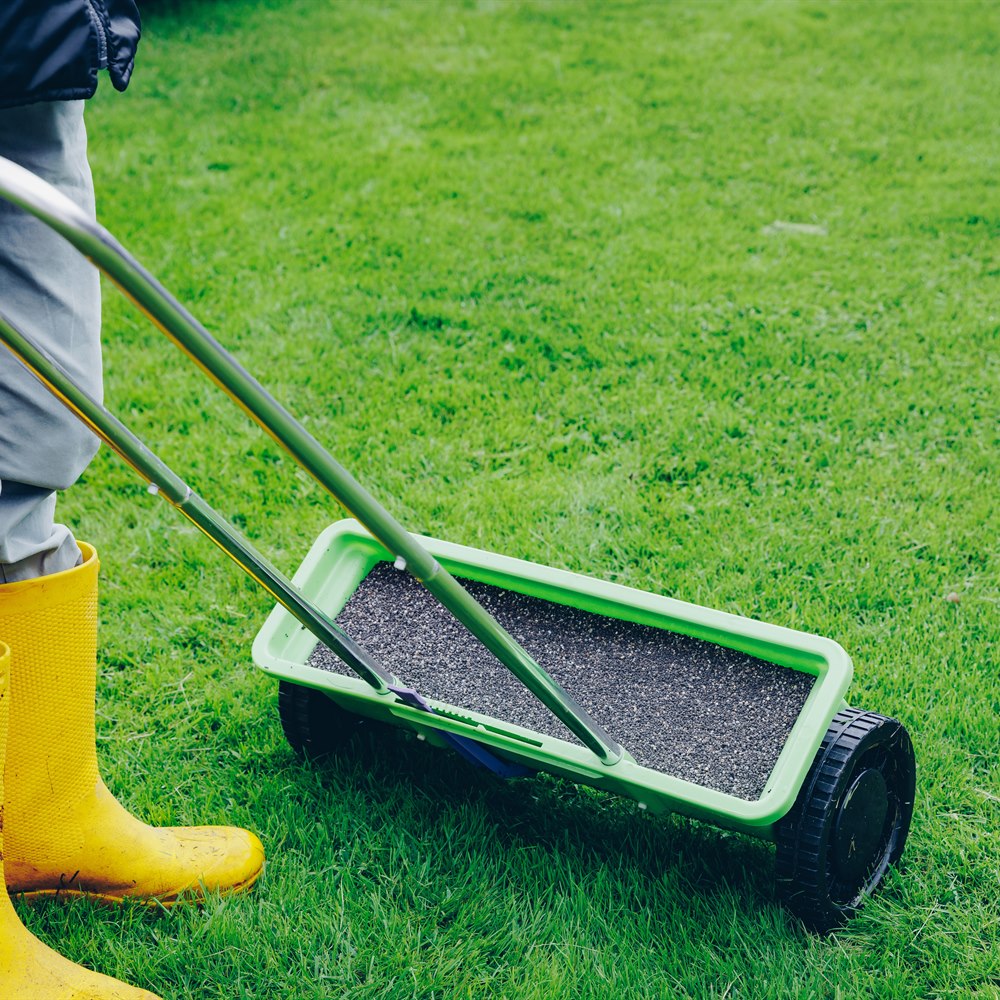
For homeowners leaning toward DIY fertilization, it helps to understand concretely what doing it well requires, since the gap between buying a bag and running an effective program is where most DIY efforts fall short. First, you need to know your grass type, because it determines the entire application calendar and the appropriate cutting height and products. Second, you need a soil test, at least occasionally, since applying nutrients blindly may address deficiencies you don’t have while missing the pH problem that’s actually limiting your lawn. Third, you need properly calibrated equipment: a broadcast spreader calibrated to the specific product you’re using, since settings vary by machine and granule size, and guessing at a setting is the most common cause of striping and burn. (For more on this, see How to Find the Best Lawn Fertilization Company.)
Fourth, and most demanding, you need timing discipline across the season. A program is several applications spaced to match the grass’s growth cycle, and the most common DIY failure isn’t a bad first application, it’s a strong spring start followed by missed summer and fall treatments, when for cool-season lawns the fall applications matter most. Building the schedule into a calendar with reminders, and buying the season’s products in advance so a missing bag doesn’t derail an application, both help. Fifth, you need to handle products responsibly: reading and following labels precisely, storing products securely away from children and pets, respecting re-entry intervals for any pesticide products, and preventing runoff into storm drains and waterways. Sixth, you need to pair the program with good mowing and watering, since a DIY fertilization program undermined by scalping or drought produces the same disappointing results a professional one would. Homeowners who do all of this generally get results comparable to a professional program at lower cost, and many find the process genuinely satisfying. Those who realistically won’t calibrate a spreader, won’t test soil, or won’t reliably execute the fall applications are usually better served by a professional program, since an inconsistent DIY effort often costs nearly as much in wasted product as a program would while delivering considerably less. Being honest about which describes you is the key to making the right choice. EPA WaterSense recommends about one inch of water a week, avoiding midday watering, and weather-based controllers to cut waste.
Deciding for Your Lawn
Weigh the real cost savings against the learning curve, the consequences of rate and timing errors, and how reliably you’ll follow a seasonal schedule. When you’re ready to price a professional program and compare, connect with local pros below.
Frequently Asked Questions
Yes, and many homeowners do successfully. DIY costs less since you pay for product rather than product plus labor and expertise, equipment needs are modest (a broadcast spreader or sprayer), and application is quick on a typical lawn. It works well for homeowners willing to learn what their grass type needs and when, and to apply carefully at the correct rate.
Rate errors, timing errors, and inconsistency. Applying too much burns turf, sometimes leaving streaks or dead patches that take a season to recover. Uneven spreading produces striping where passes overlapped and pale strips where coverage was missed. Applying at the wrong time for the grass type wastes product, and many DIY programs start strong in spring and fade, missing key applications.
Knowledge of what your grass type needs and when, calibrated equipment that applies at consistent rates, access to products and formulations not sold at retail, and the discipline of a scheduled program that doesn't depend on your remembering. Technicians also observe the lawn each visit and can identify problems, disease, insect damage, soil issues, weed patterns, early.
Yes. Applying pesticides, including many weed and insect control products, is regulated, and commercial applicators are typically licensed and trained in proper handling and application. Homeowner products are formulated for consumer use, but misapplication still carries risks to plants, pets, and waterways, and following label directions exactly is a legal as well as practical requirement.
Yes, many homeowners do. Some handle straightforward fertilization themselves while hiring out weed and insect control, which involves more regulated products and more judgment about identification and timing. Some do their own applications but pay for a soil test to guide product selection, and others hire a program to establish a healthy lawn, then maintain it themselves.