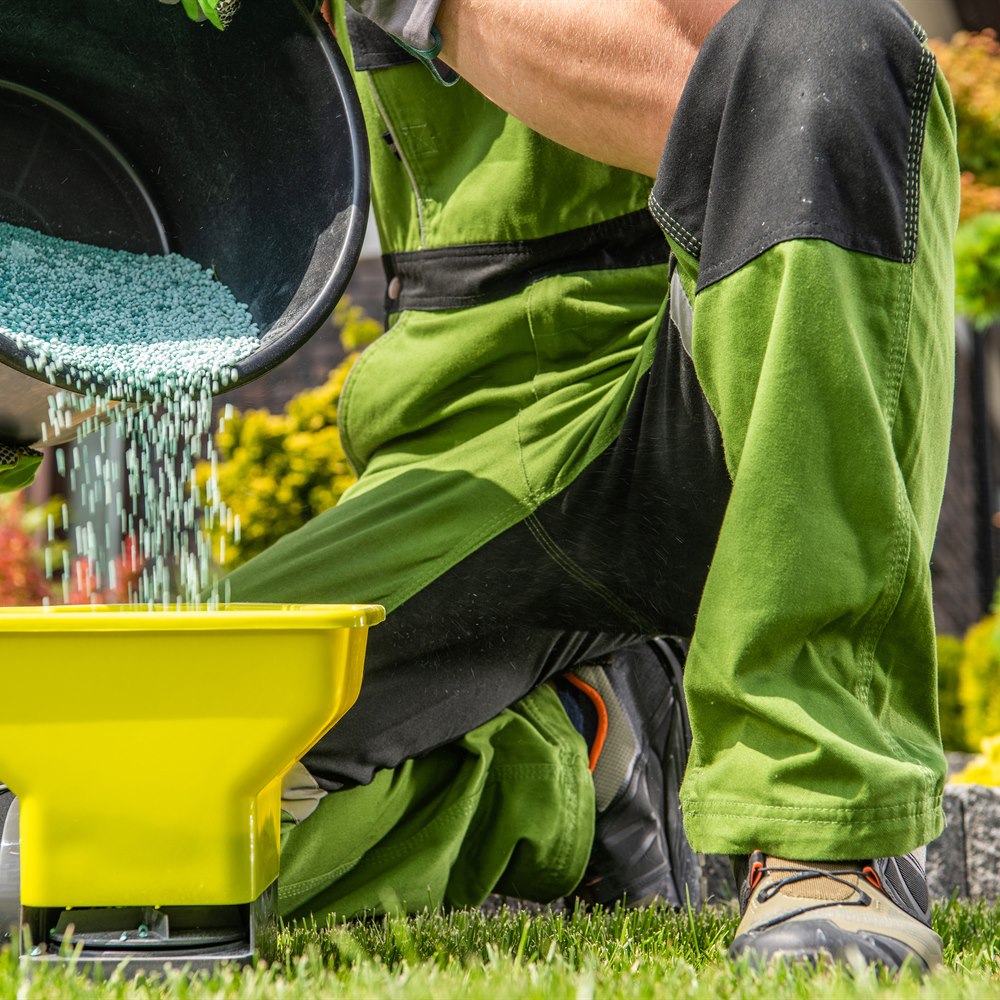
Organic or Synthetic Lawn Fertilizer: Which Should You Choose?
Synthetic fertilizer greens a lawn faster — 3 to 7 days for fast-release types — and costs less per unit of nitrogen; organic fertilizer works over weeks but builds soil health as it goes. Organic is also nearly impossible to over-apply and safe around children and pets once dry. Both produce healthy, attractive lawns. The choice comes down to how you want to get the result and what you value in the process.
Synthetic Fertilizers: Faster, More Precise
Synthetic (manufactured) fertilizers: nutrients are in water-soluble or controlled-release chemical form, directly available to the plant. The advantages: precise NPK ratios, predictable release rates (especially slow-release polymer-coated products), faster visible greening (fast-release types: 3 to 7 days), and lower cost per unit of nitrogen than most organic products. The limitations: synthetic fertilizers do not improve soil biology — they feed the grass but not the soil ecosystem. Over-application risks: nutrient runoff into waterways and potential lawn burn from high-salt-index products if applied incorrectly. Slow-release synthetic fertilizers (polymer-coated urea): the safest synthetic option for DIY application, with much lower burn risk than fast-release products. (For more on this, see Lawn Fertilizer Application Mistakes to Avoid.) EPA WaterSense recommends about one inch of water a week, avoiding midday watering, and weather-based controllers to cut waste.
Organic Fertilizers: Slower, Soil-Building
Organic fertilizers: nutrients derived from organic material (sewage biosolids, feather meal, blood meal, bone meal, kelp meal, compost). Nutrients are released as soil microbes break down the organic material — a process that also feeds the soil biology and improves soil structure over time. Advantages: virtually impossible to over-apply (organic nitrogen is much harder to apply in lawn-damaging quantities), safe for immediate use around children and pets (after drying), and long-term soil improvement beyond just nutrient delivery. Limitations: slower visible response (weeks rather than days), lower nitrogen content per pound (requires more product to deliver the same nitrogen dose), and higher cost per unit of nitrogen than synthetic. (For more on this, see Lawn Fertilization Schedule: When to Apply.)
The Combination Approach
Many lawn care professionals use a combination: organic or compost topdressing in fall to build soil health over winter, and slow-release synthetic fertilizer in spring and early summer for reliable, timed nutrient delivery during the active growing season. This approach delivers the soil-building benefits of organic amendments with the precision and reliability of slow-release synthetic fertilization. (For more on this, see Best Fertilizer for Your Lawn: How to Choose.)
Working With a Contractor on This Project
Getting the right outcome on any home services project starts before the work begins. A few consistent practices make the difference between a smooth project and a frustrating one.
Get at least two or three quotes. A single quote gives you no basis for comparison. Two or three quotes reveal the market rate for the work, expose scope differences between bidders, and let you assess contractor communication quality before any commitment is made. The lowest bid is not automatically the best value if the scope is thin or the materials are underspecified.
Ask for licenses and insurance before work starts. Verify current general liability insurance and, for any work involving workers on your property, workers compensation coverage. Licensing requirements vary by state and trade; confirm the specific requirements in your jurisdiction. A licensed contractor who carries appropriate insurance protects both parties if something goes wrong during the project.
Get the scope in writing. A written proposal that specifies materials, labor scope, timeline, what is included (permits, cleanup, disposal), and warranty terms is the foundation of a professional engagement. Verbal agreements on any of these points invite misunderstanding. For any project over $500, written scope is non-negotiable.
Clarify the payment schedule upfront. A reasonable payment schedule ties major payments to project milestones: a deposit at signing, a payment at material delivery or project start, and a final payment at completion after a walkthrough confirms satisfaction. A contractor who requires full payment upfront before work begins is a red flag in any trade.
Making a Confident Decision
The information in this article is designed to help you ask better questions of the professionals you work with, evaluate their answers with more confidence, and understand the decisions involved in this type of home services project. It is not a substitute for professional assessment of your specific home.
Every home is different. Roof slopes, local weather, tree exposure, soil conditions, and existing system condition all affect what the right solution is for your specific situation. The general principles here apply broadly, but a professional who assesses your home in person will give you guidance that accounts for the details that general articles cannot.
When you are ready to move forward, getting at least two or three quotes from licensed, insured, local contractors is the most important practical step. It lets you compare approaches, assess contractor quality, and confirm that the solution proposed matches your specific situation and budget.
Lawn Fertilization Cost at a Glance
Here is a quick reference for professional lawn fertilization costs per application for a standard residential lot.
| Cost Factor | Typical Range | Notes |
|---|---|---|
| Small lawn (under 5,000 sq ft) | $47 to $90 per application | Most crews hold a minimum of about $47 to $50 a treatment. |
| Standard lawn (5,000 to 10,000 sq ft) | $50 to $100 per application | |
| Large lawn (10,000 to 20,000 sq ft) | $65 to $170 per application | $65 to $85 at a quarter acre, $130 to $170 at a half acre. A full acre runs $260 to $340. |
| Annual program (5 to 7 applications) | $300 to $500 a year for a standard lot | $400 to $900 a year for premium products or larger lawns. Annual programs are 15 to 25 percent less expensive per visit than individual rates and include correctly timed applications through the season. |
| DIY fertilizer materials | $25 to $50 per bag (covers 5,000 sq ft) | Saves on labor but requires a calibrated spreader, correct product selection, and appropriate timing. |
| Add-ons that affect cost | Weed control ($50 to $210 additional per treatment, priced by lot size and about $80 to $160 at a half acre; most season-long programs already bundle blanket broadleaf weed treatments, so this is an add-on mainly when buying applications a la carte). Core aeration ($80 to $200 standalone). |
Cost figures on this page were checked against published pricing on August 29, 2026. How we source cost data.
National programs (TruGreen, Scotts LawnService) and local providers both serve this market. Local providers are typically 20 to 40 percent less expensive for comparable service.
Frequently Asked Questions
Neither is categorically better -- they achieve the same nutritional goal through different mechanisms. Organic: builds soil health over time, very safe to apply, no burn risk. Synthetic: faster results, more precise nutrient delivery, lower cost per unit of nitrogen. For long-term soil improvement and reduced environmental concern: organic. For fastest results and lowest per-application cost: synthetic slow-release.
Organic fertilizers (Milorganite, Espoma): generally safe for immediate contact once they are dry on the grass surface (most manufacturers recommend waiting until the product is watered in and the lawn is dry). Bone meal and blood meal: attracted to dogs, who may dig to find them. Synthetic fertilizers: keep pets and children off the treated area until watered in and dry. Read each product's specific label for re-entry recommendations.
Yes -- compost topdressing (spreading a 1/4 to 1/2-inch layer of quality compost over the lawn) improves soil biology, drainage, and moisture retention and delivers modest nutrient levels. It is not a replacement for fertilizer in terms of nitrogen delivery but is an excellent soil amendment that improves the lawn's response to any fertilization program. Apply compost in fall after core aeration for the greatest benefit.
Excessive dark green growth that requires much more frequent mowing. Increased susceptibility to disease (lush, soft growth is more vulnerable to fungal infection). Tip burn or yellowing at leaf margins (fertilizer burn from high-salt-index products applied too heavily). Runoff of dark water after rain (nutrient runoff). If you are mowing significantly more often and the lawn looks unnaturally dark green: reduce the fertilizer rate.
Slow-release fertilizer uses polymer coatings or other mechanisms to release nitrogen gradually over 6 to 12 weeks rather than all at once. The benefits: steady, even greening without surge growth, much lower burn risk than fast-release products, and one application lasts the entire season rather than 3 to 4 weeks. Most professional lawn programs use slow-release fertilizers for these reasons. Look for polymer-coated urea (PCU), sulfur-coated urea (SCU), or methylene urea in the fertilizer ingredient list.