
What Does Lawn Fertilization Cost?
Professional lawn fertilization costs $47 to $405 per application, averaging around $60 to $85 for a typical 5,000 to 10,000 square foot lawn. Lawn size and product quality drive most of the spread, with weed control and the number of applications in the program accounting for the rest.
Single Application on a Small or Average Lawn: $47 to $90
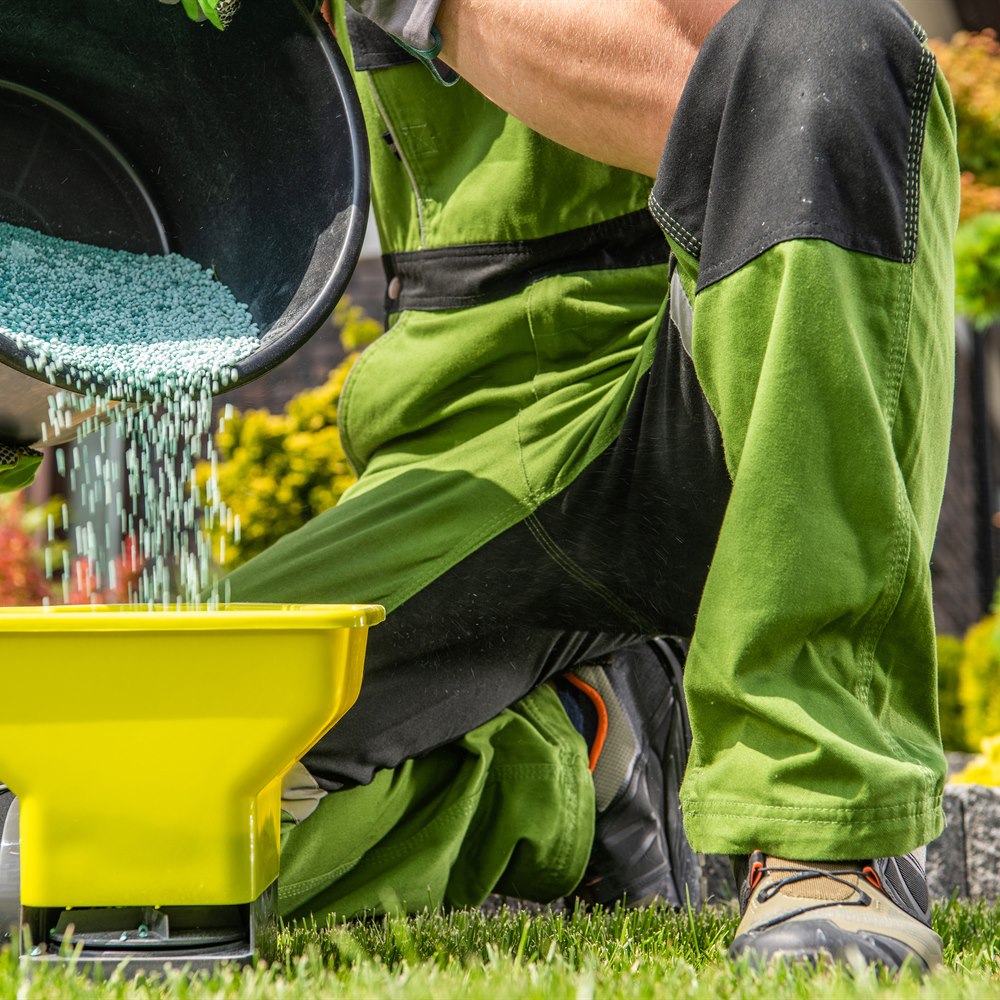
One treatment on a standard suburban lot runs $47 to $90, covering material and labor, and a one-off visit bought outside a program runs up to 30 percent above program rates. Most companies enforce a minimum charge of roughly $47 to $50 per treatment, so a very small lawn pays that floor rather than a size-based price. The technician applies fertilizer at the rate appropriate for your grass type, season, and lawn size, using a spreader for granular products or a sprayer for liquid. The visit itself is short, generally under an hour on a modest lawn, but the price reflects the product, the equipment, and the agronomic judgment about what to apply and when. Most companies include a soil-activated or slow-release fertilizer matched to the season and grass type at this tier.
Larger Lawns or Premium Products: $150 to $405
Lawns of a half acre or more, premium slow-release organic fertilizers, and targeted high-analysis products for specific nutrient deficiencies push the per-application cost to $150 to $405. Cost scales with area because more turf takes more product and more time. Premium products raise it further: slow-release formulations that feed steadily over weeks instead of dumping nutrients at once, organic and bio-based products, and specialty blends aimed at particular soil conditions all cost more, and they generally produce more consistent results.
Weed Control Add-On: $50 to $210
Weed control is commonly bundled with fertilization and adds $50 to $210 per treatment depending on product and lawn size. It may be a pre-emergent applied early in the season to stop crabgrass and other annual weeds from germinating, a post-emergent targeting weeds already up, or a combination product applied with the fertilizer. Because fertilizing a weedy lawn feeds the weeds along with the grass, most professional programs pair the two, and combined programs offer better value than buying each separately. (For more on this, see What Affects the Cost of Lawn Fertilization?.)
Lawn Fertilization Cost at a Glance
| Service | Cost |
|---|---|
| Single application, small to average lawn | $47 to $90 |
| Larger lawn or premium product | $150 to $405 |
| Weed control add-on | $50 to $210 per treatment |
| Annual program, typical 5,000 to 10,000 sq ft lawn | $300 to $500 a year |
| Annual program, premium product or larger lawn | $400 to $900 a year |
| DIY granular fertilizer, 50-pound bag | $30 to $80 |
| Soil test at county extension service | $15 to $30 |
| Overall range | $47 to $405 per application, averaging $60 to $85; an annual program is $300 to $500 a year, or $400 to $900 for a premium product or larger lawn |
Cost figures on this page were checked against published pricing on September 2, 2026. How we source cost data.
Annual Programs Versus One-Time Applications
A single application gives the lawn a short-term boost but does not build sustained turf health. Annual programs of 4 to 6 applications spaced to the grass’s growth cycle produce significantly better results over time, and they cost $300 to $500 a year for a typical 5,000 to 10,000 square foot lawn, and $400 to $900 a year for a premium program or a larger lawn. Per-application pricing inside a program typically runs 10 to 20 percent below one-time pricing. (For more on this, see Lawn Fertilization vs. Lawn Care Programs: What Is the Difference?.)
This is also where quotes get hard to compare, because providers price in different ways. A per-application figure tells you what one visit costs but nothing about how many visits you get, so the annual commitment can be several times the single-visit number. Some companies quote an all-inclusive annual program covering fertilization, pre-emergent and post-emergent weed control, and unlimited service calls between visits; others quote a lower base program and bill weed control, grub control, lime, and service calls as add-ons. The cheaper base program often costs more once you add the treatments you actually want.
The only meaningful comparison is annual cost at matched scope. Ask each provider how many applications the program includes, what each one consists of, which treatments are included versus extra, and what the full year totals with everything you intend to use. Ask whether the price is locked for the year and whether prepaying earns a discount. Quotes that looked far apart often converge once you do this, and ones that looked similar often diverge.
How Often and When to Fertilize
Most grass types want 4 to 6 applications a year. Cool-season grasses need early spring, late spring, early fall, and late fall treatments at minimum, with an optional summer application. Warm-season grasses need spring after green-up, mid-summer, and early fall at minimum, up to 5 for premium maintenance.
Timing matters as much as frequency. For cool-season grasses, fall from September to November is the most important window: the grass is actively building roots without pushing visible top growth, and fall feeding sustains color through winter and drives spring green-up. For warm-season grasses, late spring through summer from May through August is the active window, and fall fertilization provides little benefit while potentially reducing winter hardiness. Over-fertilizing is a real risk in either case — excess nitrogen produces top growth at the expense of root development and raises disease pressure.
Doing It Yourself
DIY fertilization saves $20 to $100 per application in labor. A 50-pound bag of granular fertilizer costs $30 to $80 at a home improvement store and covers up to 15,000 square feet, enough for a standard lot. The trade-off is knowledge rather than effort: reading soil test results, choosing the right analysis for the season and grass type, and calibrating the spreader correctly all take more understanding than DIY mowing does. A one-time soil test, $15 to $30 through a county extension service, is the most important investment before starting a DIY program, because it tells you what the lawn is actually short of. (For more on this, see Questions to Ask a Lawn Fertilization Company.)
Getting an Accurate Quote
An accurate price comes from a provider who has measured the lawn and proposed a specific program. Beyond size, product, and weed control, the annual total moves with the number of applications, whether soil testing is included or billed, and which extras you add — grub control, disease treatment, aeration, and overseeding are typically priced separately. Local market rates vary as well.
Get at least two written quotes on equivalent defined scope, and treat these ranges as planning benchmarks rather than fixed prices. Wide variation between quotes usually reflects a different application count, different product quality, or different inclusions rather than simple price competition.
Frequently Asked Questions
Lawn fertilization runs $47 to $405 per application, averaging $60 to $85. A single application on a small or average yard is $47 to $90, larger lawns or premium treatments are $150 to $405, and weed control adds $50 to $210. An annual 4 to 6-application program runs $300 to $500 for an average lot.
$47 to $90 on an average residential yard, covering product and labor. The technician applies fertilizer at the rate appropriate for your grass type, season, and lawn size, using a spreader for granular products or a sprayer for liquid. The visit is usually under an hour on a modest lawn.
$50 to $210 per application depending on treatment type and lawn size. It may be a pre-emergent applied early to stop crabgrass and other annual weeds from germinating, a post-emergent for weeds already growing, or a combination product applied with the fertilizer. Because fertilizing a weedy lawn feeds the weeds too, most programs pair the two.
Yes for most lawns. A consistent 4 to 6-application annual program at $300 to $500 builds soil health, reduces weed pressure by maintaining a dense turf canopy, and produces measurably greener, thicker grass than sporadic one-time treatments. Per-application pricing inside a program also runs 10 to 20 percent below one-time pricing.
Four to 6 times for most grass types. Cool-season grasses need early spring, late spring, early fall, and late fall applications at minimum, with an optional summer feeding. Warm-season grasses need spring after green-up, mid-summer, and early fall at minimum, up to 5 for premium maintenance. Over-fertilizing is a real risk, since excess nitrogen builds top growth at the expense of roots.
For cool-season grasses, fall from September to November is the most important window -- the grass is building roots without visible top growth, and fall feeding sustains winter color and drives spring green-up. For warm-season grasses, late spring through summer from May through August is the active window; fall feeding gives little benefit and may reduce winter hardiness.
Yes. A 50-pound bag of granular fertilizer costs $30 to $80 and covers up to 15,000 square feet, saving $20 to $100 per application in labor. The trade-off is knowledge: reading soil test results, matching the analysis to the season and grass type, and calibrating the spreader. Start with a soil test, $15 to $30 at a county extension service.
The number of applications in the program drives the annual total more than anything else. Soil testing may be included or billed separately, and extras such as grub control, disease treatment, aeration, and overseeding are usually priced on their own. Local market rates vary as well.