How Do You Find a Great Spray Foam Contractor?
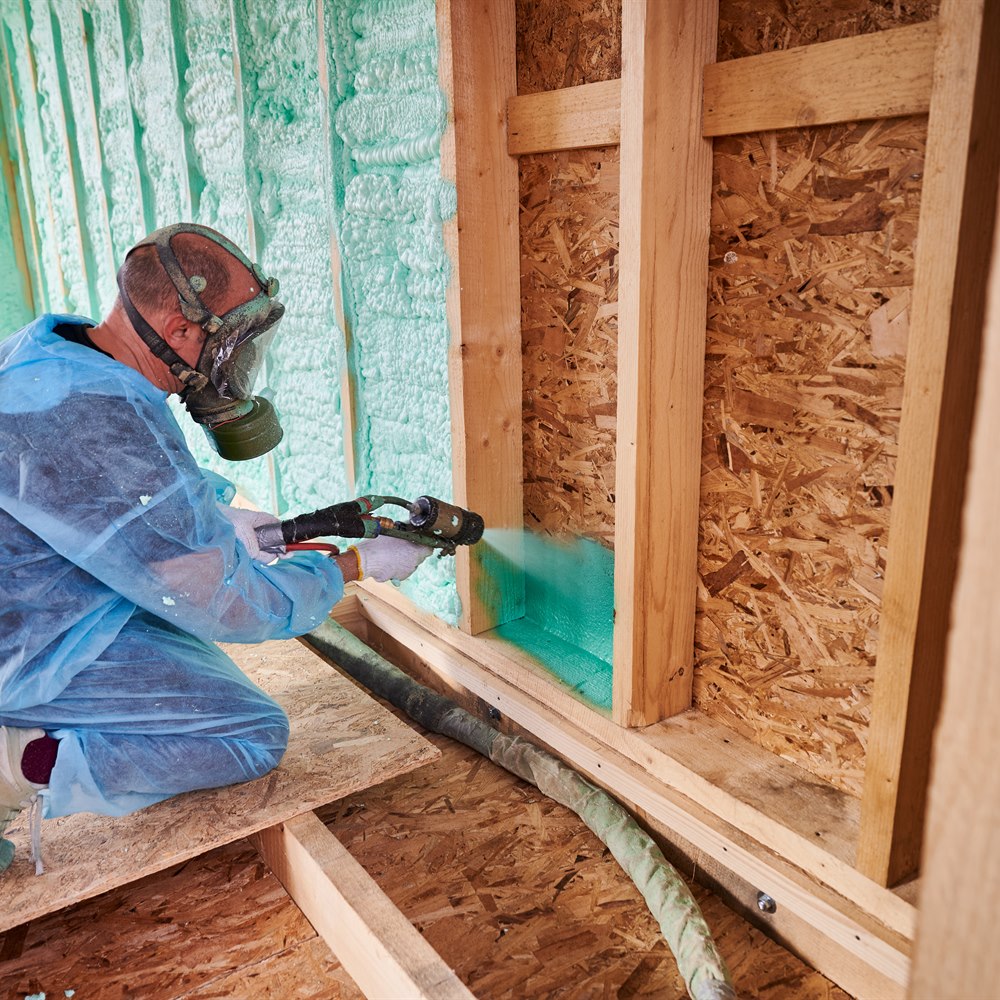
The best spray foam contractors are SPFA-certified or manufacturer-trained, run commercial proportioner equipment, and name the exact foam product they will install. Spray foam quality is invisible once the thermal barrier is installed, which makes contractor selection more consequential than with any other insulation type. Here is how to identify a qualified one.
They Are SPFA Certified or Have Manufacturer Training
The Spray Polyurethane Foam Alliance (SPFA) offers certified installer programs covering proper mixing ratios, temperature requirements, substrate preparation, and safety. Manufacturer-specific training programs (from Icynene, Lapolla, BASF, Demilec, and others) provide equivalent technical qualification. A contractor who cannot identify their specific technical training should not be trusted with a spray foam project the application is too technically sensitive. (For more on this, see Questions to Ask Before Hiring a Spray Foam Contractor.)
They Use Commercial Proportioner Equipment
Professional spray foam application requires heated, calibrated proportioner equipment that precisely controls the temperature and pressure of both chemical components. Contractors using canned-foam kits for large applications, or using consumer-grade equipment without temperature control, cannot guarantee consistent mixing ratios and therefore cannot guarantee consistent foam quality and R-value. (For more on this, see Common Spray Foam Insulation Problems and How to Avoid Them.) The Department of Energy publishes recommended R-values by climate zone and where insulation pays back fastest.
They Specify the Foam Product by Manufacturer and Product Name
Ask specifically which foam product the contractor uses. A quality contractor names the manufacturer (Icynene, BASF, Demilec, Lapolla, Huntsman, etc.) and the specific product. The manufacturer’s technical data sheet specifies the foam’s rated R-value, density, and properties allowing you to verify that the product meets your project’s performance requirements. Generic ‘open-cell’ or ‘closed-cell’ without a specific product name is insufficient.
They Explain the Re-Occupancy Protocol Proactively
A contractor who explains the 24 to 48-hour re-occupancy protocol, required ventilation, and off-gassing timeline without being asked is prioritizing occupant safety. One who does not raise this topic as part of the project discussion is either not focused on safety or is not planning to follow proper professional protocols.
Working With a Contractor on This Project
Getting the right outcome on any home services project starts before the work begins. A few consistent practices make the difference between a smooth project and a frustrating one.
Get at least two or three quotes. A single quote gives you no basis for comparison. Two or three quotes reveal the market rate for the work, expose scope differences between bidders, and let you assess contractor communication quality before any commitment is made. The lowest bid is not automatically the best value if the scope is thin or the materials are underspecified.
Ask for licenses and insurance before work starts. Verify current general liability insurance and, for any work involving workers on your property, workers compensation coverage. Licensing requirements vary by state and trade; confirm the specific requirements in your jurisdiction. A licensed contractor who carries appropriate insurance protects both parties if something goes wrong during the project.
Get the scope in writing. A written proposal that specifies materials, labor scope, timeline, what is included (permits, cleanup, disposal), and warranty terms is the foundation of a professional engagement. Verbal agreements on any of these points invite misunderstanding. For any project over $500, written scope is non-negotiable.
Clarify the payment schedule upfront. A reasonable payment schedule ties major payments to project milestones: a deposit at signing, a payment at material delivery or project start, and a final payment at completion after a walkthrough confirms satisfaction. A contractor who requires full payment upfront before work begins is a red flag in any trade.
How to Use This Guide
Finding the right contractor is the most important decision in any home services project. The criteria in this article reflect what distinguishes contractors who deliver excellent work from those who do not, based on the specific quality factors that matter for this type of work.
Use the criteria here as a screening framework, not a checklist to be completed mechanically. A contractor who scores well on the criteria that matter most for your specific project, home, and concerns is a better match than one who technically checks every box but does not communicate clearly or does not have local experience with your type of home.
The right contractor is one who provides a clear, written proposal with specific materials and scope, is licensed and insured, has verifiable local references from similar work, and backs their installation with a meaningful warranty. When you are ready to compare your options, use the button below to connect with qualified local professionals in your area.
Spray Foam Insulation Cost at a Glance
| Cost Factor | Typical Range | Notes |
|---|---|---|
| Open-cell foam | $0.44 to $0.65 per board foot installed | , lighter and more affordable; a board foot is one square foot at one inch of depth, so an attic sprayed 6 in. deep is six board feet for every square foot of floor |
| Closed-cell foam | $1.15 to $2.00 per board foot installed | , denser with better insulation and moisture resistance, at roughly three times the open-cell rate for the same depth |
| Attic or roof deck | $2,970 to $12,000 installed | a 1,500 sq ft attic at 6 in. of open cell lands near the floor; a closed-cell roof deck reaches the top |
| Overall range | $2,000 to $12,000, averaging $5,000 | for professionally installed spray foam on one area of a house – an attic, a roof deck, a crawl space or rim joists |
Cost figures on this page were checked against published pricing on August 28, 2026. How we source cost data.