How Do You Design the Best Backyard Play Space?
A great backyard play space is more than a piece of equipment set in the yard. The best ones combine the right structure for the children who will use it, appropriate safety surfacing, a location that encourages use, and a layout that leaves room for other outdoor activities. Here is how to design it well.
Start With Use, Not Equipment
Before choosing a structure, define what kind of outdoor play you want to support. Do your children gravitate toward physical climbing and sliding? Social play with friends that benefits from a fort or enclosed space? Creative and imaginative play that benefits from a mix of structured and open features? Understanding the play style helps select features that will actually get used versus ones that look impressive in a catalog but go ignored. The most used playground features tend to be swings (across nearly all ages), slides (school-age), and climbing structures that present a genuine challenge for the current age.
Size the Space Before Choosing the Equipment
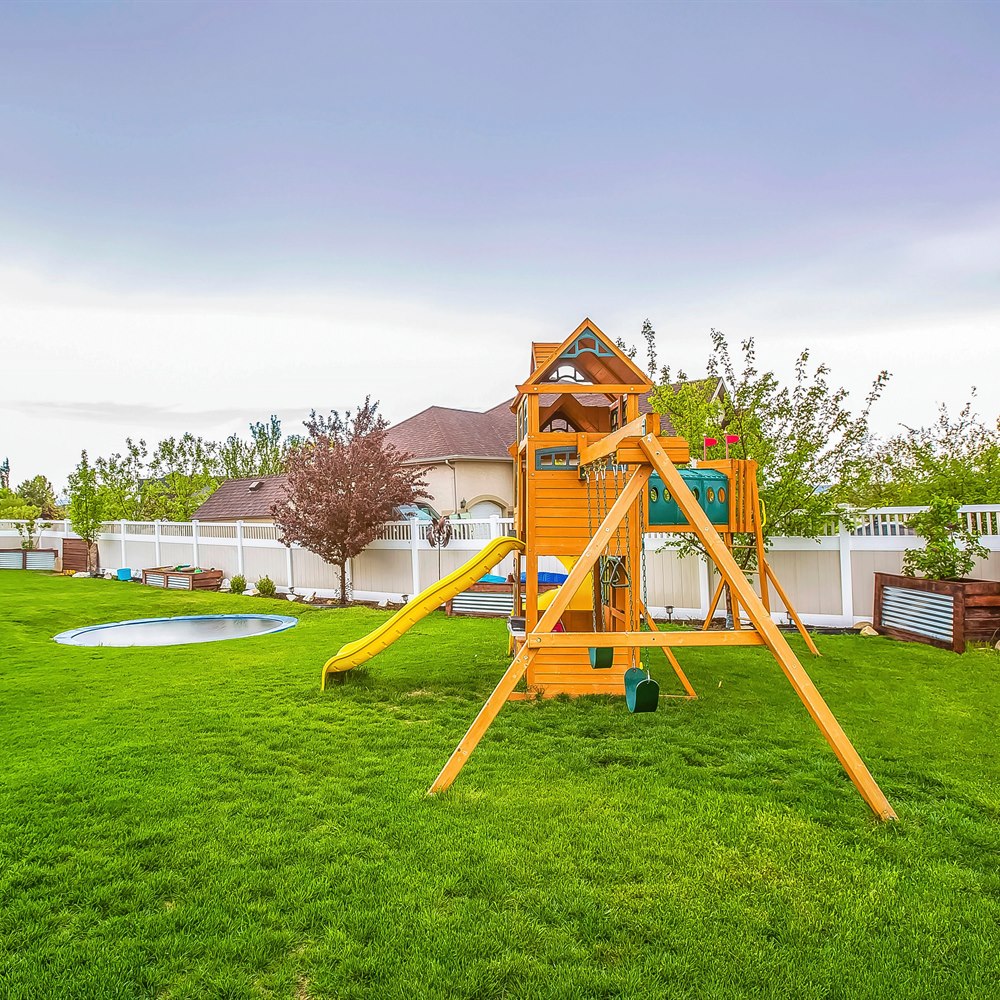
The play space design should start from your yard dimensions, not from the equipment catalog. Measure the available area and determine how much of it can realistically be dedicated to the play space while leaving room for other uses: a lawn for running, a garden, outdoor dining space. Within the play space area, the equipment footprint plus the required safety zone (extending several feet beyond equipment in all directions) sets the maximum structure size. Choosing equipment before this step routinely produces either a structure too large for the safety zone or a layout that consumes the entire yard. (For more on this, see Playground Equipment Safety: What Every Parent Should Know.)
Choose Equipment That Grows With Your Children
The best equipment investment spans several years of your children’s development rather than serving only their current age. A structure with features appropriate from ages 3 through 10 provides seven years of use; one sized for a three-year-old is outgrown by five. Multi-age structures cost more upfront but dramatically lower the cost per year of use and avoid the frustration of expensive equipment going unused because children aged out of it in two seasons. (For more on this, see Common Playground Equipment Mistakes to Avoid.)
Plan the Safety Surface as Part of the Design
Safety surfacing is not an afterthought to the play space design; it is part of it. The surface defines the safety zone visually, contains the loose fill material in a defined area, and provides the fall protection that makes the space genuinely safe. Rubber border edging or timber borders define the surfaced area cleanly. The surfaced area should extend beyond the equipment footprint in all directions per manufacturer guidelines. Planning the surface at the design stage, rather than adding it after installation, produces a more intentional, better-looking result and ensures the materials are ordered and delivered before the equipment arrives. The CPSC’s Public Playground Safety Handbook sets out fall zones, protective surfacing depth, and entrapment clearances.
Place Equipment Where It Gets Used
Playground equipment visible from the main living area of the house gets meaningfully more use than equipment hidden in a back corner. Children play more willingly when the transition from indoor to outdoor is easy and when they feel connected to where their parents are. Partial shade is a bonus: full sun makes metal and plastic surfaces uncomfortably hot in summer, shortening sessions. A location with morning sun and afternoon shade in a hot climate extends comfortable outdoor play through the warmest months.
Integrating the Play Space With the Rest of the Yard
The best backyard play spaces feel like a natural part of the yard rather than something imposed on it. A few design principles help with this integration. Consistent materials between the playground edging and other landscape features, using the same lumber type or stone that appears in the garden or patio, creates visual coherence. Planting low-maintenance shrubs or perennials at the edges of the safety zone, outside the surfaced area, softens the boundary between the equipment zone and the lawn and gives the space a finished, landscaped quality rather than a dropped-in-the-yard appearance. A natural or mulched path from the house to the play space creates a deliberate connection that makes the transition to outdoor play feel inviting rather than optional. If shade isn’t already provided by existing trees, a pergola or shade sail over part of the safety zone extends comfortable play time through hot afternoons without requiring permanent structure. These landscape and design touches don’t require significant additional cost but substantially improve how the play space looks and feels as part of the yard, which matters for whether you enjoy the space as much as your children do. (For more on this, see How to Choose the Right Playground Equipment for Your Family.)
Putting the Design Together
Design from use type and yard dimensions, choose equipment spanning several years of age-appropriate play, plan safety surfacing as an integrated element, and place the structure where it will actually be used. When you are ready to select equipment and plan the installation, connect with a local pro below.
Frequently Asked Questions
Start with the type of play you want to support (climbing, social, creative). Measure yard dimensions and determine space available including required safety zone before choosing equipment. Select a structure spanning several years of age-appropriate play. Plan safety surfacing as an integrated design element. Place equipment visible from the main living area for maximum use.
After. The play space design should start from yard dimensions, not the equipment catalog. Measure the available area, determine how much can realistically be dedicated to the play space, and determine the safety zone dimensions required for any structure you consider. Choosing equipment before this step routinely produces structures too large for the safety zone or layouts that consume the entire yard.
Swings (across nearly all ages), slides (school-age), and climbing structures presenting a genuine challenge for the current age consistently get the most use. Features that look impressive in a catalog but go unused tend to be ones that don't match the children's actual play style or that are appropriate only for a narrow age window.
Because it is part of the play space design, not an afterthought. The surfaced area defines the safety zone visually and provides the fall protection that makes the space genuinely safe. Planning it at the design stage ensures materials are ordered and on-site before the equipment arrives, producing a more intentional result and ensuring safety is in place from the first day of use.
Visible from the main living area or kitchen window where parents naturally spend time. Equipment in natural sightlines gets significantly more use because supervision is easier and children feel connected to where their parents are. Partial shade is also valuable since full sun makes metal and plastic surfaces hot in summer, shortening outdoor sessions.