How Do You Choose the Right Backyard Playground?
Choosing the right playground equipment is a balance of matching the structure to your children’s ages and interests, your yard’s size and conditions, and your budget and maintenance commitment. Here’s a practical guide to making the choice well.
Start With Your Children’s Ages and Interests
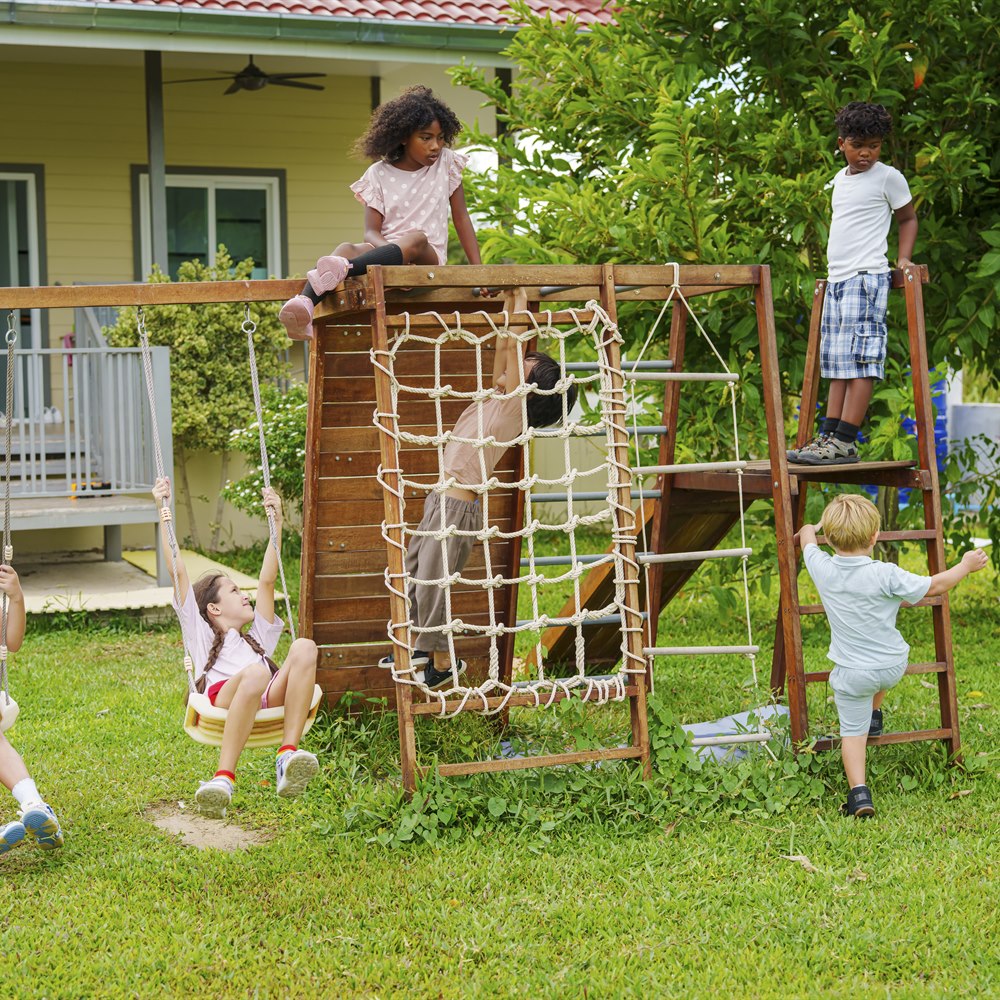
Age appropriateness is the primary filter. Toddlers (2 to 4) need lower platforms, enclosed spaces, and age-appropriate swings including bucket swings with full support. School-age children (5 to 10) are the primary audience for most residential playsets: slides, climbing walls, monkey bars, swings, and forts all engage this age group well. Older children (10 and up) need more challenging climbing features and tire swings and often lose interest in structures designed for younger children. Buying for the age the child is now without considering how quickly they’ll age out of it is a common regret. A structure that serves children from 3 to 10 provides more years of use than one sized for a toddler that they’ll outgrow in two years.
Match the Structure to Your Yard Size
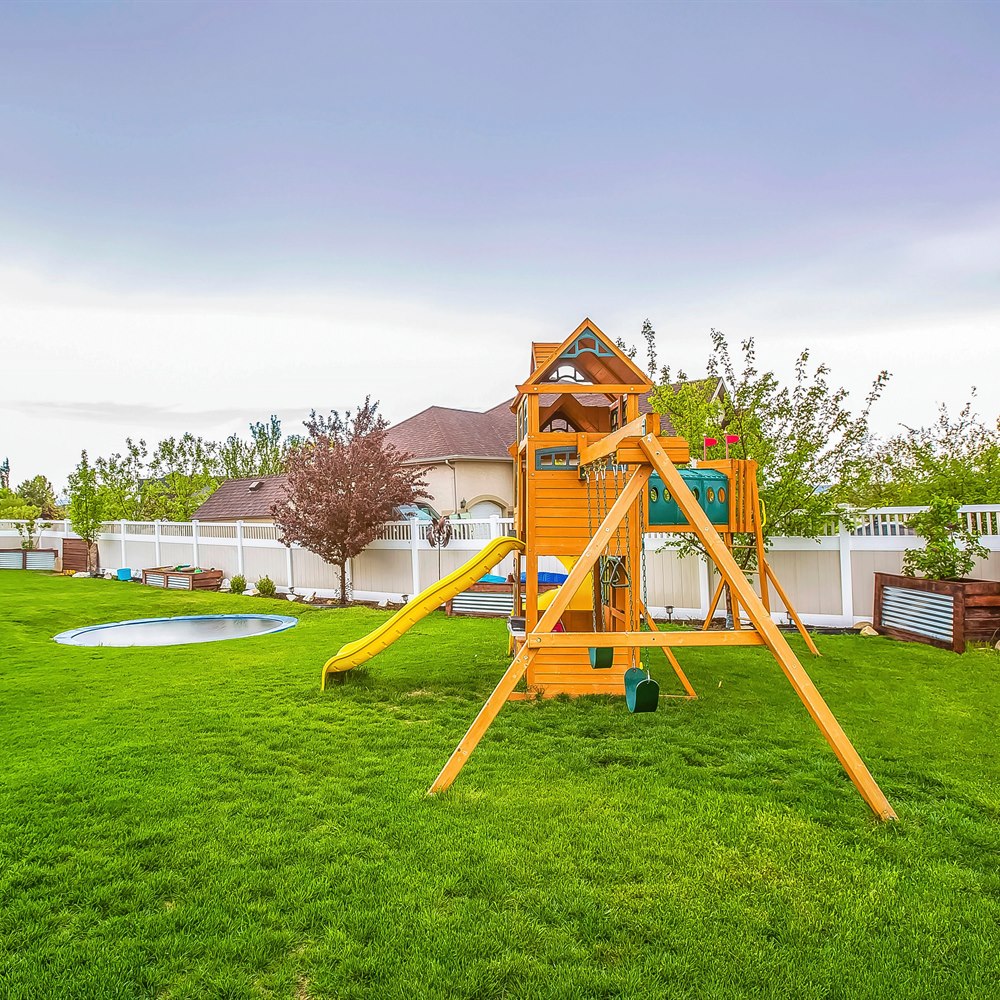
Safety guidelines require a fall zone around playground equipment that extends several feet beyond the equipment footprint in all directions. A large multi-tower structure requires a substantial safety zone, and placing it in a yard that can’t accommodate appropriate clearance creates a safety problem and a visually overcrowded space. Measure your available space and work backward from that to the appropriate structure size rather than choosing a structure and hoping it fits. (For more on this, see What Affects the Cost of Playground Equipment?.)
Consider Maintenance Commitment
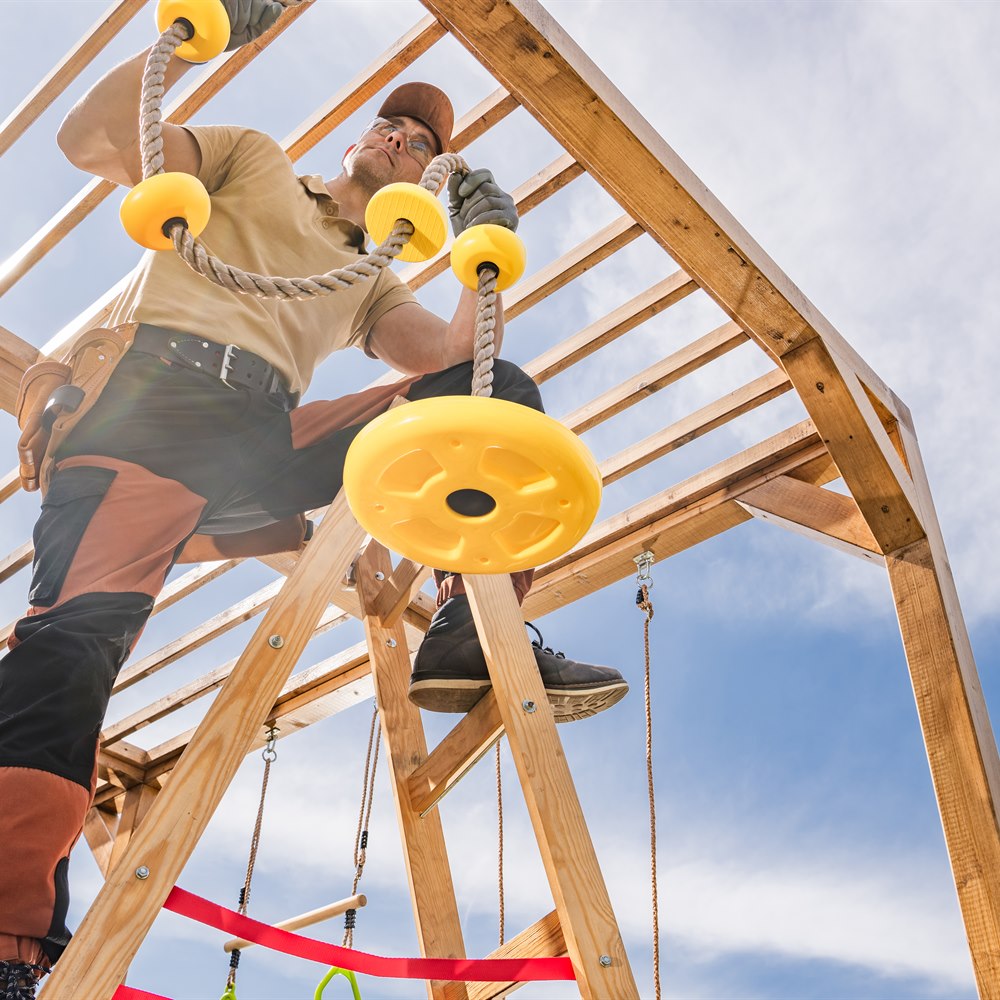
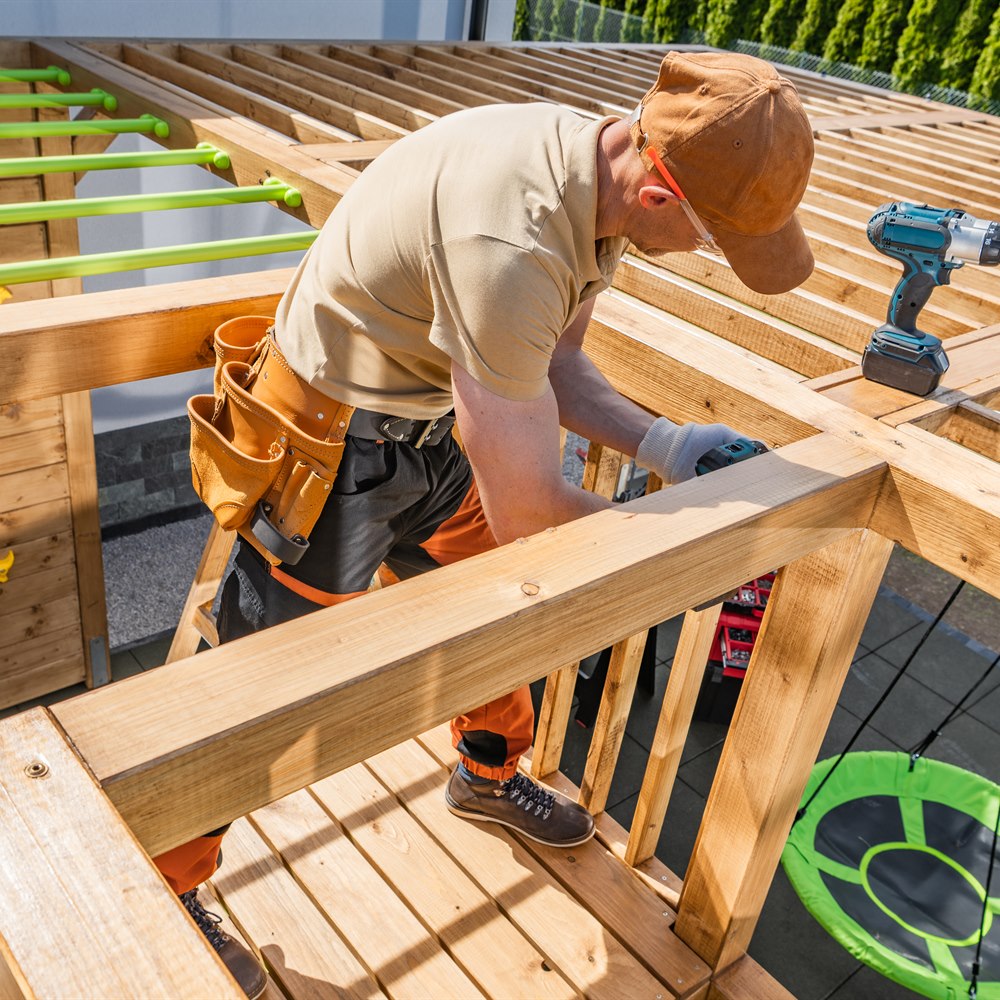
Wooden playsets require periodic maintenance: sanding, sealing or staining, hardware inspection. If that commitment will be consistently made, wood is an excellent choice. If maintenance is realistically unlikely, the playset will deteriorate within a few years and create rough surfaces. Be honest about this before choosing wood. Composite or commercial-grade structures require far less maintenance and may be a better fit for busy families who won’t consistently maintain a wood structure.
Think About How Many Children Will Use It
A structure used by multiple children simultaneously needs to be sized for concurrent use. A single-tower structure works well for one child; it creates conflict and congestion for three children wanting different activities at the same time. Feature variety, multiple play options in the same structure, is what allows multiple children to use a playset simultaneously without competing for the same element. For families with multiple children, investing in more features reduces conflict and increases time on the structure.
Plan the Location Thoughtfully
Location affects how much the equipment is actually used. Structures visible from the main living areas of the house get more use than those tucked in an out-of-sight corner, because children play more when supervised adults can see them easily. Partial shade is valuable: full sun makes plastic slides and metal components uncomfortably hot in summer and shortens play sessions. Flat, well-drained ground is safer and makes installation simpler. Think through the location before buying so the structure goes in the best position rather than the most convenient one.
Getting Children Involved in the Selection
One practical way to improve the chances that playground equipment will be used consistently is to involve the children in the selection process at an appropriate level. This doesn’t mean letting children design the structure themselves, since they’ll request everything and understand none of the constraints, but showing them two or three pre-screened options that fit the yard, budget, and age requirements and asking which features they’re most excited about produces useful information. Children often have clear preferences between a tall tube slide versus an open wave slide, a climbing wall versus rope net, a covered fort versus an open platform, and those preferences predict actual use better than a parent’s guess about what will be popular. The engagement from having chosen also increases initial enthusiasm and early habit formation around outdoor play, which matters for whether the equipment becomes a daily destination or an occasional novelty. (For more on this, see How to Find the Best Backyard Playground Equipment.)
Reassessing the Choice as Children Grow
A playground purchase is not final in the way some home improvements are, because children’s play needs genuinely change over time. A structure appropriate at age four requires supplemental features or adjustment by age eight, and the families who get the most from their playground investment are those who actively maintain and adapt the space rather than treating it as fixed. Adding a tire swing to replace a standard swing as children get older, upgrading the slide to a longer or more challenging version, or adding a climbing rope are modest additions that extend the active life of a structure significantly. Removing features that are no longer appropriate for the current age and replacing them with more challenging ones is an underused strategy that extends engagement with the same basic structure for several additional years beyond what the original purchase alone would provide. (For more on this, see How to Design the Best Backyard Play Space for Your Kids.)
Making the Choice
Choose for your children’s current and near-future ages, your yard’s actual dimensions and the safety zone they allow, your realistic maintenance commitment, the number of children using it simultaneously, and a location that supports actual use. When you’re ready for equipment options and installation, connect with a local pro below. The CPSC’s Public Playground Safety Handbook sets out fall zones, protective surfacing depth, and entrapment clearances.
Frequently Asked Questions
Start with age appropriateness (toddlers need lower platforms and bucket swings; school-age need slides, climbing walls, and swings; older children need more challenging features). Size to yard dimensions including required safety clearance. Consider maintenance commitment honestly. Think about how many children will use it simultaneously and choose feature variety accordingly.
Safety guidelines require a fall zone extending several feet beyond the equipment footprint in all directions. Measure your available space and work backward to the appropriate structure size. A large multi-tower structure requires a substantial safety zone; placing it in a yard that can't accommodate appropriate clearance creates safety problems and visual overcrowding.
Depends on age at purchase and structure type. A structure serving children from ages 3 to 10 provides roughly seven years of use; one sized for a toddler that doesn't accommodate school-age play may be outgrown in two to three years. Buying a structure with features spanning a wider age range, even if not all are currently relevant, extends the useful life significantly.
Yes significantly. Structures visible from main living areas get more use because children play more when supervised adults can see them easily. Partial shade is valuable since full sun makes slides and metal components hot. Flat, well-drained ground is safer. Think through the best location before buying rather than placing the structure wherever installation is most convenient.
It depends on the structure, but most residential playsets require a safety zone extending 6 feet or more beyond the equipment in all directions, plus the equipment footprint itself. A mid-range playset with a 10x10 ft footprint needs roughly a 22x22 ft clear area minimum. Check the manufacturer's recommended safety zone for any structure you're considering.