What Goes Wrong With Backyard Playground Equipment?
Skipping safety surfacing is the most consequential backyard playground mistake — grass and dirt are not adequate to prevent serious injury in falls from elevated platforms. The other costly one is buying for the child’s current age only: a structure bought at three can be outgrown by five and then sits unused. Backyard playground decisions are usually made once, so here’s what goes wrong and how to avoid it.
Mistake: No Safety Surfacing
How to avoid it: Installing playground equipment on grass, dirt, or pavers without appropriate safety surfacing is the most consequential mistake. Turf looks like a soft landing but isn’t adequate to prevent serious injury in falls from elevated platforms. Engineered wood fiber, rubber mulch, or poured rubber in the safety zone around and under the equipment is the safety investment that matters most. The cost of surfacing is modest relative to equipment cost and substantial relative to fall-related injury cost. Install appropriate surfacing before the equipment is used.
Mistake: Buying for the Child’s Current Age Only
How to avoid it: Buying a structure targeted at a child’s current age produces a structure they outgrow quickly. A toddler-focused structure bought when the child is three may be outgrown by five. Avoid it by choosing a structure with features spanning from the child’s current age upward, even if some features aren’t immediately appropriate, so the structure provides years of use as the child grows. Multi-age structures cost somewhat more upfront but spread that cost over many more years of play.
Mistake: Placing the Equipment Out of Sightlines
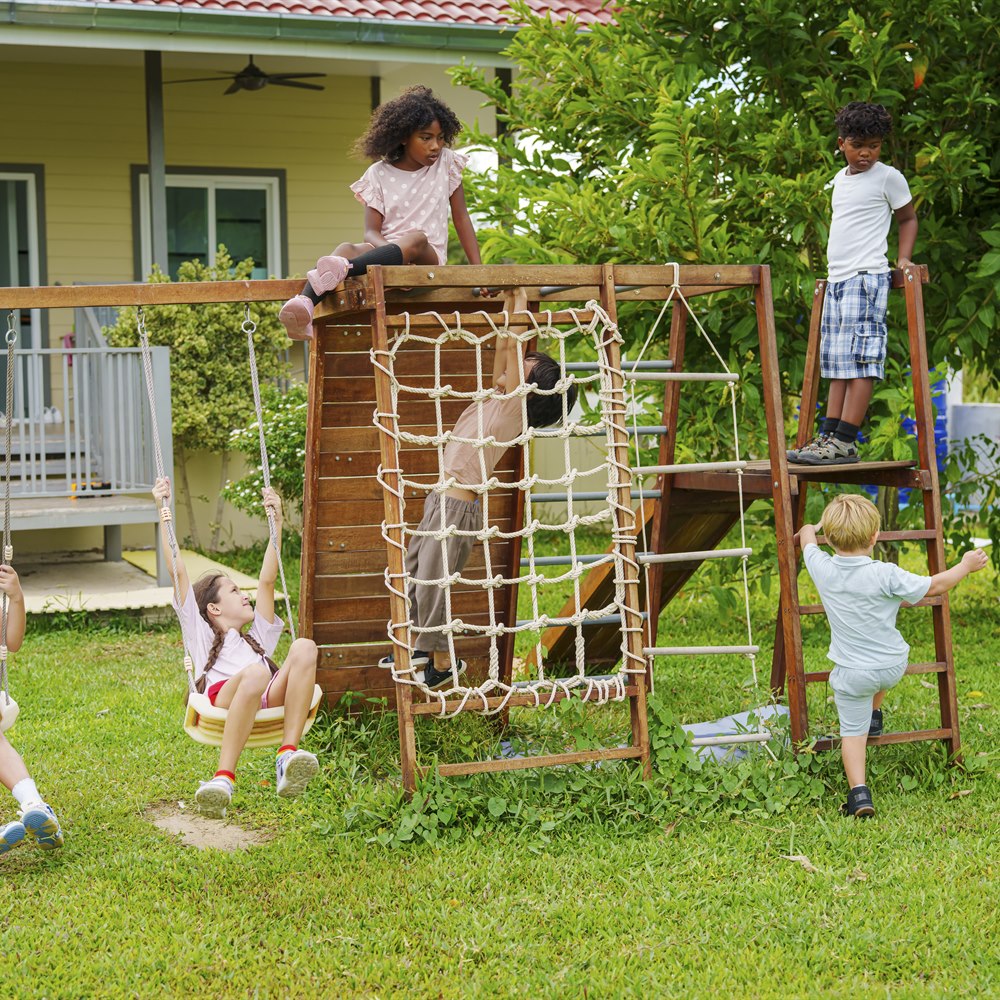
How to avoid it: Structures placed in corners, behind garage buildings, or otherwise out of the natural sightlines from house windows get significantly less use because parents can’t supervise easily and children feel less connected to the outdoor play area. Avoid it by choosing a location visible from the main living area or kitchen window, even if that location is slightly less convenient for installation. This single placement decision affects how much the equipment is used more than any other factor after the initial purchase.
Mistake: Skipping Annual Maintenance
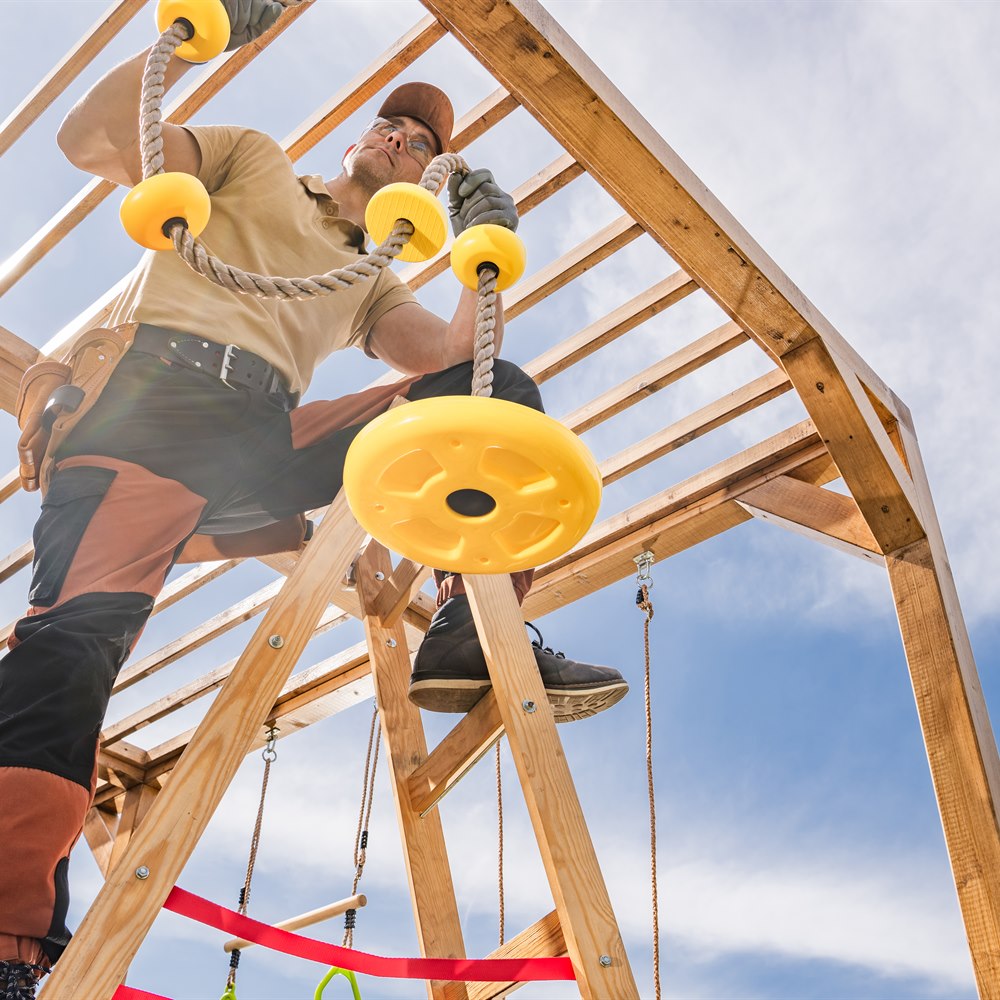
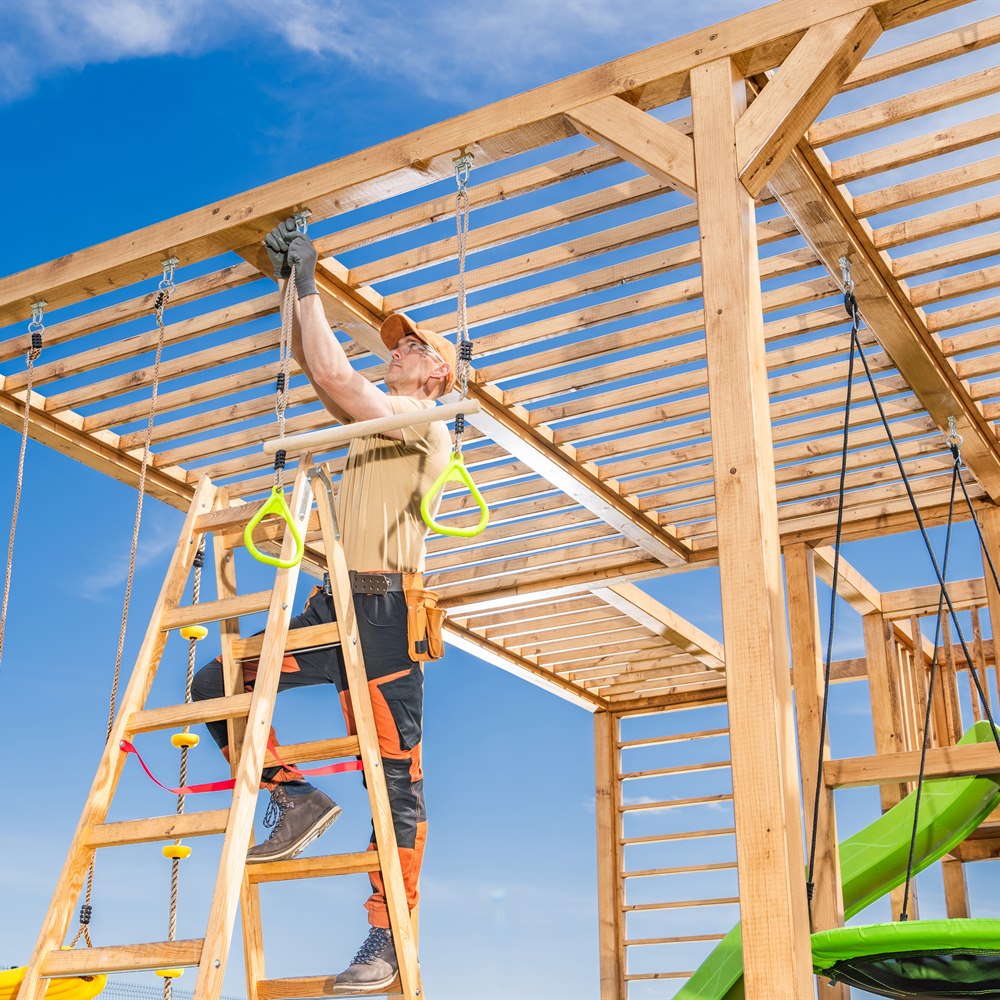
How to avoid it: Wooden playsets that aren’t maintained develop rough surfaces and structural deterioration within a few years. Hardware loosens from use and weather cycles. Avoid it by building annual maintenance into your spring routine: tighten all hardware, sand any rough spots, inspect for rot at ground contact points, and apply sealant or stain on the appropriate schedule. This two to three hour annual task keeps the equipment safe and extends its life substantially.
Mistake: Overcrowding the Space
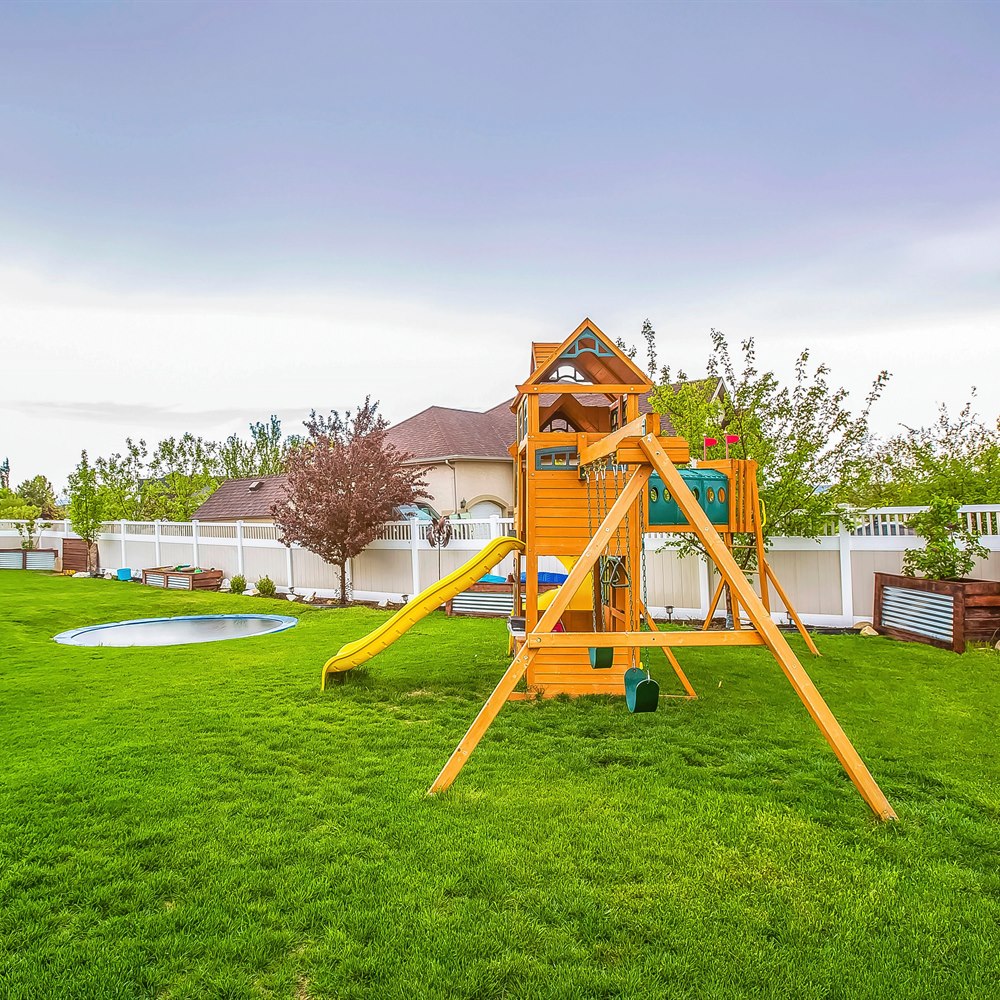
How to avoid it: A structure that consumes the entire backyard, leaving no room for the safety zone, other play, or simple lawn use, creates a safety problem and limits the outdoor space for other activities. Avoid it by measuring the yard, determining the required safety zone, and choosing a structure whose total footprint (equipment plus safety zone) fits comfortably within the available space. If the yard is small, a simpler structure that fits properly is a better choice than an elaborate one that doesn’t. (For more on this, see Playground Equipment Safety: What Every Parent Should Know.)
Why Researching Before Buying Matters
Backyard playground equipment is a purchase where research before buying prevents most of the common mistakes, because the errors are predictable and the information to avoid them is available. Reading safety guidelines from the Consumer Product Safety Commission takes thirty minutes and addresses entrapment, fall zones, and surfacing requirements in clear terms. Reading reviews from parents who purchased specific structures twelve to eighteen months earlier reveals how the equipment held up, which features their children actually used, and whether the assembly experience matched the description. Visiting a neighbor’s or friend’s installed playset of a brand or tier you’re considering is the most efficient research of all, since it answers appearance, scale, and condition questions that no photograph fully captures. The homeowners who report the most regret about playground purchases are consistently those who bought quickly on price, catalog appearance, or a sale without understanding the total cost, age appropriateness, or yard fit. The research investment of two to three hours before purchase eliminates most of those regret scenarios. (For more on this, see How to Find the Best Backyard Playground Equipment.) The CPSC’s Public Playground Safety Handbook sets out fall zones, protective surfacing depth, and entrapment clearances.
The Mistake of Buying Purely on Price
Buying playground equipment at the lowest available price for the features shown is a mistake that compounds through several consequences. Low-price equipment is typically manufactured to margins that require compromises in lumber quality, hardware grade, and finish protection. The customer who pays $900 for a structure listed at $2,500 elsewhere is almost certainly receiving meaningfully lower-quality lumber, thinner hardware, and a finish that protects for one season. These compromises become visible within two to three years as checking lumber, rusting hardware, and loose connections accumulate into a structure that requires either significant maintenance or early replacement. The families who report the highest satisfaction with playground equipment purchases are almost uniformly those who spent at or above mid-range on an established brand, maintained it consistently, and used it for eight to twelve years before passing it on or selling it. (For more on this, see Hidden Costs of Playground Equipment.)
Getting It Right
Install appropriate safety surfacing, choose for your child’s future ages not just today, place equipment in natural sightlines, maintain annually, and size to fit your yard with safety clearance. When you’re ready for professional installation, connect below.
Ranges here are national ballpark figures, not quotes. Actual pricing varies by region, home condition, materials, and contractor. How we source cost data.
Frequently Asked Questions
Installing without safety surfacing. Grass and dirt aren't adequate to prevent serious injury in falls from elevated platforms. Engineered wood fiber, rubber mulch, or poured rubber in the safety zone around and under the equipment is the most consequential safety investment. Install appropriate surfacing before the equipment is used.
Often because they were sized for the child's current age only, and the child outgrows it within a year or two. Or they're placed out of natural sightlines from the house, reducing parental supervision ease and children's connection to the play area. Buying for a span of ages and placing in visible locations both improve long-term use.
Wooden playsets develop rough surfaces and structural deterioration within a few years without maintenance. Hardware loosens from use and weather. Annual inspection and tightening, sanding rough spots, and applying sealant on schedule keep the equipment safe and extend its life. This two to three hour annual task prevents the alternative of a deteriorating structure that becomes unsafe.
Yes. A structure that consumes the entire yard without adequate safety clearance creates a safety problem and limits other outdoor use. The required safety zone extends several feet beyond the equipment in all directions. Measure the yard, determine the safety zone, and choose a structure whose total footprint fits comfortably. A simpler structure that fits properly is better than an elaborate one that doesn't.
In natural sightlines from the main living area or kitchen window. Structures visible from where parents spend time get significantly more use because supervision is easier and children feel more connected to the outdoor play area. This placement decision affects use frequency more than any other factor after the initial purchase.