How Do You Find the Best Backyard Playground?
The best backyard playground equipment is safe for the children using it, appropriately sized for your yard and their ages, durable enough to last through years of play, and installed correctly. Here’s how to identify it among the many options available.
Safety Certification Comes First
Before any other consideration, look for equipment that meets ASTM F1148 (the standard for home playground equipment) and Consumer Product Safety Commission guidelines. These standards address structural integrity, spacing dimensions that prevent entrapment, hardware requirements, and age-appropriate design. Manufacturers who test and certify to these standards are making a genuine commitment to safety engineering. Equipment without these certifications may look similar but hasn’t been evaluated for the specific hazards that cause playground injuries. (For more on this, see Playground Equipment Safety: What Every Parent Should Know.)
Choose Cedar or Quality Composite for Residential Use
Within residential-grade wooden playsets, cedar is the preferred wood because it’s naturally rot-resistant without chemical treatment, takes sealant well, and doesn’t raise the concerns that some pressure-treated chemicals do in play equipment. Quality composite structures eliminate wood maintenance entirely and are appropriate for families who want a lower-maintenance option. Avoid metal sets at the low end for anything beyond a very basic swing: they rust, provide limited play value, and deteriorate quickly in outdoor conditions. (For more on this, see Common Playground Equipment Mistakes to Avoid.)
Match the Scale to Your Yard and Children
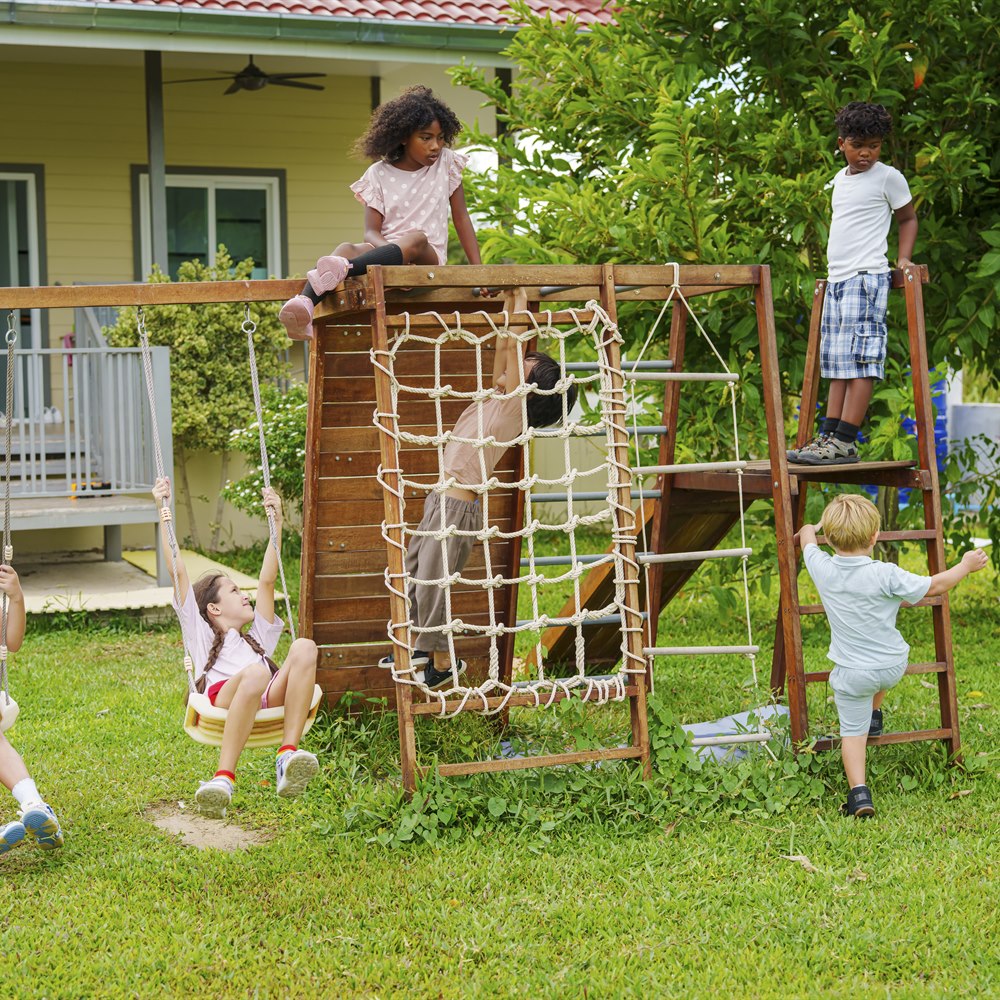
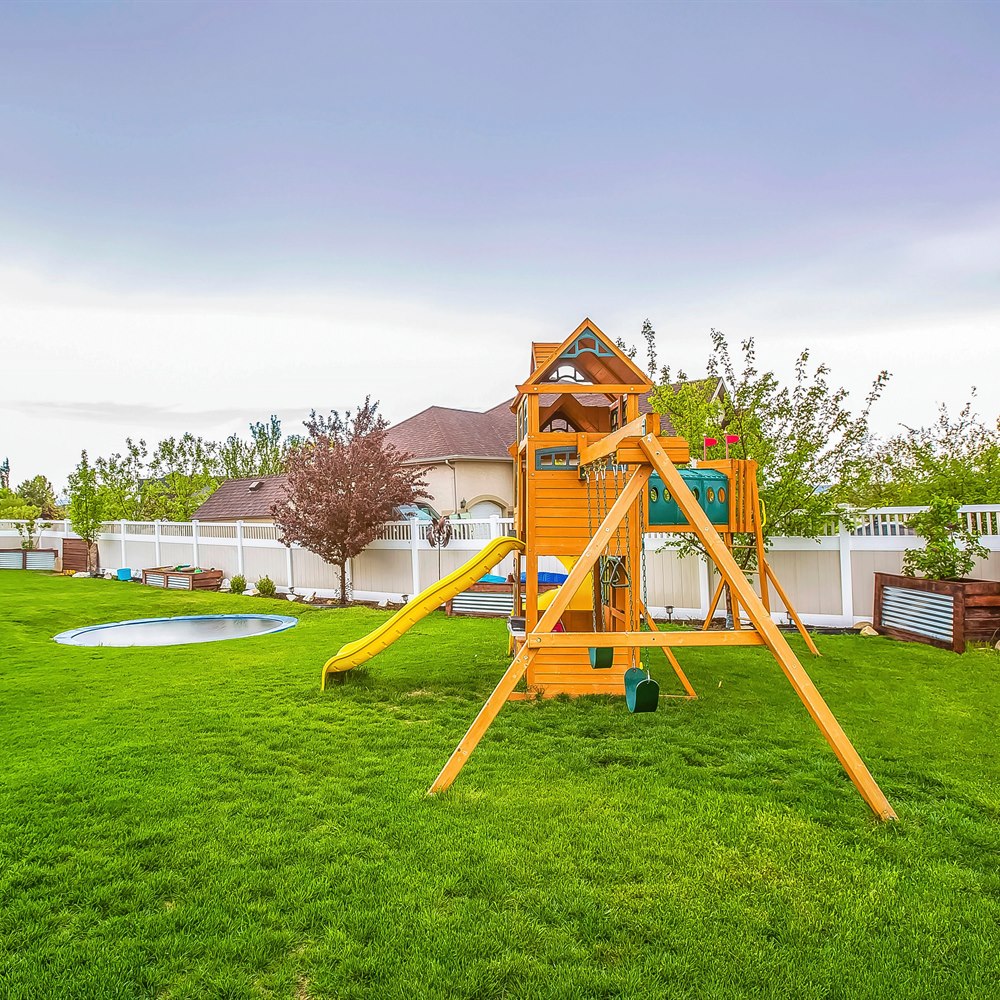
The best playground is the one that fits your yard with appropriate safety clearance and serves your children’s ages and interests. An elaborate structure in a yard too small for the safety zone, or a toddler-focused structure bought when the child is already five, represents mismatched scale. Measure the available space, determine the safety zone required for any structure you’re considering, and confirm the equipment fits before purchase. Then match the feature set to your children’s current ages and near-future interests. The CPSC’s Public Playground Safety Handbook sets out fall zones, protective surfacing depth, and entrapment clearances.
Look for Strong Warranty and Brand Track Record
Established playground brands with a decade or more of residential market history and verifiable customer reviews carry a meaningful warranty (typically five to fifteen years on structural components) and demonstrate that their products perform in the field rather than just on paper. For equipment your children will climb on daily, brand track record and warranty depth matter more than for many other purchases, since you’re trusting the structural integrity of something that carries weight and dynamic load repeatedly.
Professional Installation Is Part of the Best Outcome
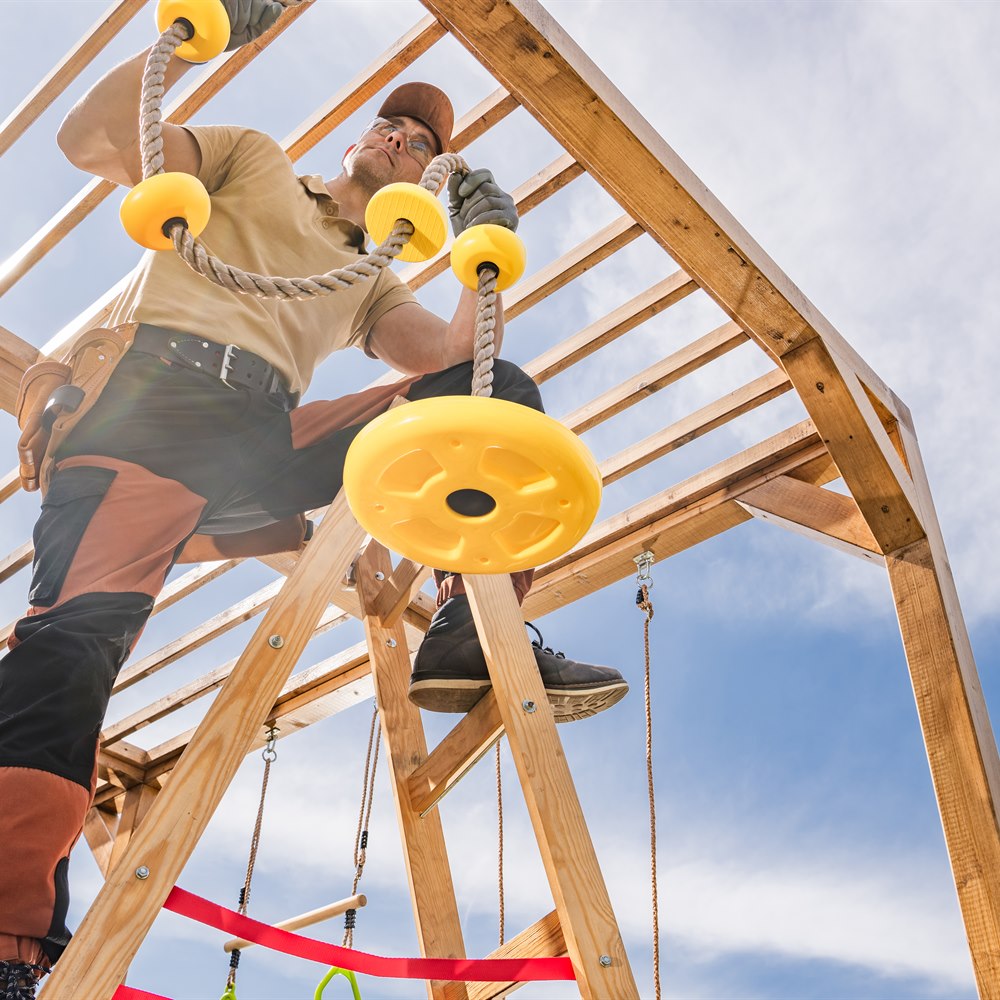
Even the best equipment installed incorrectly creates safety problems. Professional installation ensures level placement, appropriate anchoring for your specific soil conditions, correct hardware torque on all fasteners, and proper chain and swing attachment. For mid-range and larger structures, installation by a professional who works with the equipment regularly produces a better, safer result than owner assembly, and the cost is modest relative to the equipment investment.
Plan the Safety Zone Before Delivery
Order safety surfacing and prepare the installation area before the equipment arrives. Engineered wood fiber or rubber mulch in the appropriate depth across the safety zone should be in place before the first use. Planning this in advance, rather than as an afterthought after the excited children want to play immediately, ensures the most important safety element is in place when the equipment goes up.
Where to Find Reliable Reviews and Recommendations
The most useful reviews for playground equipment come from parents who have used a specific structure for at least a full year, have children in the age range the equipment targets, and describe specific details rather than general satisfaction. Review platforms that filter by verified purchase and show date of review allow you to find reviews from the right time horizon. Playground-specific parenting forums and neighborhood groups are also valuable because they surface regional information, such as which brands hold up in humid climates or which structures fit narrow yards, that general retailer reviews don’t capture. Asking specifically in neighborhood or parent groups for recommendations from families whose yards and children are similar to yours produces more relevant input than reading aggregate ratings that average across widely different use cases. Finally, manufacturer warranty claims processes and customer service quality are worth researching, since a fifteen-year structural warranty is only valuable if the company honors it when needed, and forum discussions often surface real experiences with warranty claims that the brand’s marketing naturally doesn’t.
Finding the Right Equipment
Safety certification, appropriate wood or composite material, matched scale, brand track record, professional installation, and safety surfacing in place combine to produce a backyard playground that serves your family safely for many years. When you’re ready for equipment recommendations and installation, connect with local pros below. (For more on this, see Questions to Ask When Buying Backyard Playground Equipment.)
Frequently Asked Questions
Look for ASTM F1148 certification and CPSC compliance, cedar or quality composite construction for residential wood sets, appropriate scale for your yard (with safety zone) and children's ages, established brand with strong structural warranty, professional installation, and safety surfacing (engineered wood fiber or rubber mulch) installed before first use.
Cedar is naturally rot-resistant without chemical treatment, takes sealant well, and avoids the concerns that some pressure-treated chemical formulations raise for play equipment children contact daily. Quality cedar sets last ten to fifteen years with reasonable maintenance and are the preferred residential wood option.
That it fits your yard with appropriate safety clearance, not just that it fits the footprint. Measure available space, determine the manufacturer's recommended safety zone for any structure you're considering, and confirm the equipment plus safety zone fits comfortably. A structure that doesn't leave appropriate safety clearance creates a hazard regardless of quality.
Yes, meaningfully. Established brands with residential market history, verifiable reviews, and structural warranties of five to fifteen years have demonstrated performance in the field. For equipment children climb on daily, brand track record and warranty depth matter more than for many purchases since you're trusting structural integrity under repeated dynamic load.
For mid-range and larger structures, yes. Professional installation ensures level placement, appropriate anchoring for your soil, correct hardware torque, and proper swing attachment. The cost is modest relative to equipment investment, and a correctly installed, properly anchored structure is meaningfully safer than one assembled by an owner unfamiliar with the specific kit.