What Goes Wrong With Leaf Management?
Leaf management looks simple but has several common failure modes that result in lawn damage, extra work, or a property that doesn’t actually get managed well through the season. Here’s what goes wrong and how to avoid it.
Mistake: Waiting Until All Leaves Have Fallen
How to avoid it: Waiting to manage leaves until every tree has dropped produces a heavy, wet, often-matted accumulation that’s harder to remove and more damaging to the turf than managing accumulation progressively. Leaves left through rain and cool temperatures mat, begin to decompose, and create the conditions for disease. Avoid it by starting leaf management when leaves begin falling rather than when they’ve all come down, making two or three lighter visits rather than one overwhelming season-end cleanup. (For more on this, see How to Prepare Your Yard for Fall Leaf Season.)
Mistake: Only Clearing the Lawn and Leaving Beds
How to avoid it: Blowing leaves off the lawn and into the beds, or clearing the lawn while leaving beds leaf-covered, gives the property an incomplete appearance and leaves decomposing material sitting on perennials and shrubs through winter. Leaves in beds can smother overwintering perennials and provide habitat for pests. Avoid it by including bed cleanup in the scope, whether done concurrently with lawn clearing or as a separate pass. If budget requires prioritization, turf first and beds second is the right sequence, but don’t skip beds entirely.
Mistake: Mulching Too Thick a Layer at Once
How to avoid it: Mulching leaves with a mower is effective, but trying to mulch a very thick accumulation at once clogs the mower, leaves visible leaf pieces on the turf rather than fine particles that fall through, and can mat rather than shred the material. Avoid it by mulching more frequently when the layer is light enough to shred effectively, or by removing very heavy accumulations before mulching a thinner top layer. The goal is fine particles that disappear into the turf, not ground leaves sitting visibly on the surface.
Mistake: Blowing Leaves Into the Street
How to avoid it: Blowing leaves into the street is illegal in many municipalities, creates storm drain problems, and is bad neighbor practice. Leaves in storm drains contribute to nutrient pollution in waterways. Avoid it by blowing toward the curb for municipal pickup (where that service exists) rather than into the street, or by consolidating and bagging for disposal or composting. A crew that consistently blows leaves into the street is creating a liability; professional services should be aware of local ordinances.
Mistake: Ignoring Leaves in Gutters
How to avoid it: Leaves in gutters create water backup, ice dams in freeze climates, and water damage to fascia and foundations. Clearing the lawn and beds while leaving gutters packed with leaves addresses only part of the fall cleanup need. Avoid it by adding gutter cleaning to the fall cleanup scope, at least one annual cleaning at the end of the leaf season when the final accumulation is complete. This is a small add-on relative to the value it provides in preventing water damage. (For more on this, see Why Removing Leaves Matters: The Lawn Case for Fall Cleanup.)
How Equipment Use Causes Problems
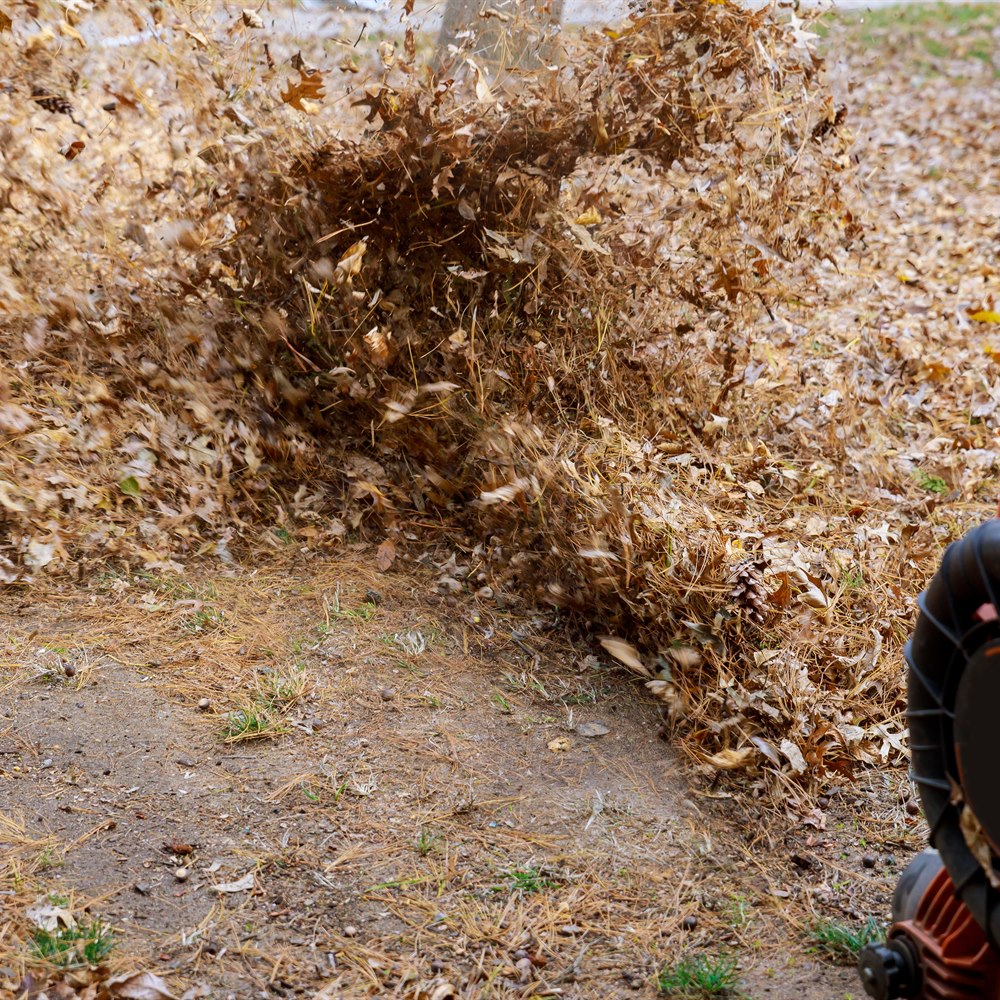
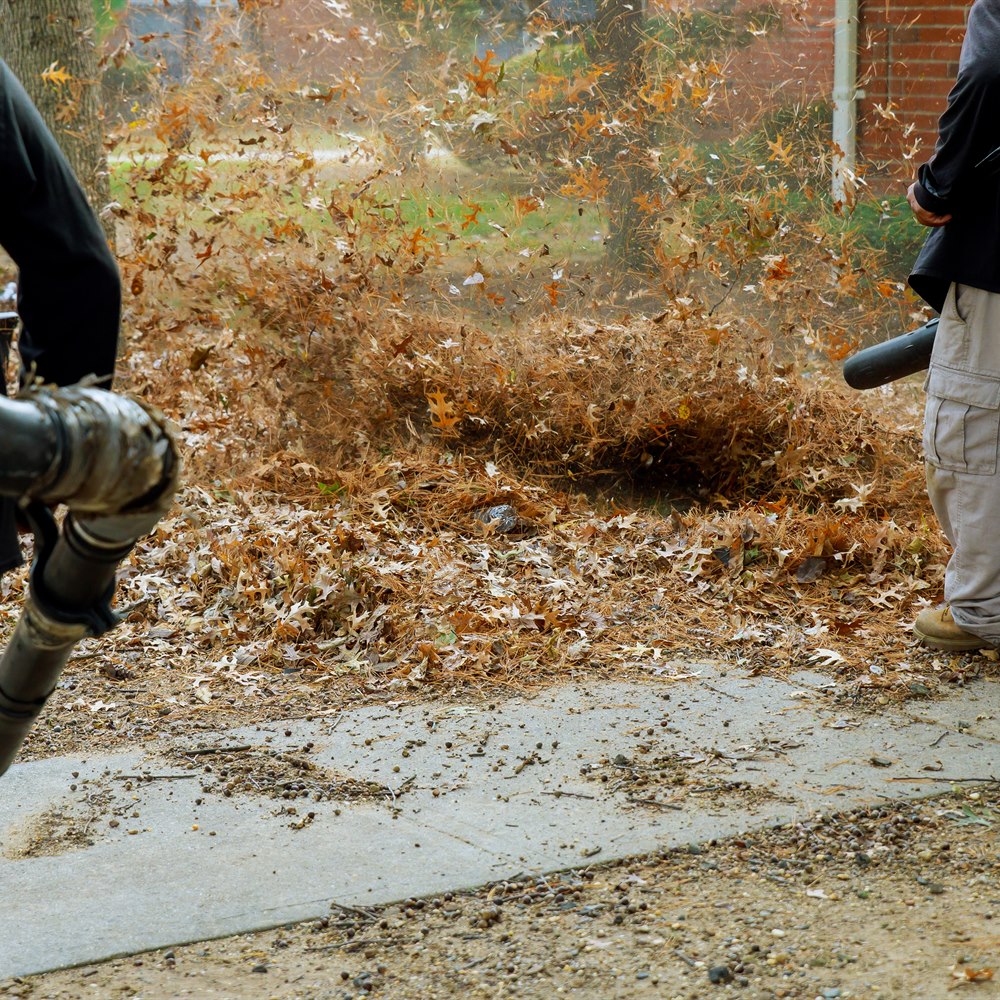
Many leaf management mistakes are equipment-use mistakes rather than judgment mistakes, and understanding them helps avoid damage to the property and to neighboring properties. The most common is directing the blower exhaust toward plantings, structures, or neighbors without controlling the direction of the debris stream. Blowers concentrate a high-velocity air stream, and undirected use displaces mulch from beds, deposits leaves into newly cleaned areas, and can damage tender plants or hard surfaces. Using a blower effectively means directing the airflow consistently toward a collection point, working methodically in one direction, and reducing power near beds and obstacles to avoid disturbing mulch or plants.
Timing blower use for when neighbors are present, using blowers in residential areas before quiet hours, and being attentive to where debris is being displaced rather than just where it’s coming from are practices that distinguish professional crews from those who create problems while doing the work. For homeowners doing their own leaf management, developing a systematic approach, working consistently from one end of the property toward a collection point and clearing hard surfaces last, is far more effective than random passes that redistribute leaves rather than consolidate them. The investment in a backpack blower over a handheld, even for modest properties, is often recovered quickly in reduced effort and better results because the additional airflow allows leaves to be directed more precisely and accumulated more efficiently, reducing the number of passes needed. (For more on this, see Leaf Removal vs. Leaf Mulching: Which Is Better?.)
Managing Leaves Well
Start early rather than waiting, include beds in the scope, mulch when the layer is light enough to shred effectively, keep leaves out of the street and storm drains, and don’t neglect gutters. When you’re ready for professional service that avoids these mistakes, connect below.
Frequently Asked Questions
Waiting until all leaves have fallen to manage them. This produces a heavy, wet, often-matted accumulation that's harder to remove and more damaging to turf than managing progressively. Starting when leaves begin falling and making two or three lighter visits is better for the lawn and less work than one overwhelming season-end cleanup.
Yes. Leaves in beds can smother overwintering perennials and provide habitat for pests, and a cleared lawn bordered by leaf-filled beds looks incomplete. Include bed cleanup in the scope. If budget requires prioritization, turf first and beds second, but don't skip beds entirely.
A layer thin enough to shred into fine particles that fall into the turf rather than sitting visibly on the surface. Very thick accumulations clog the mower and leave unshredded material that mats rather than decomposes. Mulch more frequently when the layer is light, or remove heavy accumulations before mulching a thinner top layer.
No. It's illegal in many municipalities, creates storm drain problems, and contributes to nutrient pollution in waterways. Blow toward the curb for municipal pickup where that service exists, or consolidate and bag for disposal. Professional services should be aware of local ordinances and not blow leaves into the street.
Yes, ideally. Leaves in gutters create water backup, ice dams in freeze climates, and water damage to fascia and foundations. Adding gutter cleaning at the end of the leaf season when final accumulation is complete is a small add-on that prevents significant water damage and completes the fall cleanup properly.