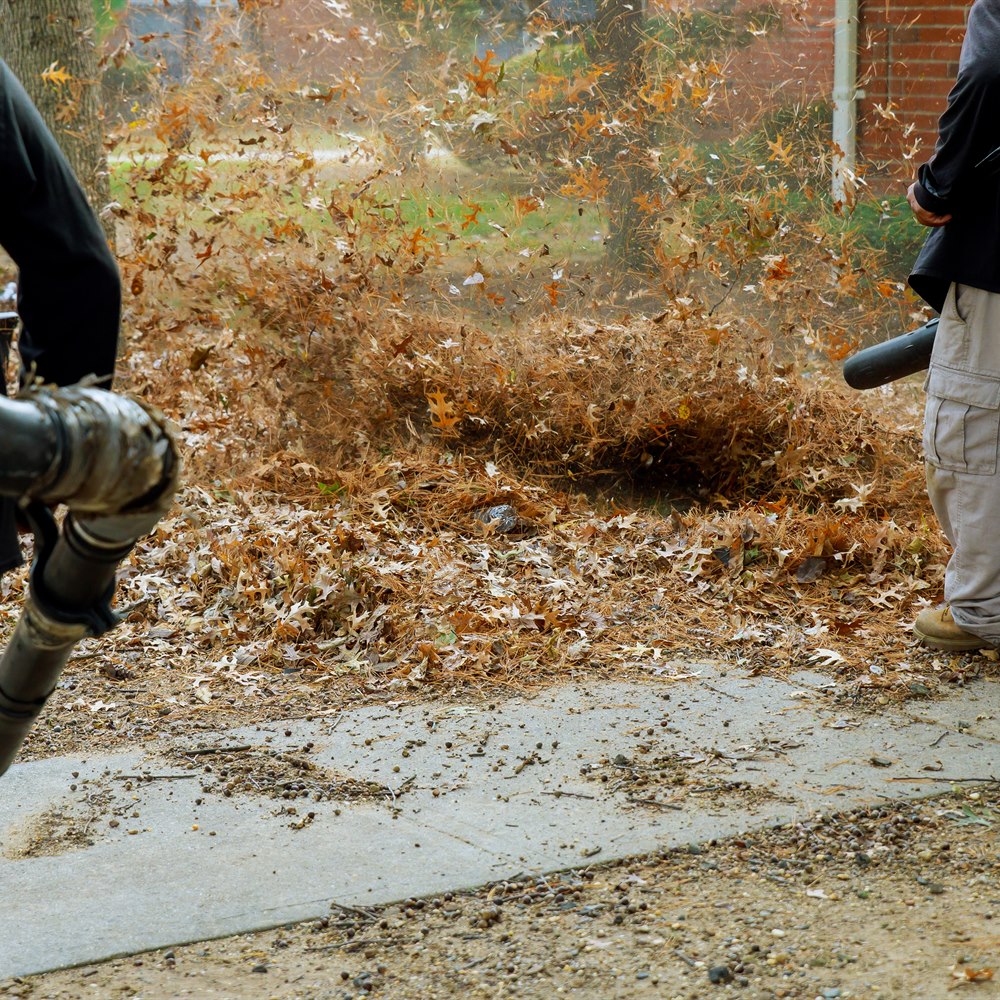
How Do You Prepare Your Yard for Leaf Season?
Schedule aeration and overseeding in September, book leaf removal service in August or September, sharpen the mulching blade, finish bed maintenance, and look up your municipal leaf pickup schedule. Proactive preparation in early fall reduces the work of leaf management and protects the lawn through the season. Here is what to do before significant leaf drop begins.
Aerate Before Leaf Season
Fall core aeration in September before leaves begin falling in volume opens the soil for the mulched leaf fragments and fertilizer applications to reach the root zone effectively. Aerating through a layer of leaves or mulched debris is less effective than aerating on clean turf. Schedule fall aeration and overseeding in early September, before the primary leaf drop window.
Book Leaf Removal Service Early
As noted in the timing guide: book leaf removal in August or September for fall service. Companies fill their October and November schedules quickly. Waiting until leaves are on the ground to search for service often results in 3 to 4-week waits during the critical removal window.
Check Your Mulching Blade
If you plan to mulch leaves with your mower, confirm your mulching blade is sharp and installed correctly before leaf season. A dull mulching blade tears leaves rather than chopping them finely, leaving ragged pieces that are slow to decompose. Blade sharpening costs $10 to $20 at a mower service shop and takes 30 minutes.
Clear Beds Before Leaves Fall
Finishing any late-season bed maintenance cutting back perennials, pulling annuals, applying pre-emergent weed control in beds before leaves begin falling reduces the complexity of bed cleanup. Working in and around beds covered with leaves is slower and messier than working in clean beds.
Know Your Municipal Leaf Pickup Schedule
Most Midwest, Northeast, and Mid-Atlantic municipalities publish fall leaf pickup schedules beginning in October. Know your pickup dates and schedule leaf removal accordingly blowing leaves to the curb works only if pickup follows within days, not weeks. (For more on this, see Hidden Costs of Leaf Removal.)
Working With a Contractor on This Project
Getting the right outcome on any home services project starts before the work begins. A few consistent practices make the difference between a smooth project and a frustrating one.
Get at least two or three quotes. A single quote gives you no basis for comparison. Two or three quotes reveal the market rate for the work, expose scope differences between bidders, and let you assess contractor communication quality before any commitment is made. The lowest bid is not automatically the best value if the scope is thin or the materials are underspecified.
Ask for licenses and insurance before work starts. Verify current general liability insurance and, for any work involving workers on your property, workers compensation coverage. Licensing requirements vary by state and trade; confirm the specific requirements in your jurisdiction. A licensed contractor who carries appropriate insurance protects both parties if something goes wrong during the project.
Get the scope in writing. A written proposal that specifies materials, labor scope, timeline, what is included (permits, cleanup, disposal), and warranty terms is the foundation of a professional engagement. Verbal agreements on any of these points invite misunderstanding. For any project over $500, written scope is non-negotiable.
Clarify the payment schedule upfront. A reasonable payment schedule ties major payments to project milestones: a deposit at signing, a payment at material delivery or project start, and a final payment at completion after a walkthrough confirms satisfaction. A contractor who requires full payment upfront before work begins is a red flag in any trade.
Making a Confident Decision
The information in this article is designed to help you ask better questions of the professionals you work with, evaluate their answers with more confidence, and understand the decisions involved in this type of home services project. It is not a substitute for professional assessment of your specific home. (For more on this, see Questions to Ask a Leaf Removal Service.)
Every home is different. Roof slopes, local weather, tree exposure, soil conditions, and existing system condition all affect what the right solution is for your specific situation. The general principles here apply broadly, but a professional who assesses your home in person will give you guidance that accounts for the details that general articles cannot.
When you are ready to move forward, getting at least two or three quotes from licensed, insured, local contractors is the most important practical step. It lets you compare approaches, assess contractor quality, and confirm that the solution proposed matches your specific situation and budget.
Leaf Removal Cost at a Glance
Small yard: $150 to $250 per visit for light leaf cover and quick cleanup. Most crews hold a flat minimum of $150 to $200 on a small job.
Large or wooded property: $300 to $800 per visit for heavy leaf volume and hauling. An acre or more of heavy leaf cover runs $450 to $1,000 or more.
Full fall cleanup: $200 to $600 per visit for beds, gutters, and debris beyond leaves, quoted on top of or in place of leaf-only pricing.
Overall range: $150 to $800, averaging $275. These are one-time cleanup prices, not a season; repeat visits booked on a fall schedule run $60 to $150 each.
Cost figures on this page were checked against published pricing on August 25, 2026. How we source cost data.