What Is the Best Patio Material for Your Home?
Concrete pavers are the best patio material for cold climates and stamped concrete ($14 to $22 per square foot) is the best value in warm ones, with natural stone the choice where premium aesthetics justify the cost. There is no single best material — climate, budget, maintenance tolerance, and aesthetic goals decide it.
Best for Cold Climates: Concrete Pavers
In climates with more than 15 freeze-thaw cycles per year (the upper Midwest, Northeast, and Pacific Northwest): concrete pavers are the most durable choice. The flexible sand-and-gravel base accommodates frost heave without cracking the surface. Individual pavers that shift can be re-leveled without demolition. De-icing salts affect the joint sand (not the paver units) — far less damaging than the same salts on concrete. Recommended products: Belgard, Unilock, or Techo-Bloc concrete pavers (1.5 to 2-inch thickness); tumbled or textured surface for better traction when wet. A paver patio in a cold climate, properly installed with polymeric joint sand: 30 to 50 years of service with minimal maintenance.
Best for Warm Climates: Stamped Concrete
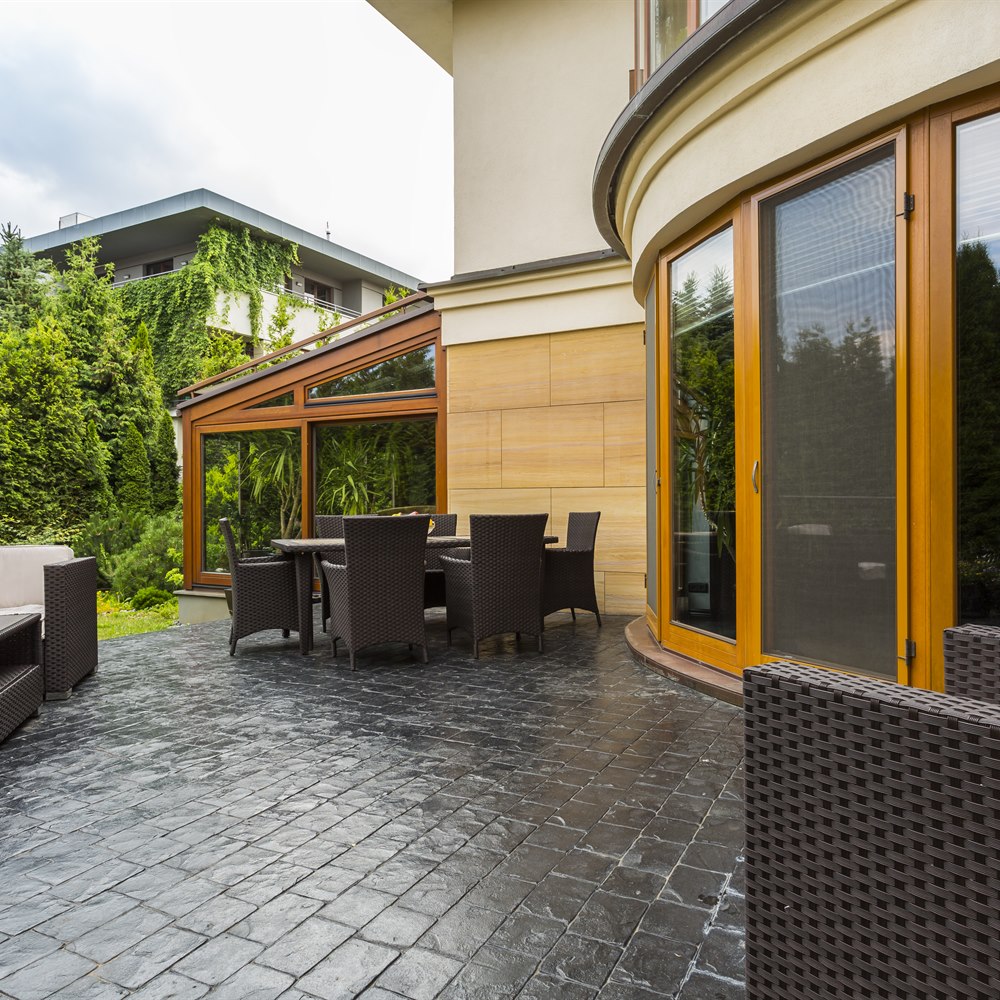
In warm climates with minimal freeze-thaw (the South, Southwest, and California): stamped concrete is the most versatile and cost-effective premium patio material. No freeze-thaw means the primary limitation of concrete (brittle in cold) is not relevant. Stamped concrete at $14 to $22 per square foot delivers the visual character of pavers or stone for less than natural stone, with unlimited design flexibility. Maintenance: reseal every 2 to 3 years with a UV-stable acrylic sealer. Anti-slip additive in the topcoat is essential for any concrete patio that may be wet (pool decks, patios in rainy climates). (For more on this, see Concrete vs. Pavers vs. Natural Stone Patio: Which Is Right?.)
Best Aesthetics: Natural Stone (Travertine or Bluestone)
For homeowners where the patio is a primary visual element of the home’s outdoor presentation: natural stone delivers a quality that manufactured products cannot fully replicate. Travertine ($15 to $25 per square foot): stays remarkably cool in full sun (making it the best pool deck material), is soft underfoot, and provides a warm Mediterranean aesthetic. Bluestone ($18 to $28 per square foot): provides a formal, timeless appearance that suits traditional and colonial homes; it is dense, durable, and handles cold climates well. Both require a higher upfront investment but provide a finished appearance that holds its visual appeal for generations. (For more on this, see Concrete vs. Pavers vs. Natural Stone: Which Patio Material?.)
Working With a Contractor on This Project
Getting the right outcome on any home services project starts before the work begins. A few consistent practices make the difference between a smooth project and a frustrating one.
Get at least two or three quotes. A single quote gives you no basis for comparison. Two or three quotes reveal the market rate for the work, expose scope differences between bidders, and let you assess contractor communication quality before any commitment is made. The lowest bid is not automatically the best value if the scope is thin or the materials are underspecified.
Ask for licenses and insurance before work starts. Verify current general liability insurance and, for any work involving workers on your property, workers compensation coverage. Licensing requirements vary by state and trade; confirm the specific requirements in your jurisdiction. A licensed contractor who carries appropriate insurance protects both parties if something goes wrong during the project. (For more on this, see Questions to Ask Before Hiring a Patio Contractor.)
Get the scope in writing. A written proposal that specifies materials, labor scope, timeline, what is included (permits, cleanup, disposal), and warranty terms is the foundation of a professional engagement. Verbal agreements on any of these points invite misunderstanding. For any project over $500, written scope is non-negotiable.
Clarify the payment schedule upfront. A reasonable payment schedule ties major payments to project milestones: a deposit at signing, a payment at material delivery or project start, and a final payment at completion after a walkthrough confirms satisfaction. A contractor who requires full payment upfront before work begins is a red flag in any trade.
How to Use This Guide
Finding the right contractor is the most important decision in any home services project. The criteria in this article reflect what distinguishes contractors who deliver excellent work from those who do not, based on the specific quality factors that matter for this type of work.
Use the criteria here as a screening framework, not a checklist to be completed mechanically. A contractor who scores well on the criteria that matter most for your specific project, home, and concerns is a better match than one who technically checks every box but does not communicate clearly or does not have local experience with your type of home.
The right contractor is one who provides a clear, written proposal with specific materials and scope, is licensed and insured, has verifiable local references from similar work, and backs their installation with a meaningful warranty. When you are ready to compare your options, use the button below to connect with qualified local professionals in your area.
Cost figures on this page were checked against published pricing on August 23, 2026. How we source cost data.