What Drives Gutter Guard Costs?
Gutter guard costs, from $900 to $7,000, are driven primarily by guard type, material quality, and linear footage. Here is what moves the number most.
Guard Type and Design
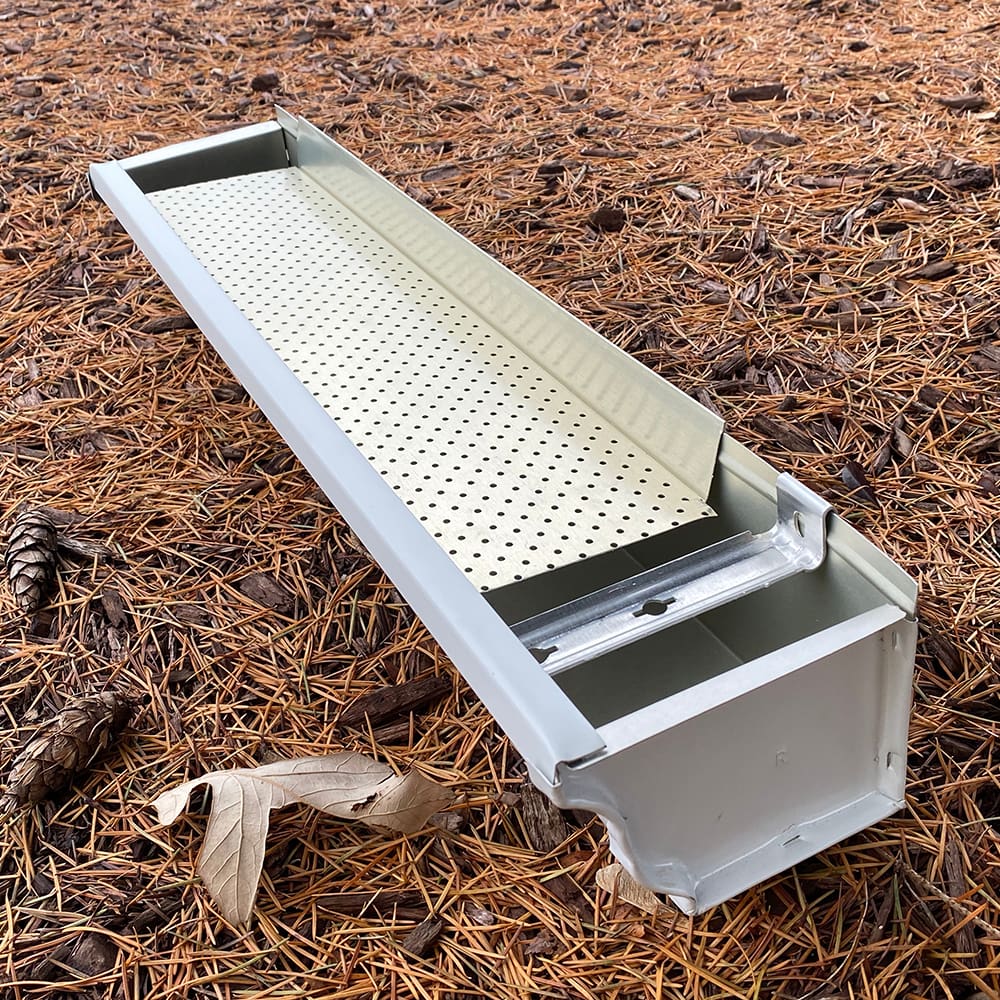
Guard type is the most direct cost driver. Mesh guards at $3 to $15 per linear foot installed span the widest range — aluminum mesh at $3 to $8, stainless micro-mesh at $8 to $15 — and, in quality aluminum or stainless versions, are among the most effective designs. Brush guards at $3 to $4 per linear foot are the least expensive option and effective for large debris but susceptible to fine debris lodging in bristles. Reverse-curve guards at $15 to $45 per linear foot installed add a surface-tension principle that works well for large debris but struggles with fine debris and very heavy rain. Premium dealer-installed systems run $40 to $62 or more per linear foot. (For more on this, see How to Choose the Right Gutter Guard Type.)
Material Quality Within a Guard Type
Within mesh guards, stainless steel micro-mesh is more durable and more effective (finer mesh openings) than aluminum mesh, which is more durable than plastic mesh. The material quality within a guard category directly affects both performance and longevity. Stainless steel micro-mesh guards cost $5 to $14 more per linear foot than plastic mesh but last 20 or more years versus 5 to 10 for plastic. (For more on this, see What Affects Gutter Guard Cost?.)
Linear Footage
Guard cost scales directly with the total linear footage of gutters on the home. A small ranch with 100 feet of gutters costs significantly less than a large two-story with 250 feet at the same per-foot rate.
Debris Environment
The debris environment affects which guard type is appropriate and therefore which cost tier applies. A property with heavy pine needle load requires a finer-mesh guard that costs more than the coarser guards adequate for leaf-only environments. Matching the guard design to the specific debris type is the most important performance decision; selecting too coarse a guard produces a guard that does not work as expected.
Getting an Accurate Price
Guard type, material quality, linear footage, and debris environment together determine the specific cost. Connect with a local pro below when you are ready for an assessment and quote.
Gutter Guard Cost at a Glance
Here is a quick reference for gutter guard cost by type. All ranges below assume a standard home with 150 linear feet of gutters. Every range below is an installed price covering material and labor except where the row says material only. Gutter cleaning before installation is an additional cost of $150 to $400 and is not included below.
| Cost Factor | Typical Range | Notes |
|---|---|---|
| Plastic mesh inserts (DIY product) | $75 to $150 in material only for 150 feet | Shortest service life (5 to 10 years), becomes brittle in cold climates, and passes fine debris through coarser mesh openings. Not recommended for cold climates or pine needle environments. |
| Brush (bristle) inserts | $450 to $600 installed (150 feet) | Easy to install and remove. Effective for leaves but fine debris (pine needles, seed pods) lodges in bristles. Service life 5 to 10 years. |
| Aluminum micro-mesh (DIY or professional) | $300 to $700 DIY material | $600 to $1,200 professionally installed (150 feet). Effective for most debris types. Service life 15 to 20 years. |
| Stainless steel micro-mesh (professional) | $1,200 to $2,250 installed (150 feet) | Most effective for pine needle and mixed debris environments. Fine mesh openings. Service life 20 or more years. |
| Reverse-curve guards | $2,250 to $6,750 installed (150 feet) | Effective for large debris; struggles with fine debris and very heavy rain. Service life 20 or more years in metal. |
| Premium dealer-installed systems | $5,900 to $9,200 installed (150 feet) | Often include no-clog guarantees and stronger warranties. |
Cost figures on this page were checked against published pricing on August 29, 2026. How we source cost data.
Planning Your Project Budget
The cost ranges in this article are based on industry data and are intended as planning benchmarks, not fixed prices. The actual cost for your project depends on your specific home, your local labor market, the current price of materials, and the scope the contractor confirms after a site inspection.
Always get at least two written quotes on equivalent defined scope before committing to any home services project. Wide price variation between quotes usually reflects differences in material quality, scope completeness (what is included and what is not), or contractor overhead and experience level rather than simple price competition.
Use the cost data in this article to ask better questions during the quoting process: What material is included? What does that per-square-foot or per-linear-foot rate include and exclude? Are permits, cleanup, and disposal included? What is the warranty on labor? These questions turn a quote into a comparable basis for decision-making. (For more on this, see Questions to Ask a Gutter Guard Installer.)