
How Do You Find a Quality Gutter Guard Installer?
Independent installers fit quality micro-mesh gutter guards for $8 to $15 per linear foot installed, while direct-sales representatives charge $6,000 to $12,000+ for an average home — 3 to 5 times the cost of equivalent or better products. Gutter guard installation has a significant high-pressure direct-sales presence, so the work is navigating it and getting a quality installation at a fair price.
Avoid High-Pressure Direct-Sales Models
LeafGuard, LeafFilter, HomeCraft, and similar brand-name systems are sold primarily through high-pressure in-home sales presentations with same-day discount offers designed to prevent comparison shopping. These products are often good quality — but the retail pricing through their representatives ($6,000 to $12,000+ for an average home) is 3 to 5 times the cost of equivalent or better products available through independent installers. The same price pressure tactic (‘if you sign today, we can honor this price’) should always be resisted. Get at least two independent installer quotes before considering any direct-sales proposal.”),
Choose Independent Installers Offering Quality Micro-Mesh
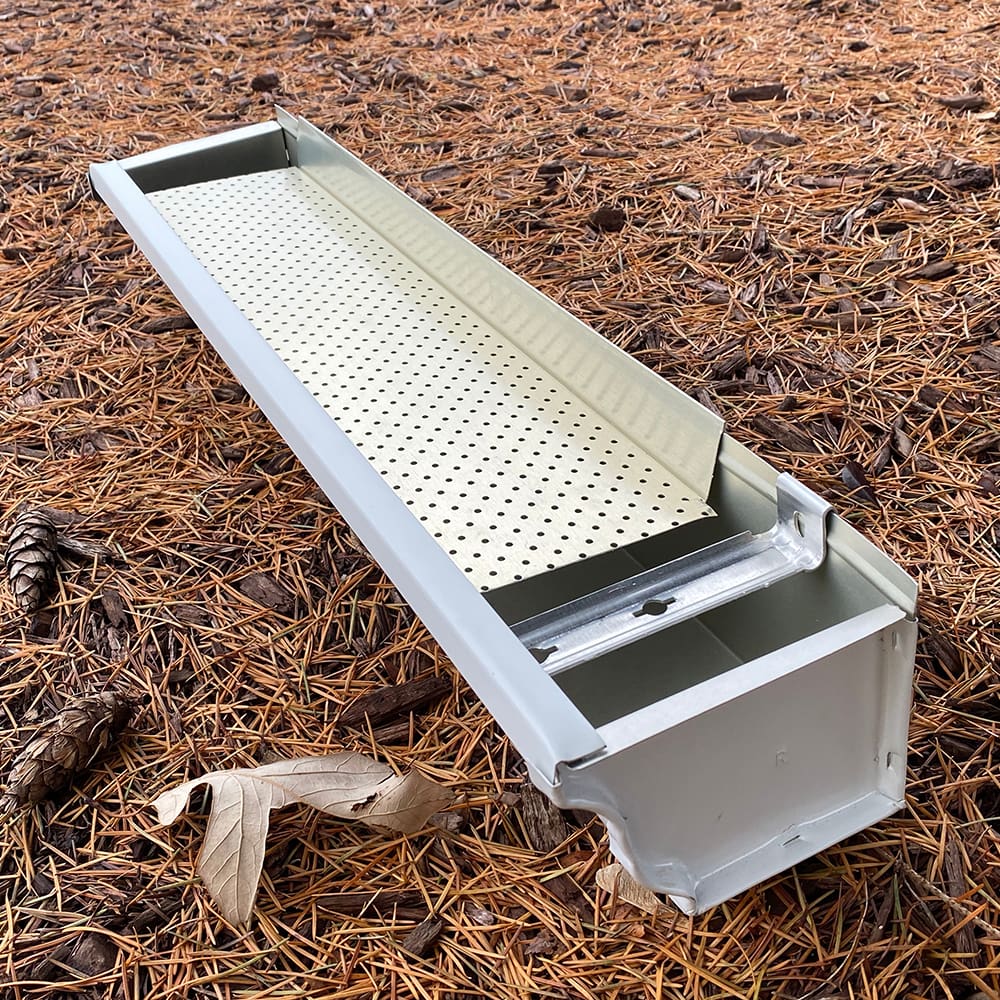
Most reputable gutter installation companies also install gutter guards — either as a standalone service or combined with new gutter installation. An independent installer who has been in the gutter business for 5+ years typically offers quality micro-mesh products from manufacturers (Raptor, Amerimax, GutterRX, or a branded equivalent) at $8 to $15 per linear foot installed — significantly less than direct-sales pricing. Ask specifically: ‘What is the opening size on your micro-mesh?’ A stainless steel micro-mesh with 0.040 to 0.050-inch openings blocks pine needles and most debris. Larger openings (1/4 inch or more) let small debris through.
Confirm the Warranty and Who Backs It
Gutter guard warranties come from the manufacturer (for the product) and the installer (for the installation). A product with a 20 to 30-year warranty is only as good as the manufacturer’s financial stability over that period — many small guard manufacturers have come and gone. Established brands with long track records and financial backing (GAF, Leaf Home, or products sold through major gutter companies) are more likely to honor long-term warranties than newer direct-to-consumer brands. Ask the installer: who is the manufacturer, what is the warranty term, and how is the warranty serviced if the product fails? (For more on this, see Questions to Ask When Getting Gutter Guard Quotes.)
Working With a Contractor on This Project
Getting the right outcome on any home services project starts before the work begins. A few consistent practices make the difference between a smooth project and a frustrating one.
Get at least two or three quotes. A single quote gives you no basis for comparison. Two or three quotes reveal the market rate for the work, expose scope differences between bidders, and let you assess contractor communication quality before any commitment is made. The lowest bid is not automatically the best value if the scope is thin or the materials are underspecified.
Ask for licenses and insurance before work starts. Verify current general liability insurance and, for any work involving workers on your property, workers compensation coverage. Licensing requirements vary by state and trade; confirm the specific requirements in your jurisdiction. A licensed contractor who carries appropriate insurance protects both parties if something goes wrong during the project.
Get the scope in writing. A written proposal that specifies materials, labor scope, timeline, what is included (permits, cleanup, disposal), and warranty terms is the foundation of a professional engagement. Verbal agreements on any of these points invite misunderstanding. For any project over $500, written scope is non-negotiable.
Clarify the payment schedule upfront. A reasonable payment schedule ties major payments to project milestones: a deposit at signing, a payment at material delivery or project start, and a final payment at completion after a walkthrough confirms satisfaction. A contractor who requires full payment upfront before work begins is a red flag in any trade.
How to Use This Guide
Finding the right contractor is the most important decision in any home services project. The criteria in this article reflect what distinguishes contractors who deliver excellent work from those who do not, based on the specific quality factors that matter for this type of work.
Use the criteria here as a screening framework, not a checklist to be completed mechanically. A contractor who scores well on the criteria that matter most for your specific project, home, and concerns is a better match than one who technically checks every box but does not communicate clearly or does not have local experience with your type of home.
The right contractor is one who provides a clear, written proposal with specific materials and scope, is licensed and insured, has verifiable local references from similar work, and backs their installation with a meaningful warranty. When you are ready to compare your options, use the button below to connect with qualified local professionals in your area.
Cost figures on this page were checked against published pricing on September 2, 2026. How we source cost data.