What Should You Ask a Retaining Wall Contractor?
A retaining wall that safely holds back soil for decades depends on hiring the right contractor and understanding how they’ll build it, especially the drainage, base, and engineering that determine whether it lasts. The right questions upfront reveal whether a contractor is experienced and thorough. Here’s what to ask before hiring.
How Will You Handle Drainage?
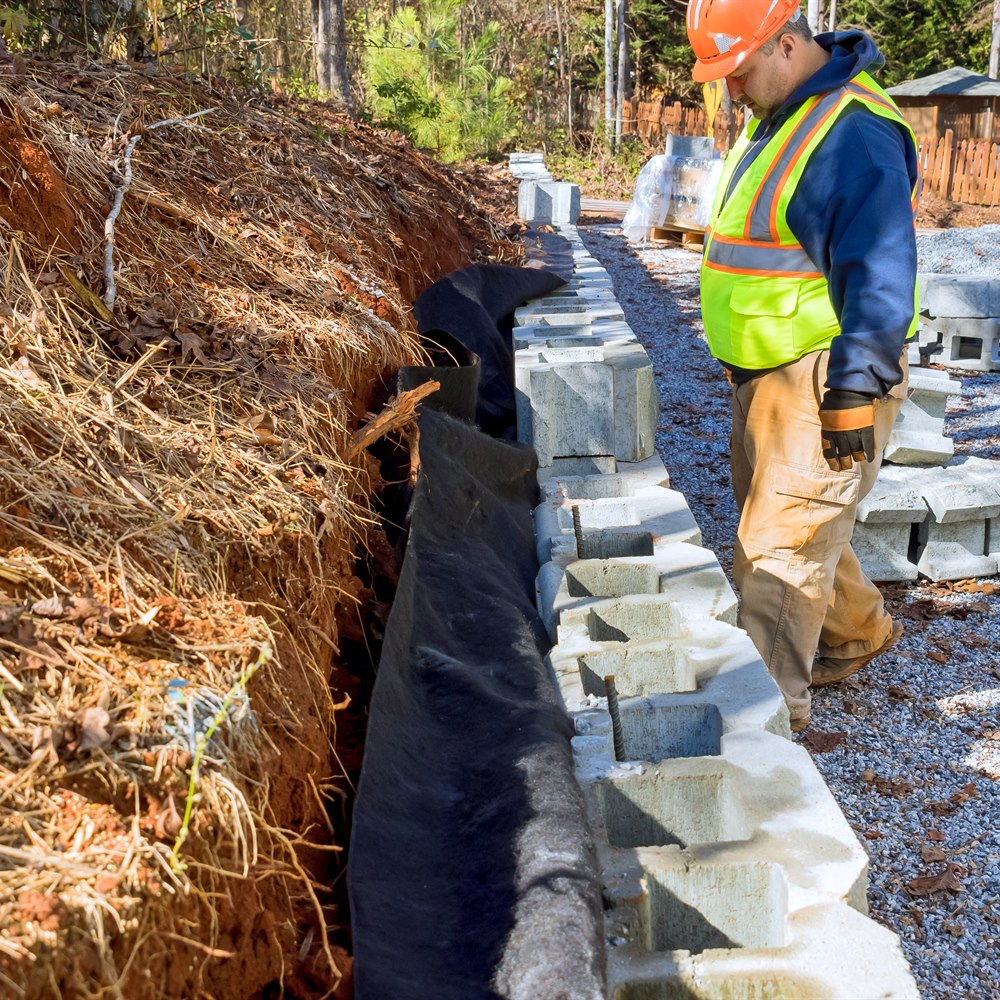
Start with drainage, the most critical factor in a retaining wall’s survival. Ask specifically how they’ll manage drainage behind the wall, gravel backfill, a drainage pipe, weep holes as appropriate. A knowledgeable contractor explains a proper drainage approach, since they know water pressure is the leading cause of failure, while a vague answer or one that glosses over drainage is a serious warning sign. Because proper drainage is what keeps a wall from failing, and because it’s invisible and easy to skip, understanding the contractor’s drainage plan is the single most important question you can ask. (For more on this, see Hidden Costs of Building a Retaining Wall.)
How Will You Prepare the Base?
Ask about the base, the foundation of a stable wall. Ask how they’ll excavate and prepare the base, the depth, the material, and how they’ll compact it. A quality contractor builds a proper base suited to the wall and soil, while an inadequate base leads to settling and leaning. Because the base determines whether the wall stays stable or fails, understanding how the contractor will prepare it is an important question. Their approach to the base, like their approach to drainage, reveals whether they do the invisible fundamentals right that determine the wall’s longevity.
Do I Need Engineering or a Permit?
Ask whether your wall requires engineering or a permit, and how they’ll handle it. For taller or load-bearing walls, engineering and a permit are often required, and a knowledgeable contractor knows the local requirements and addresses them. A contractor who’s aware of and handles the engineering and permit requirements is being professional and ensuring the wall is safe and legal, while one who dismisses or is unaware of these for a significant wall is a concern. Understanding the engineering and permit situation ensures your wall is properly designed, safe, and code-compliant.
Are You Experienced With This Type of Wall?
Ask about their experience with your type and size of wall, a low garden block wall, a tall engineered wall, a natural stone wall. Each requires different skills, and a tall or structural wall especially demands relevant expertise. A contractor experienced with walls like yours builds it correctly, while one unfamiliar with your type or scale may produce a wall that fails. Confirming they regularly build walls like yours, ideally with examples to see, reduces the risk. Relevant experience with your specific type and size of retaining wall is a good sign you’ll get a wall that’s built right and lasts. (For more on this, see How to Find the Best Retaining Wall Contractor.)
Can I See Your Work, and Are You Licensed and Insured?
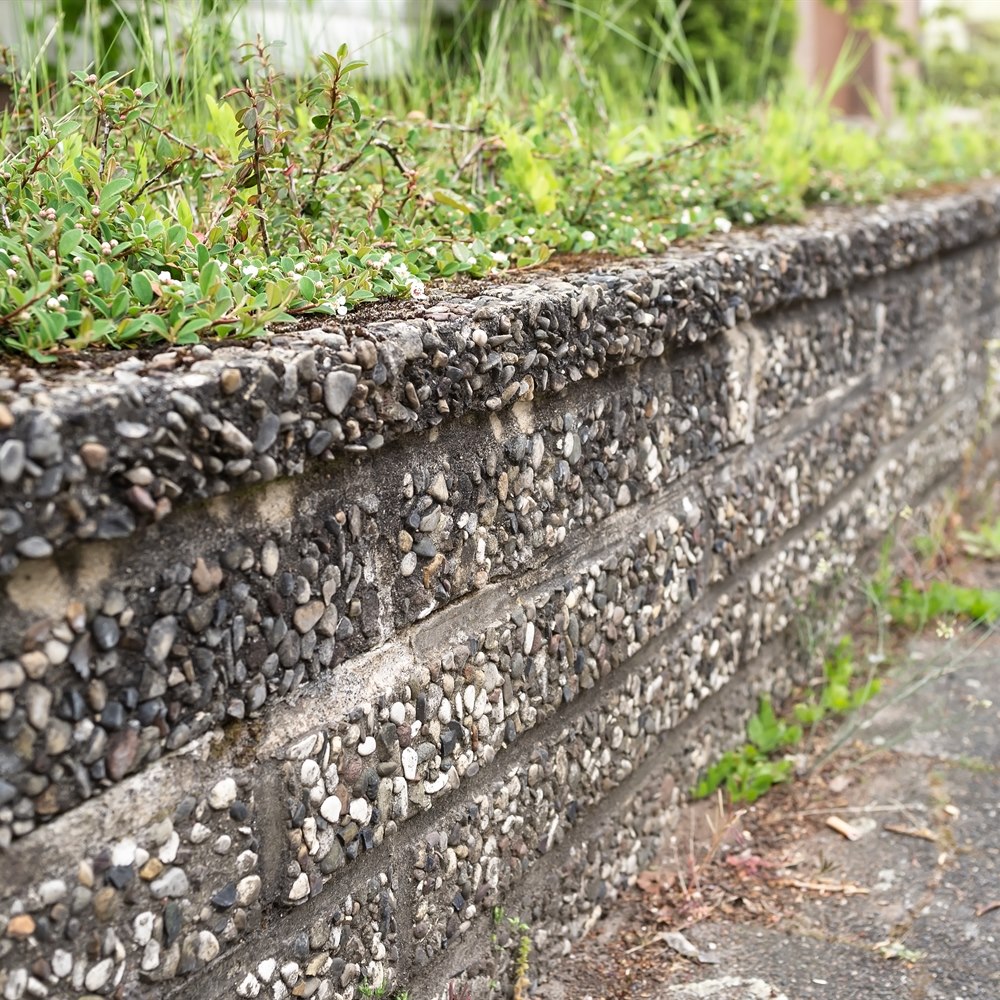
Ask to see examples of completed retaining walls, ideally some that are a few years old to see how they’ve held up, and confirm they’re licensed (where required) and insured. A retaining wall’s true quality shows over time (whether it stays stable or leans), so older examples are valuable. Proper credentials and insurance protect you. A contractor proud of their work, with older walls that have held up, and properly credentialed and insured, is demonstrating capability and professionalism. These are important due diligence for a structural project that must last.
Do You Guarantee Your Work?
Ask whether they guarantee their work and what it covers. A retaining wall is a structural element where problems (leaning, bulging, failure) may take time to appear, so a guarantee gives you valuable recourse if the wall has an issue. A contractor confident in their drainage, base, and construction stands behind the wall with a warranty. Understanding the guarantee, what’s covered and for how long, matters for a structure that must perform for years. A meaningful guarantee reflects the contractor’s confidence in their work and provides important protection for a significant structural investment.
Asking About the Wall’s Design and What Happens If Problems Arise
Two additional lines of questioning help complete your evaluation of a retaining wall contractor. First, ask about the wall’s design and how they’ve accounted for your specific situation, the height, the loads, the soil, and the drainage. A knowledgeable contractor can explain how they’ve designed the wall to handle your particular conditions, why they’ve chosen a certain approach, base, and drainage plan, and, for a significant wall, how the engineering addresses the forces involved. A contractor who can articulate the reasoning behind their design demonstrates the understanding that produces a wall suited to your situation, while one who treats every wall the same or can’t explain how they’ve accounted for your conditions may be applying a generic approach that doesn’t fit your specific needs. Understanding the design reasoning also helps you gauge whether the contractor genuinely grasps the structural demands of your project.
Second, clarify what happens if the wall develops problems after construction, both what their guarantee covers and how they’d respond. Retaining walls can develop issues over time, and because these may take time to appear and stem from the invisible fundamentals, knowing the contractor’s accountability matters. Ask specifically what their warranty covers, leaning, bulging, drainage failure, and for how long, and how they’d handle a callback if the wall showed signs of trouble. A contractor confident in their drainage, base, and construction stands behind the wall and responds professionally to any issue, while vagueness about warranties or callbacks is a warning sign about both their confidence and your protection. Since a retaining wall is a structural investment whose quality proves itself over years, understanding how the contractor stands behind their work, alongside the questions about drainage, base, engineering, and design, gives you a complete picture of whether they’ll build a wall that lasts and support it if problems arise. This thorough evaluation, covering both how they’ll build the wall and how they’ll stand behind it, is exactly the due diligence a significant structural project warrants before you commit.
Putting It Together
These questions, especially about drainage, the base, and engineering, ensure you hire a thorough, experienced contractor who’ll build a retaining wall that lasts. A quality contractor answers them all clearly, particularly on drainage. When you’re ready to get quotes from qualified local pros, connect below. (For more on this, see Common Retaining Wall Mistakes and How to Avoid Them.)
Frequently Asked Questions
How they'll handle drainage (the most critical factor, gravel backfill, drainage pipe, weep holes), how they'll prepare the base (depth, material, compaction), whether you need engineering or a permit and how they'll handle it, whether they're experienced with your type and size of wall, whether you can see their work (ideally older walls) and they're licensed and insured, and whether they guarantee their work.
How they'll handle drainage behind the wall, gravel backfill, a drainage pipe, weep holes as appropriate, since water pressure is the leading cause of retaining wall failure. A knowledgeable contractor explains a proper drainage approach, while a vague answer that glosses over drainage is a serious warning sign. Because proper drainage keeps a wall from failing and is easy to skip, it's the single most important question to ask.
Yes. Ask how they'll excavate and prepare the base, the depth, the material, and how they'll compact it. A quality contractor builds a proper base suited to the wall and soil, while an inadequate base leads to settling and leaning. Because the base determines whether the wall stays stable or fails, understanding how the contractor will prepare it reveals whether they do the invisible fundamentals right.
Yes. Ask whether your wall requires engineering or a permit and how they'll handle it. For taller or load-bearing walls, both are often required, and a knowledgeable contractor knows the local requirements and addresses them. A contractor aware of and handling these is being professional and ensuring the wall is safe and legal, while one who dismisses or is unaware of them for a significant wall is a concern.
Yes. A retaining wall is a structural element where problems (leaning, bulging, failure) may take time to appear, so a guarantee gives valuable recourse if the wall has an issue. A contractor confident in their drainage, base, and construction stands behind the wall with a warranty. Understanding the guarantee, what's covered and for how long, matters for a structure that must perform for years, and a meaningful one reflects confidence in their work.