
How Do You Choose the Best Gutter Guards?
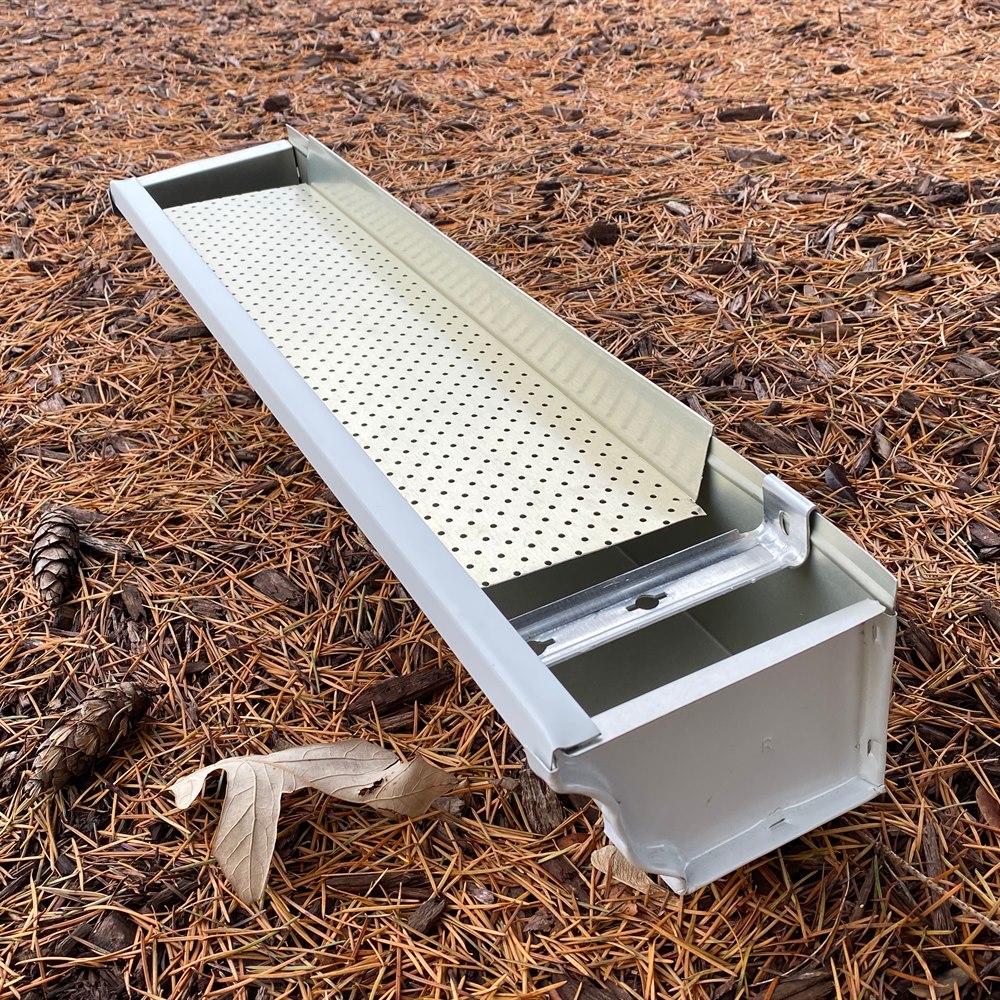
Stainless steel micro-mesh with openings under 50 microns is the best gutter guard for most homes, and it lasts 20 or more years against 15 to 20 years for aluminum and 5 to 10 for plastic. Start by identifying the debris that actually falls on your property, because that determines which design works, then confirm the guard fits your gutter profile and needs only the maintenance you can commit to.
Identify the Dominant Debris First
This is the most important step. Walk the property perimeter in fall and look at what is accumulating in the gutters: large leaves (oak, maple, sycamore), pine needles, small seed pods (maple, elm, sweetgum), or a mix. The dominant debris type determines which guard design is effective. A guard that works excellently in a leaf-only environment may be completely ineffective in a pine needle environment.
Micro-Mesh for Most Debris Environments
Stainless steel micro-mesh with fine openings (under 50 microns) is the most versatile guard design and the recommended choice for mixed debris environments, pine needle environments, and any environment where long-term maintenance reduction is the primary goal. It outperforms brush guards (which trap fine debris) and reverse-curve guards (which struggle with fine debris and heavy rain) across the widest range of conditions. Aluminum micro-mesh is appropriate for leaf-dominant, lower-debris environments at lower cost.
Choose Metal Over Plastic for Longevity
Plastic and vinyl guard components become brittle with UV exposure and freeze-thaw cycling, typically failing within 5 to 10 years. Aluminum guards last 15 to 20 years. Stainless steel micro-mesh guards last 20 or more years. The per-year cost of stainless steel guards over a 20-year service life often compares favorably to plastic guards that require replacement in 7 to 10 years. Choose metal construction for any guard intended to be a long-term solution. (For more on this, see How to Maintain Gutter Guards Over Time.)
Confirm the Guard Is Compatible With Your Gutter System
Guard designs are fitted to specific gutter profiles (5-inch K-style, 6-inch K-style, half-round). Confirm the guard is designed for your specific gutter profile and that the installation method is compatible with your existing gutters and their warranty. Guards that require penetrating the gutter or modifying its profile may affect gutter warranty coverage. (For more on this, see Questions to Ask a Gutter Guard Installer.)
Set Realistic Maintenance Expectations
Choose a guard that fits the maintenance reduction you genuinely expect. Annual inspection and cleaning every 2 to 3 years is a realistic expectation for most quality metal mesh guards. If truly minimal maintenance is the goal in a heavy-debris environment, premium fine micro-mesh systems with a no-clog guarantee may justify the premium.
Making the Choice
Identify the debris type, choose stainless steel micro-mesh for most environments, select metal construction for longevity, confirm gutter compatibility, and set realistic maintenance expectations. Use the button below to connect with a local gutter guard specialist. (For more on this, see How to Choose the Right Gutter Guard Type.)
Working With a Contractor on This Project
Getting the right outcome on any home services project starts before the work begins. A few consistent practices make the difference between a smooth project and a frustrating one.
Get at least two or three quotes. A single quote gives you no basis for comparison. Two or three quotes reveal the market rate for the work, expose scope differences between bidders, and let you assess contractor communication quality before any commitment is made. The lowest bid is not automatically the best value if the scope is thin or the materials are underspecified.
Ask for licenses and insurance before work starts. Verify current general liability insurance and, for any work involving workers on your property, workers compensation coverage. Licensing requirements vary by state and trade; confirm the specific requirements in your jurisdiction. A licensed contractor who carries appropriate insurance protects both parties if something goes wrong during the project.
Get the scope in writing. A written proposal that specifies materials, labor scope, timeline, what is included (permits, cleanup, disposal), and warranty terms is the foundation of a professional engagement. Verbal agreements on any of these points invite misunderstanding. For any project over $500, written scope is non-negotiable.
Clarify the payment schedule upfront. A reasonable payment schedule ties major payments to project milestones: a deposit at signing, a payment at material delivery or project start, and a final payment at completion after a walkthrough confirms satisfaction. A contractor who requires full payment upfront before work begins is a red flag in any trade.
How to Use This Guide
Finding the right contractor is the most important decision in any home services project. The criteria in this article reflect what distinguishes contractors who deliver excellent work from those who do not, based on the specific quality factors that matter for this type of work.
Use the criteria here as a screening framework, not a checklist to be completed mechanically. A contractor who scores well on the criteria that matter most for your specific project, home, and concerns is a better match than one who technically checks every box but does not communicate clearly or does not have local experience with your type of home.
The right contractor is one who provides a clear, written proposal with specific materials and scope, is licensed and insured, has verifiable local references from similar work, and backs their installation with a meaningful warranty. When you are ready to compare your options, use the button below to connect with qualified local professionals in your area.
Ranges here are national ballpark figures, not quotes. Actual pricing varies by region, home condition, materials, and contractor. How we source cost data.