How Long Does a Cabinet and Countertop Installation Take?
The installation of cabinets and countertops typically takes 2 to 5 days, but the full project timeline is longer once you include the lead time for ordering and fabrication. Understanding both the installation timeline and the full project timeline helps you plan. Here’s what to expect and what affects how long your kitchen project takes.
The Installation: 2 to 5 Days
The actual installation of cabinets and countertops takes about two to five days. Installing the cabinets (removing old ones, mounting and leveling new ones) takes a portion of this, and installing the countertops (which for stone often happens separately after the cabinets are set and templated) takes additional time. A simple kitchen goes faster; a large or complex one takes longer. This 2-to-5-day window covers the hands-on installation, but it’s important to understand that this is separate from the lead time to order and fabricate the cabinets and counters, which comes before installation. (For more on this, see Hidden Costs of New Cabinets and Countertops.)
Lead Time for Cabinets
Before installation, the cabinets must be ordered and, for semi-custom and custom, made, and this lead time can be substantial. Stock cabinets are often quickly available, but semi-custom cabinets are made to order (typically a few weeks), and custom cabinets are built from scratch (often longer, sometimes many weeks). This lead time, from ordering to delivery, is a major part of the overall project timeline and much longer than the installation itself. Understanding that custom and semi-custom cabinets require significant lead time before they can be installed is important for planning your kitchen project’s true timeline.
Lead Time for Countertops
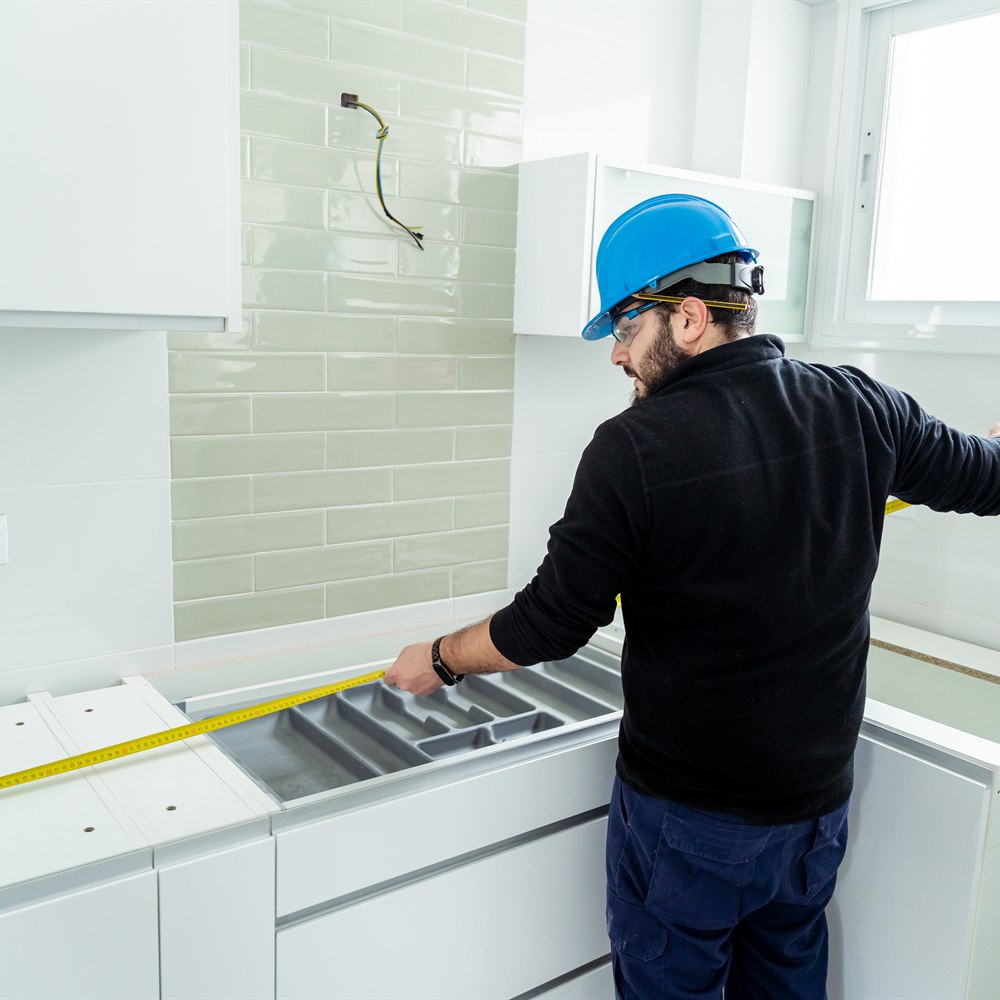
Countertops, especially stone, also have a lead time driven by fabrication. For stone and quartz counters, the process typically involves installing the cabinets first, then templating the counters (precise measurement), then fabricating them (cutting, edging, finishing), then installing, with the fabrication taking time (often a week or more) between templating and installation. This means the countertops are usually installed after the cabinets and after a fabrication period, so the counters may go in some days or weeks after the cabinets. Understanding this multi-step countertop process and its fabrication lead time explains why a kitchen isn’t complete the day cabinets go in. (For more on this, see How Much Do Cabinets and Countertops Cost?.)
The Sequence and Gap Between Cabinets and Counters
A key timeline consideration is the sequence: cabinets are installed first, then the counters are templated against the installed cabinets, then fabricated, then installed. This creates a gap, often a week or more, between cabinet installation and countertop installation, during which the counters are being fabricated. During this gap, you may have cabinets but no counters (and a temporarily limited kitchen). Understanding this sequence and the gap it creates helps you plan for a period when the kitchen is partially complete. This is a normal part of the process for stone counters, driven by the need to template against installed cabinets. (For more on this, see Common Cabinet and Countertop Mistakes and How to Avoid Them.)
What Can Affect the Timeline
Several factors affect the overall timeline. The cabinet grade drives the lead time (stock fast, custom long). The countertop material affects it (stone requires fabrication; laminate may be faster). The kitchen size and complexity affect installation time. Removal of old cabinets and counters, plumbing and electrical work, and any modifications add time. And ordering, delivery, and fabrication schedules affect the total. Because these factors vary, the full project, from ordering to completion, can range from a couple of weeks (stock, simple) to many weeks (custom cabinets, stone counters), even though the installation itself is just a few days.
Planning Around a Kitchen That’s Out of Service
Beyond understanding the timeline, one of the most important practical aspects of a cabinet and countertop project to plan for is that your kitchen will be partially or fully out of service during the work, and given the multi-stage timeline with its lead times and the gap between cabinet and counter installation, this disruption can span a meaningful period. Unlike a quick project, a kitchen renovation means your kitchen is disrupted through demolition, cabinet installation, the fabrication gap when you may have cabinets but no counters, and countertop installation, during which cooking, food storage, and normal kitchen use are limited or impossible. Understanding upfront that you’ll be without a fully functional kitchen for this period lets you plan, setting up a temporary kitchen space, stocking easy meals, or arranging alternatives, so the disruption is manageable rather than a daily crisis.
The gap between cabinet installation and countertop installation deserves particular planning attention, since it’s a phase homeowners often don’t anticipate. Because stone counters must be templated against installed cabinets and then fabricated over a week or more, there’s a period where your new cabinets are in but you have no countertops, and often no sink (since it’s installed with the counters), making the kitchen largely unusable for that stretch. Planning for this specific gap, knowing it’s coming and arranging to manage without a functional kitchen during it, prevents it from being an unwelcome surprise. More broadly, coordinating the project timing with your life, avoiding scheduling it during periods when you especially need your kitchen, like holidays or events, and understanding the full duration from ordering through final installation, helps you approach the project prepared. A good contractor can give you a realistic timeline including the lead times and the fabrication gap, and asking about the expected duration of kitchen downtime upfront lets you plan effectively. Understanding not just how long the installation takes but how long your kitchen will be disrupted, and planning around that reality, ensures the project, while temporarily inconvenient, doesn’t catch you off guard, and lets you get through the renovation to enjoy your new kitchen with minimal stress. Anticipating and planning for the kitchen downtime is a key part of a well-managed kitchen project.
Planning Around the Timeline
Expect the installation to take 2 to 5 days, but plan for a full project timeline of weeks once you include cabinet lead time and countertop fabrication, with a gap between cabinet and counter installation for stone. Understanding both timelines helps you set realistic expectations. When you’re ready to plan your kitchen project, connect with a local pro below.
Frequently Asked Questions
The actual installation takes about 2 to 5 days, but the full project timeline is longer once you include lead time for ordering and fabrication. Installing the cabinets and countertops takes the 2-to-5-day window, but this is separate from the weeks of lead time to order and fabricate the cabinets and counters that come before installation, so the full project spans longer.
Because they're built from scratch to your specifications, which requires significant lead time before installation. Stock cabinets are often quickly available, but semi-custom cabinets are made to order (typically a few weeks) and custom cabinets are built from scratch (often longer, sometimes many weeks). This lead time, from ordering to delivery, is a major part of the overall timeline and much longer than the few-day installation itself.
Because countertops, especially stone, must be templated (precisely measured) against the installed cabinets before they can be fabricated. The process is: install cabinets, template counters, fabricate them (cutting, edging, finishing, often a week or more), then install. This means counters go in after the cabinets and after a fabrication period, creating a gap during which you may have cabinets but no counters, a normal part of the process for stone.
Often, yes, for stone counters. Cabinets are installed first, then counters are templated against them, fabricated (a week or more), and installed, creating a gap between cabinet and countertop installation during which the counters are being made. During this gap you may have cabinets but a temporarily limited kitchen without counters. This is normal for stone, driven by the need to template against installed cabinets, so plan for a partially complete period.
The cabinet grade (stock fast, custom long lead time), the countertop material (stone requires fabrication; laminate may be faster), the kitchen size and complexity, removal of old cabinets and counters, plumbing and electrical work, modifications, and ordering, delivery, and fabrication schedules. Because these vary, the full project from ordering to completion can range from a couple of weeks (stock, simple) to many weeks (custom, stone), though installation is just a few days.