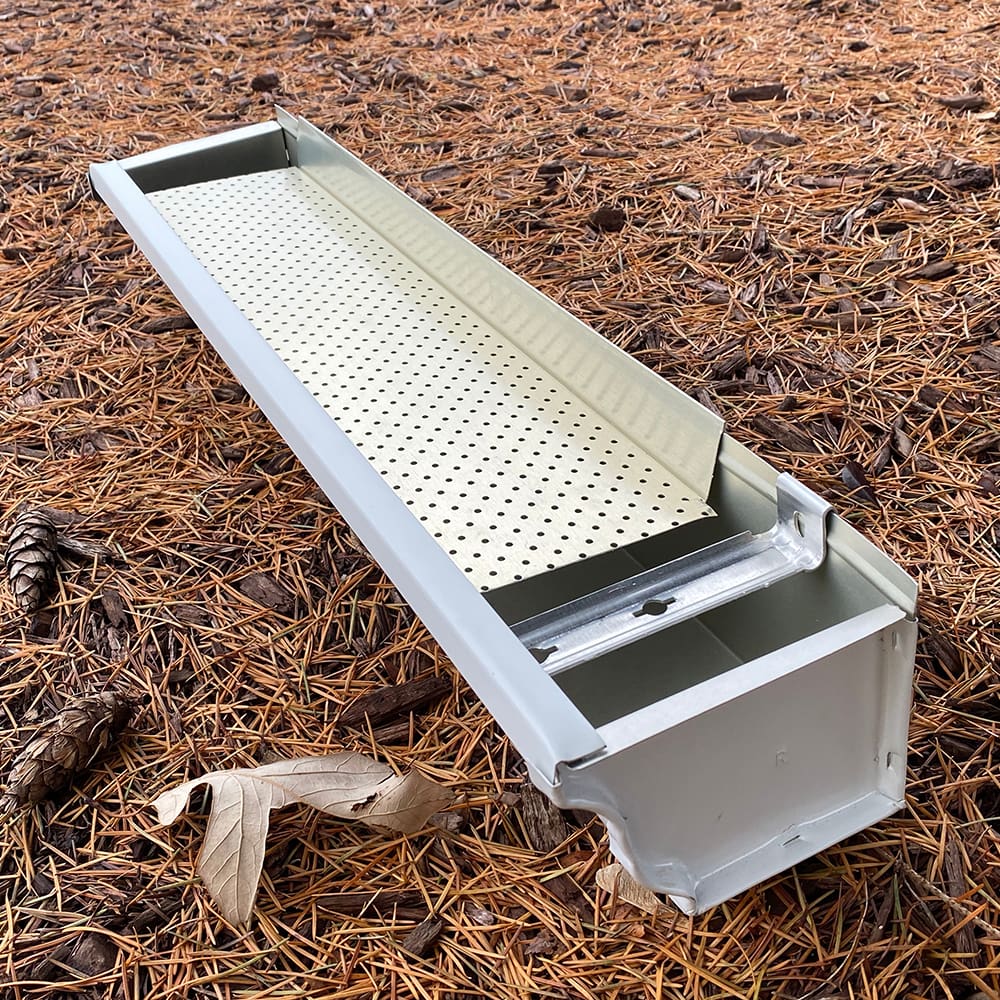

What Goes Wrong With Gutter Guard Installation?
No gutter guard eliminates maintenance — even micro-mesh needs an annual inspection and cleaning every 1 to 3 years, and guards fail outright when they are wrong for the property’s debris type or installed over gutters with underlying problems. Here is what goes wrong and how to avoid it.
Mistake: Installing Guards on Dirty Gutters
How to avoid it: Guards installed over accumulated debris permanently trap that debris under the guard, accelerating gutter floor corrosion. Always clean gutters thoroughly before installing guards. Confirm whether any guard installation quote includes cleaning or whether it is a separate cost. (For more on this, see Questions to Ask a Gutter Guard Installer.)
Mistake: Choosing the Wrong Guard for the Debris Type
How to avoid it: This is the most common cause of gutter guard disappointment. Reverse-curve and coarse mesh guards installed on a property with significant pine needle load are ineffective against pine needles. Brush guards in a seed pod environment trap pods in the bristles. The guard must be matched to the specific debris type on the property. Identify the dominant debris type before selecting a guard design, not based on price or appearance alone.
Mistake: Expecting Zero Maintenance
How to avoid it: No gutter guard eliminates maintenance entirely. Even the best micro-mesh guards accumulate fine debris on the mesh surface over time, reducing water intake efficiency. Set the realistic expectation that guards reduce cleaning from twice per year to annual inspection with cleaning every 1 to 3 years, not zero maintenance forever. (For more on this, see Gutter Guard Maintenance: What to Expect.)
Mistake: Installing Guards That Void Gutter Warranty
How to avoid it: Some gutter guard products are fastened in ways that penetrate or modify the gutter, potentially voiding the gutter installation warranty. Confirm with your gutter installer whether the guard product is compatible with the gutters’ warranty terms before purchase and installation.
Mistake: Ignoring Underlying Gutter Problems
How to avoid it: Guards installed over gutters with failed joints, incorrect slope, or deteriorating fasteners do not fix those problems. The leaking joint continues to leak; the standing water from incorrect slope continues to accumulate. Address gutter problems before installing guards. (For more on this, see How to Maintain Gutter Guards Over Time.)
Getting It Right
Clean gutters first, match the guard to the debris type, set realistic maintenance expectations, confirm warranty compatibility, and address gutter problems before guard installation. Connect with a local pro below when you are ready.
Working With a Contractor on This Project
Getting the right outcome on any home services project starts before the work begins. A few consistent practices make the difference between a smooth project and a frustrating one.
Get at least two or three quotes. A single quote gives you no basis for comparison. Two or three quotes reveal the market rate for the work, expose scope differences between bidders, and let you assess contractor communication quality before any commitment is made. The lowest bid is not automatically the best value if the scope is thin or the materials are underspecified.
Ask for licenses and insurance before work starts. Verify current general liability insurance and, for any work involving workers on your property, workers compensation coverage. Licensing requirements vary by state and trade; confirm the specific requirements in your jurisdiction. A licensed contractor who carries appropriate insurance protects both parties if something goes wrong during the project.
Get the scope in writing. A written proposal that specifies materials, labor scope, timeline, what is included (permits, cleanup, disposal), and warranty terms is the foundation of a professional engagement. Verbal agreements on any of these points invite misunderstanding. For any project over $500, written scope is non-negotiable.
Clarify the payment schedule upfront. A reasonable payment schedule ties major payments to project milestones: a deposit at signing, a payment at material delivery or project start, and a final payment at completion after a walkthrough confirms satisfaction. A contractor who requires full payment upfront before work begins is a red flag in any trade.
Making a Confident Decision
The information in this article is designed to help you ask better questions of the professionals you work with, evaluate their answers with more confidence, and understand the decisions involved in this type of home services project. It is not a substitute for professional assessment of your specific home.
Every home is different. Roof slopes, local weather, tree exposure, soil conditions, and existing system condition all affect what the right solution is for your specific situation. The general principles here apply broadly, but a professional who assesses your home in person will give you guidance that accounts for the details that general articles cannot.
When you are ready to move forward, getting at least two or three quotes from licensed, insured, local contractors is the most important practical step. It lets you compare approaches, assess contractor quality, and confirm that the solution proposed matches your specific situation and budget.
Ranges here are national ballpark figures, not quotes. Actual pricing varies by region, home condition, materials, and contractor. How we source cost data.