What Drives Tile Installation Costs?
Tile installation costs, typically $10 to $50 per square foot installed (about $2,000 to $10,000 for a typical 200 square foot floor), are driven by the tile type, the labor complexity, the substrate condition, the area, and the design. Understanding these factors helps you make sense of a quote and control your cost. Here’s what moves the number.
The Tile Type
The tile type is a major cost driver, spanning from economical ceramic through mid-range porcelain to premium natural stone, roughly $1 to $15 per square foot for the material. Ceramic is the most affordable, porcelain (denser, more durable, more water-resistant) is mid-range, and natural stone (marble, travertine, slate) is premium. Your tile choice sets much of the material cost and can also affect labor (stone and some tiles are harder to cut and install). Choosing between ceramic, porcelain, and stone, balancing budget, durability, and appearance, is a key decision that significantly affects the total.
The Labor Complexity
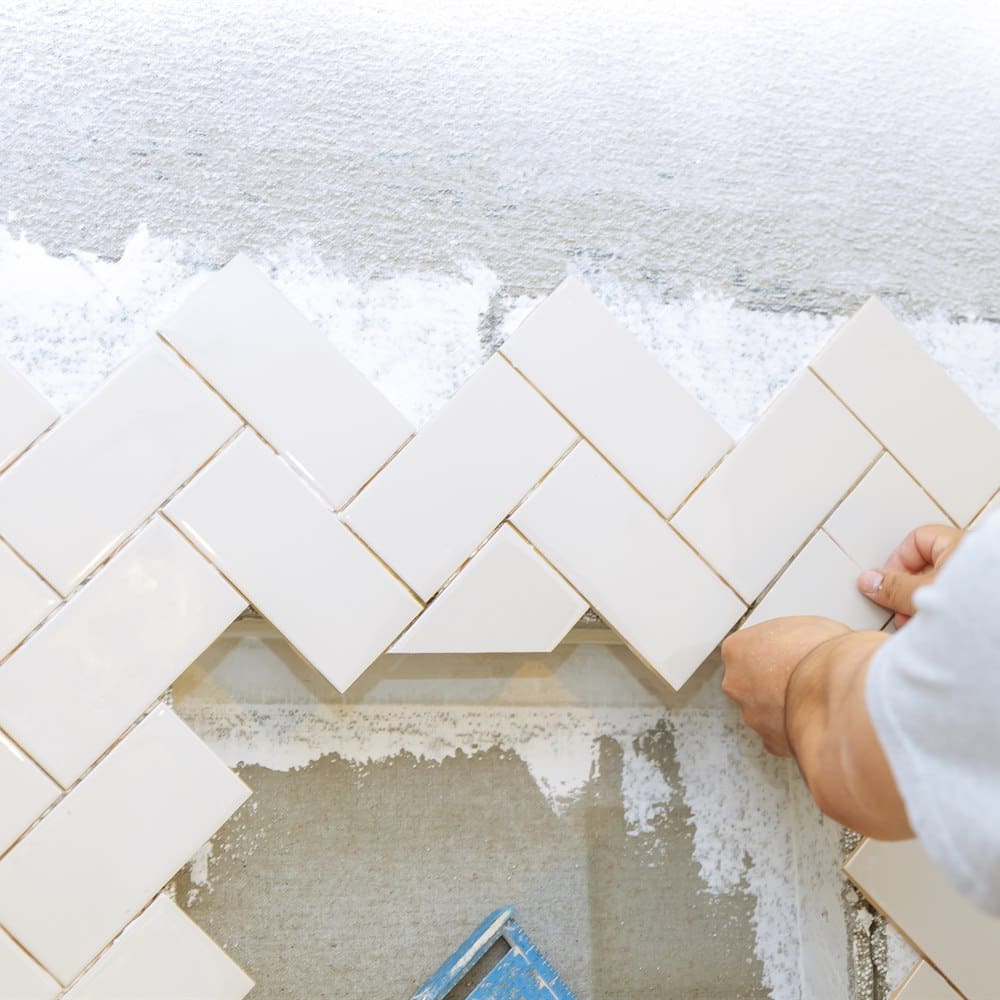
The labor complexity is a major driver, since tile labor (roughly $8 to $25 per square foot for floor and wall tile, and $30 to $55 for a shower surround) varies widely with the job. Simple installations, large tiles, straightforward straight layouts, standard patterns, cost less labor, while complex ones, small tiles, intricate patterns (herringbone, mosaics), diagonal layouts, lots of cuts, and difficult areas, cost more. Because tile installation is skilled, time-intensive work, the complexity heavily affects the labor. A simple large-format tile floor is far less labor than an intricate mosaic. The labor complexity, driven by the tile size, pattern, and layout, is one of the biggest cost factors. (For more on this, see How Long Does Tile Installation Take?.)
The Substrate Condition
The substrate condition affects the cost, sometimes significantly and unpredictably. Tile needs a sound, flat, stable substrate, and if yours is uneven, damaged, or unsuitable, leveling, repair, or installing proper backer board adds cost. Because substrate problems are often hidden until the old surface is removed, this can be an unexpected cost. A good, ready substrate keeps costs down, while one needing work adds to them. Because a tile installation depends on a proper substrate, its condition is a real, sometimes surprising factor, which is why budgeting a contingency for possible substrate work is wise. (For more on this, see Hidden Costs of Tile Installation.)
The Area and Location
The area and installation location affect the cost. More square footage costs proportionally more, since tiling is priced by area. And the location affects complexity, a simple floor is more straightforward than a shower (needing waterproofing and detailed work), a backsplash (many cuts around outlets and fixtures), or walls. Wet areas like showers require waterproofing that adds cost. The area drives the scale, while the location, floor, wall, backsplash, or shower, affects the complexity and any special requirements. Both the size and the specific location of the tile work are real cost factors.
The Design Complexity
The design complexity affects the labor cost. A simple, single-tile, straight layout is most economical, while patterns, borders, mosaics, multiple tile sizes or colors, inlays, and decorative details require more time, cutting, and skill. Small tiles and mosaics especially add labor (more pieces, more grout lines). The more intricate and custom the design, the higher the labor. Your design choices, beyond the tile type and location, are a real cost factor, so a straightforward design keeps costs down while an elaborate one adds to the total. Design complexity is a lever you control within the project.
Local Labor Rates
Where you live affects the cost through local labor and material rates. Tile installation costs vary by region, so the same project can cost more in a high-cost area than a lower-cost one. Local competition among installers also affects pricing. While you can’t change your location, understanding that part of the cost is local rates helps explain variation and reminds you to compare a few local providers, since prices and included services differ even within the same area.
How to Control Your Tile Installation Cost
Because tile installation cost is driven by several factors, understanding which ones you control gives you real ability to shape the project to your budget, while being careful not to compromise the essentials. The tile type is a lever you fully control: choosing economical ceramic instead of premium natural stone, or mid-range porcelain where its durability is worth it, significantly affects the material cost. The design complexity is another major lever, opting for a simple, straightforward layout of larger tiles rather than an intricate pattern, mosaic, or small tiles reduces the labor cost substantially, since the design drives so much of the labor. And the scope, how much area you tile, is within your control, perhaps tiling a feature area rather than a whole room, or prioritizing the spaces where tile matters most. (For more on this, see How to Budget and Pay for Tile Installation.)
Other choices help manage the cost too. You might use premium tile strategically, where it will have the most impact or where its performance matters most, while using more economical tile or even other materials elsewhere, concentrating your budget for the best effect. Choosing a larger tile format where appropriate reduces the labor (fewer pieces to set, fewer grout lines) compared to small tiles or mosaics. And keeping the tile in areas with a good existing substrate, where possible, avoids the added cost of extensive substrate work. However, the crucial caveat in controlling tile cost is that certain things should never be cut to save money: proper substrate preparation and, in wet areas, waterproofing are essential to a lasting installation, and skimping on them, or hiring the cheapest installer who does, leads to failures far costlier than the savings. So the right approach to controlling tile cost is to adjust the levers you genuinely control, the tile type, the design complexity, the scope, and the format, while insisting on proper substrate prep, waterproofing, and skilled installation as non-negotiables. This lets you shape the project to your budget through smart material and design choices, and by being strategic about where to invest, without compromising the fundamentals that determine whether the tile lasts. Understanding both the levers you control and the essentials you shouldn’t cut is the key to getting quality tile at a cost you can afford.
Getting an Accurate Price
Because tile type, labor complexity, substrate condition, area and location, design complexity, and local rates all move the number, an accurate cost depends on your specific project. Ceramic in a simple floor layout on a good substrate sits at the low end; premium stone in an intricate shower with substrate work runs toward the top. When you’re ready for an estimate, connect with a local pro below.
Cost figures on this page were checked against published pricing on August 26, 2026. How we source cost data.
Frequently Asked Questions
The tile type and the labor complexity together. The tile material spans from economical ceramic through mid-range porcelain to premium stone ($1-$15/sq ft), while labor ($8-$25/sq ft) varies widely with the job's complexity. Simple installations (large tiles, straight layouts) cost less labor, while complex ones (small tiles, intricate patterns, mosaics) cost more. The tile choice and the labor complexity largely determine where your project lands.
Because tile installation is skilled, time-intensive work, and the labor complexity varies widely with the job. Simple installations, large tiles, straightforward straight layouts, standard patterns, cost less, while complex ones, small tiles, intricate patterns (herringbone, mosaics), diagonal layouts, lots of cuts, and difficult areas, cost more. A simple large-format tile floor is far less labor than an intricate mosaic, so the complexity heavily affects the labor cost.
Sometimes significantly and unpredictably. Tile needs a sound, flat, stable substrate, and if yours is uneven, damaged, or unsuitable, leveling, repair, or installing proper backer board adds cost. Because substrate problems are often hidden until the old surface is removed, this can be an unexpected cost. A tile installation depends on a proper substrate, so its condition is a real, sometimes surprising factor, making a contingency for substrate work wise.
Yes. A simple floor is more straightforward than a shower (needing waterproofing and detailed work), a backsplash (many cuts around outlets and fixtures), or walls. Wet areas like showers require waterproofing that adds cost. Along with the area (more square footage costs proportionally more), the location, floor, wall, backsplash, or shower, affects the complexity and any special requirements, making both size and location real cost factors.
Yes. A simple, single-tile, straight layout is most economical, while patterns, borders, mosaics, multiple tile sizes or colors, inlays, and decorative details require more time, cutting, and skill. Small tiles and mosaics especially add labor (more pieces, more grout lines). The more intricate and custom the design, the higher the labor, so a straightforward design keeps costs down while an elaborate one adds to the total.