What Tile Pattern Should You Choose?
Straight grid is the cheapest tile pattern to install, running bond is the most popular, and herringbone adds 15 to 25 percent in labor for the angle cuts. A 45-degree diagonal makes a small room look larger. The pattern you lay changes the room’s perceived size, character, and visual energy as much as the tile itself does. Here is the guide.
Straight Grid (Stack Bond)
The most common and least expensive to install (minimal cuts). Tiles laid in perfectly aligned rows and columns. Best for: large-format tile where the grout lines are already minimal and the pattern itself is a design statement. In small-format tile: the perfectly aligned grid pattern can feel rigid and institutional. Offset the tiles by 1/3 or 1/2 for a running bond pattern that feels more organic. (For more on this, see Shower Tile: How to Choose and Install Correctly.)
Running Bond (Brick Pattern)
The most popular tile pattern for rectangular tile — each row is offset from the adjacent row by half a tile length (like standard brick coursing). Appropriate for: subway tile backsplash (the classic application), wood-look plank tile installed like flooring planks, and any rectangular tile in a bathroom or kitchen. More dynamic than a straight grid, still simple to install (less cutting than diagonal or herringbone). (For more on this, see Kitchen Backsplash Ideas: Materials, Patterns, and Costs.)
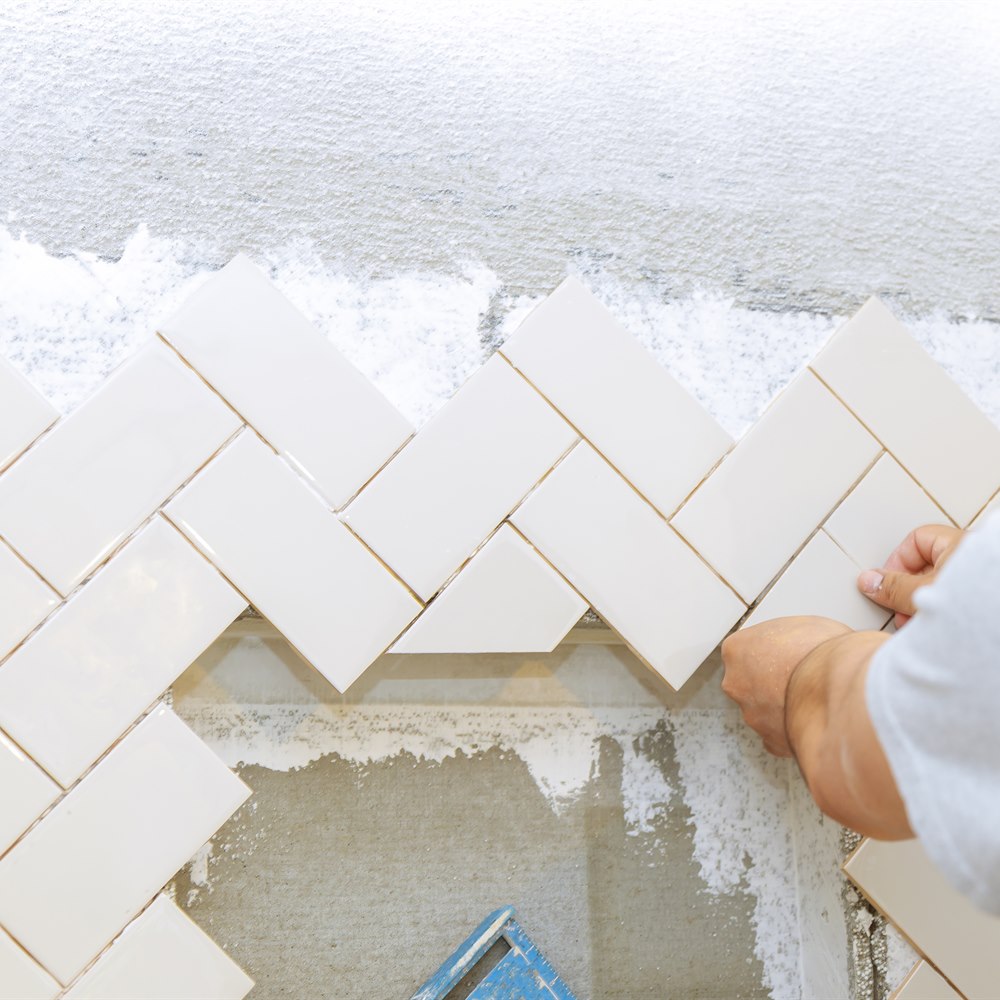
Herringbone
Rectangular tiles set at 90-degree angles to each other in a V-pattern. More visually dynamic than a running bond and provides a sense of directionality and movement. Particularly popular for: subway tile backsplash in a contemporary kitchen, hardwood-look tile in a hallway (the herringbone pattern is traditional in European parquet flooring), and bathroom accent walls. Cost premium: 15 to 25 percent more in labor than running bond due to the angle cuts at the perimeter.
Diagonal (45-Degree)
Tile laid at a 45-degree angle to the wall: makes a small room appear larger (the diagonal line draws the eye across the diagonal dimension of the room, which is the longest dimension). Popular for small bathroom floors and foyer floors. Cost premium: 15 to 20 percent more in labor than straight pattern due to more cuts and more material waste at the perimeter (all perimeter tiles must be cut at 45 degrees).
Working With a Contractor on This Project
Getting the right outcome on any home services project starts before the work begins. A few consistent practices make the difference between a smooth project and a frustrating one.
Get at least two or three quotes. A single quote gives you no basis for comparison. Two or three quotes reveal the market rate for the work, expose scope differences between bidders, and let you assess contractor communication quality before any commitment is made. The lowest bid is not automatically the best value if the scope is thin or the materials are underspecified.
Ask for licenses and insurance before work starts. Verify current general liability insurance and, for any work involving workers on your property, workers compensation coverage. Licensing requirements vary by state and trade; confirm the specific requirements in your jurisdiction. A licensed contractor who carries appropriate insurance protects both parties if something goes wrong during the project.
Get the scope in writing. A written proposal that specifies materials, labor scope, timeline, what is included (permits, cleanup, disposal), and warranty terms is the foundation of a professional engagement. Verbal agreements on any of these points invite misunderstanding. For any project over $500, written scope is non-negotiable.
Clarify the payment schedule upfront. A reasonable payment schedule ties major payments to project milestones: a deposit at signing, a payment at material delivery or project start, and a final payment at completion after a walkthrough confirms satisfaction. A contractor who requires full payment upfront before work begins is a red flag in any trade.
Making a Confident Decision
The information in this article is designed to help you ask better questions of the professionals you work with, evaluate their answers with more confidence, and understand the decisions involved in this type of home services project. It is not a substitute for professional assessment of your specific home.
Every home is different. Roof slopes, local weather, tree exposure, soil conditions, and existing system condition all affect what the right solution is for your specific situation. The general principles here apply broadly, but a professional who assesses your home in person will give you guidance that accounts for the details that general articles cannot.
When you are ready to move forward, getting at least two or three quotes from licensed, insured, local contractors is the most important practical step. It lets you compare approaches, assess contractor quality, and confirm that the solution proposed matches your specific situation and budget.
Tile Installation Cost at a Glance
Ceramic floor or wall tile: $10 to $22 per sq ft installed. Porcelain: $15 to $35 per sq ft, denser and more moisture-resistant, suitable for showers and exteriors. Natural stone (marble, travertine, slate): $40 to $90 per sq ft, requires sealing and pH-neutral cleaning. Large-format porcelain (24×24 or larger): adds 20 to 30 percent to the labor and requires a very flat substrate. Kitchen backsplash: $800 to $2,500 for a typical 30 sq ft area, a higher rate per square foot than a floor because of the small area and many cuts. Full bathroom (floor and shower walls): $3,000 to $10,000 total including waterproofing membrane.
Old tile removal: $2 to $7 per sq ft additional. Waterproofing membrane in shower (Kerdi, RedGard, or equivalent): $450 to $750 additional, mandatory for any shower installation. Confirm whether removal and waterproofing are included in any quote before comparing bids. (For more on this, see How Much Does Tile Installation Cost?.)
Cost figures on this page were checked against published pricing on August 29, 2026. How we source cost data.
Frequently Asked Questions
Diagonal (45-degree) pattern: makes a small room appear larger by drawing the eye across the diagonal dimension. Large-format tile with minimal grout lines: reduces the visual break-up of the floor, making the space feel more expansive. Light-colored tile: reflects more light and contributes to a spacious feeling.
Herringbone: the most widely requested pattern in kitchen backsplash applications for the past 5 to 8 years. Running bond (standard brick pattern): remains the most widely installed overall (the classic subway tile backsplash in running bond). For floor tile: straight grid in large-format porcelain is the most popular contemporary floor tile approach.
A Versailles (or French pattern) uses four different tile sizes in a repeating layout that mimics the stone paving at the Palace of Versailles. It is used with natural stone and large-format tile to create a traditional, formal floor pattern. More complex to lay out and install than a standard pattern -- requires careful tile sizing to avoid awkward cuts. A beautiful result in the right setting (formal living rooms, traditional entries, Mediterranean-style homes) but not appropriate for contemporary settings.
Small mosaic tiles (1-inch, 2x2-inch): typically delivered on 12x12-inch mesh backing sheets for efficient installation. The pattern within the mosaic is set by the manufacturer (typical patterns: straight, offset, or mixed sizes). For the joint between mesh sheets: the installer aligns the pattern at the seams. A single consistent pattern throughout the installation is the safest approach for most small-tile applications.
Yes significantly. A grout color that closely matches the tile: makes the grout lines recede and the tile surface reads as a continuous material. A contrasting grout color: makes the pattern of the tile layout visually prominent. Classic subway tile in white with a medium gray grout: the contrast makes the brick pattern pop. The same subway tile with white grout: reads as a near-seamless surface. Choose the grout color with the intended visual emphasis in mind.