Putting Green or Practice Mat, Which Is Right?
A backyard putting green costs $18 to $40 per square foot installed, while a portable practice mat is cheap, rolls up, and commits you to nothing. The green buys real contours, breaks, and true ball roll; the mat buys flexibility and a low price. The right choice comes down to how seriously and how often you will practice, plus the space and budget you have. Here is how they compare.
The Quick Answer
Choose a backyard putting green if you’re a dedicated golfer who wants realistic, course-like practice (contours, breaks, real ball roll) and will use it regularly, and you have the space and budget. Choose a practice mat if you want affordable, flexible putting practice, have limited space or budget, or aren’t sure you’ll practice enough to justify a permanent green. The deciding factors are commitment, realism wanted, space, and budget. Those four tend to move together in practice: a committed golfer who wants real course conditions usually also has the motivation to justify the space and cost of a green, while someone unsure of their commitment, or short on either room or budget, is generally better matched to a mat, so being honest about the first factor, how seriously and often you’ll practice, usually settles the other three. A useful way to weigh them is that the green and the mat sit at opposite ends of a single trade-off, the green maximizes realism at the cost of money, space, and permanence, while the mat maximizes flexibility and low cost at the expense of realism, so the right pick is really about which end of that trade-off matches how seriously and how often you’ll practice. (For more on this, see The Best Putting Green Setup for Your Space and Game.)
Side by Side
| Backyard Green | Practice Mat | |
|---|---|---|
| Cost | $18-$40/sq ft installed | Low (a mat) |
| Realism | High (contours, true roll) | Limited (flat, basic roll) |
| Space | Dedicated yard area | Rolls up, portable |
| Practice value | Full (putts, breaks, chipping) | Basic putting stroke |
| Permanence | Permanent feature | Portable, temporary |
Cost figures on this page were checked against published pricing on September 2, 2026. How we source cost data.
Why Choose a Backyard Putting Green
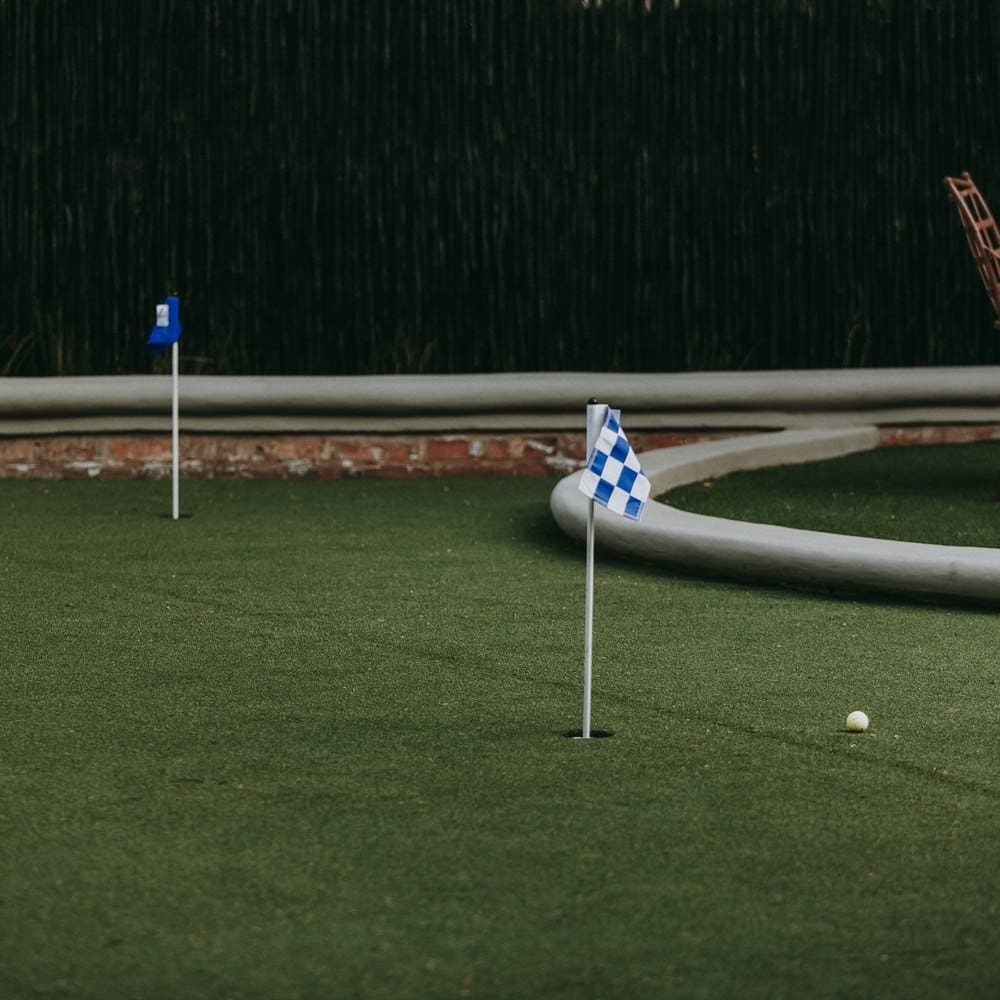
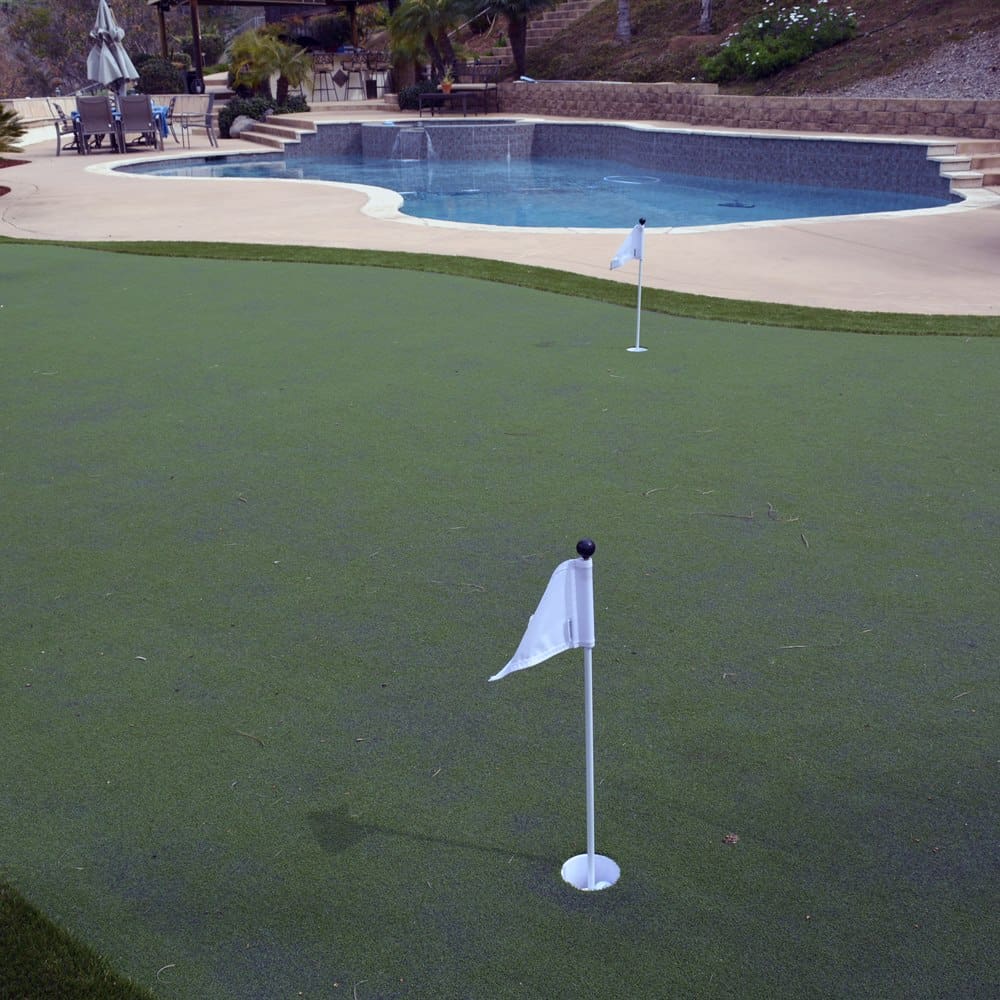
A real putting green delivers course-like practice a mat can’t: true, fast ball roll on specialized turf, realistic contours and breaks to practice reading greens, multiple cups, and often a chipping area. For a dedicated golfer, this realistic practice genuinely improves the short game in a way a flat mat can’t. It’s also a lasting backyard amenity. If you’ll practice regularly and want real course conditions at home, the green is the serious golfer’s choice, worth its cost for the practice value. The practice advantage is concrete rather than cosmetic: a real green lets you rehearse reading break, controlling speed across undulations, and holing out from varied positions and cups, the exact skills that lower scores, whereas a flat mat can only groove the stroke itself, so for a golfer whose weakness is green reading and speed control, the green trains something a mat fundamentally cannot. The practice advantage is concrete, a real green lets you work on speed control across varying breaks, reading slope, and lag putting on a true, course-like surface, none of which a flat mat can reproduce, so for a player whose short game is a genuine focus, the green trains skills that actually transfer to scoring in a way the mat simply cannot. (For more on this, see When a Backyard Putting Green Isn’t the Right Choice.)
Why Choose a Practice Mat
A practice mat is far cheaper, requires no installation, takes no permanent space (roll it out and away), and can even be used indoors. For casual practice, limited budgets or space, or testing whether you’ll practice enough to warrant a green, a mat is the sensible, low-commitment option. It won’t replicate real green conditions, but for grooving a putting stroke, it does the basic job affordably. If you want simple, flexible, low-cost practice, the mat is the practical choice. The mat’s flexibility is a genuine feature, not just a consolation: being able to roll it out in a hallway or garage means practice isn’t gated by weather or daylight, and for grooving a repeatable stroke through sheer repetition, that everyday convenience can produce more actual practice than a beautiful outdoor green that only gets used on nice afternoons. Its flexibility is a real virtue for many golfers, a mat can move indoors for winter or bad weather, roll away when the room is needed, and cost little enough to be an easy purchase, so for grooving a repeatable stroke and getting daily reps regardless of season, it does the fundamental job without asking for space or a significant investment.
Weighing Realism vs. Practicality
The core trade-off is realism versus practicality. A green offers real course conditions but at real cost and permanence; a mat offers basic practice with maximum flexibility and minimal cost. A serious golfer who values realistic practice leans toward the green; a casual or budget-conscious player leans toward the mat. Be honest about how much realism you need and how much you’ll practice. Match the tool to your genuine commitment. The honest self-assessment is worth doing before spending, because the green rewards frequent, realistic practice with real gains while the mat rewards convenient repetition, so a player who overestimates their commitment can end up with an underused green, while one who underestimates it can outgrow a mat quickly, and matching the tool to how you’ll truly practice avoids both. The honest question underneath is how much realism your practice actually needs, if you mainly want to groove a consistent stroke, a mat delivers that and the green’s realism is largely wasted, but if reading break and controlling speed on a true surface is what you’re trying to improve, only the green provides it, so matching the tool to the specific skill you’re working on avoids both overspending and underinvesting.
Considering a Middle Path
You don’t have to choose the extremes. A compact backyard green offers more realism than a mat at less cost than an elaborate green, and starting with a mat to build the habit before investing in a green is a reasonable path. If you’re unsure, a mat now and a green later, once you know you’ll use it, avoids overcommitting. There’s a spectrum between a simple mat and a full green. That spectrum is genuinely useful for hedging the decision: a compact installed green splits the difference with real roll and a couple of breaks at less cost than an elaborate one, and starting with a mat to prove the habit before committing to a green is a low-risk path, so you needn’t treat it as a single irreversible choice between the two extremes. That spectrum is worth keeping in mind because the choice isn’t strictly binary, a compact backyard green splits the difference with some real roll and gentle break at a fraction of an elaborate green’s cost, and beginning with a mat to confirm you’ll practice before committing to any installation is a low-risk way to find where on that spectrum you actually belong.
Making the Call
Choose a backyard green if you’re a dedicated golfer wanting realistic, course-like practice, with the space and budget, and you’ll use it regularly. Choose a mat for affordable, flexible, low-commitment practice, or to test your commitment first. The deciding factors are how much you’ll practice, the realism you want, and your space and budget. When you’re ready to explore a real green, connect with a local pro below. (For more on this, see How to Budget and Pay for a Backyard Putting Green.)
Frequently Asked Questions
Choose a green if you're a dedicated golfer wanting realistic, course-like practice (contours, breaks, true roll) who'll use it regularly, with the space and budget. Choose a mat for affordable, flexible practice, limited space or budget, or if you're unsure you'll practice enough to justify a permanent green.
For realism, yes, it delivers true, fast ball roll, realistic contours and breaks, multiple cups, and often chipping, genuinely improving the short game in a way a flat mat can't. But it costs $10-$25 per square foot installed and is permanent, while a mat is cheap, portable, and low-commitment.
It's far cheaper, needs no installation, takes no permanent space (roll it out and away), and can be used indoors. For casual practice, limited budget or space, or testing whether you'll practice enough to warrant a green, it's the sensible low-commitment option. It grooves a putting stroke affordably.
Yes, that's a reasonable path. Starting with a mat to build the practice habit before investing in a green avoids overcommitting, and if you're unsure, a mat now and a green later, once you know you'll use it, is sensible. There's a spectrum between a simple mat and a full green.
Realism versus practicality. A green offers real course conditions but at real cost and permanence; a mat offers basic practice with maximum flexibility and minimal cost. A serious golfer who values realistic practice leans to the green; a casual or budget-conscious player leans to the mat.