How Do You Budget for a Backyard Playground?
Playground equipment, at $500 to $12,000, is a meaningful outdoor investment. Getting lasting value means budgeting for the complete cost, choosing a structure appropriately sized for your family, and planning for maintenance. Here’s how to approach it.
Budget for the Total Installed Cost
The equipment price is only part of the total. Add professional assembly ($700 to $900 for most structures), safety surfacing (engineered wood fiber at $3 to $5 per square foot installed, rubber mulch at $6 to $10, poured-in-place rubber at $20 to $27, across the whole safety zone), site preparation if the ground needs leveling, and first-year maintenance supplies. Homeowners who budget for equipment only routinely underestimate the total, because surfacing is priced by the square foot rather than by the job and across a full zone is often the largest single line in the project. Building the full cost picture upfront prevents the surprise of additional purchases after the main item arrives. The CPSC’s Public Playground Safety Handbook sets out fall zones, protective surfacing depth, and entrapment clearances.
Size to the Family, Not the Catalog
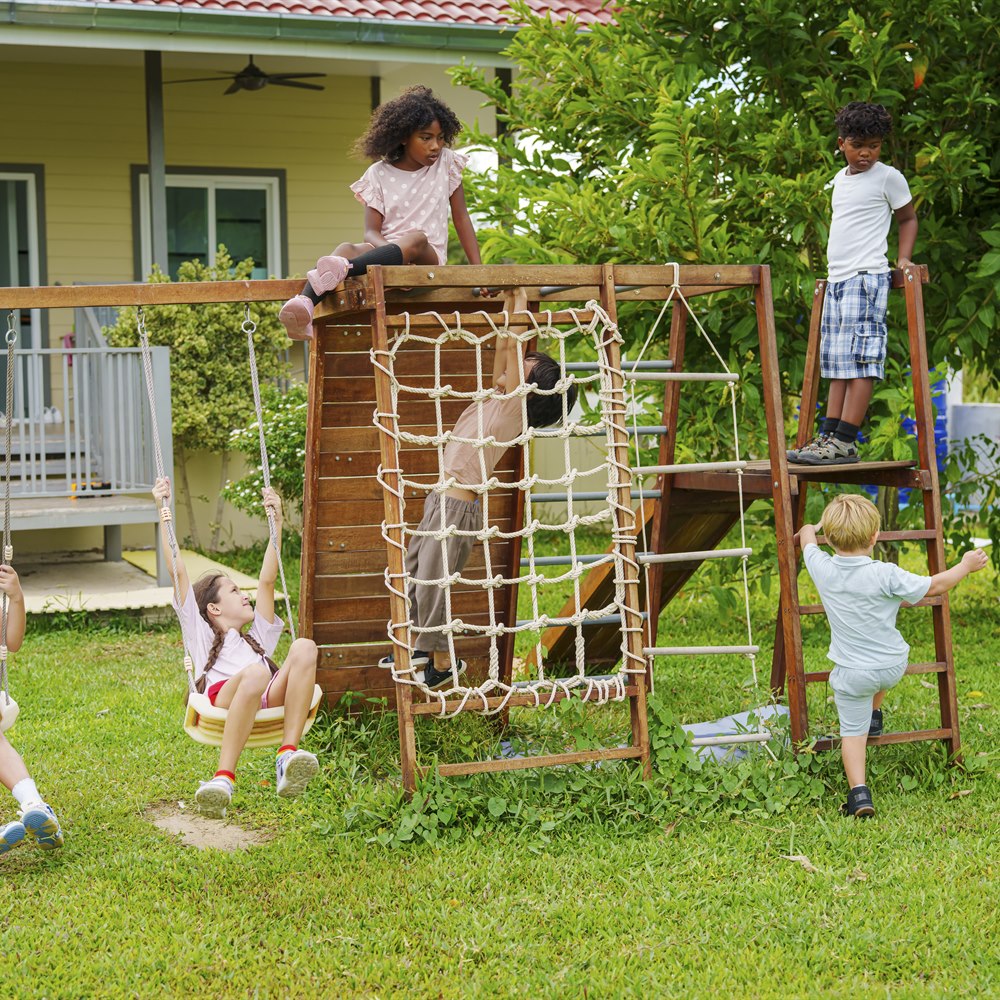
Choosing a structure based on catalog appeal rather than genuine family fit leads to two common outcomes: buying too little (children outgrow or lose interest quickly) or too much (elaborate structures that sit unused because they exceeded the age and interest fit). A family with a toddler and a four-year-old has different needs than a family with seven and ten-year-olds. An honest assessment of current ages and interests, and how long you plan to use the structure, guides the right tier and feature set.
Wood vs. Metal vs. Composite: Budget Implications
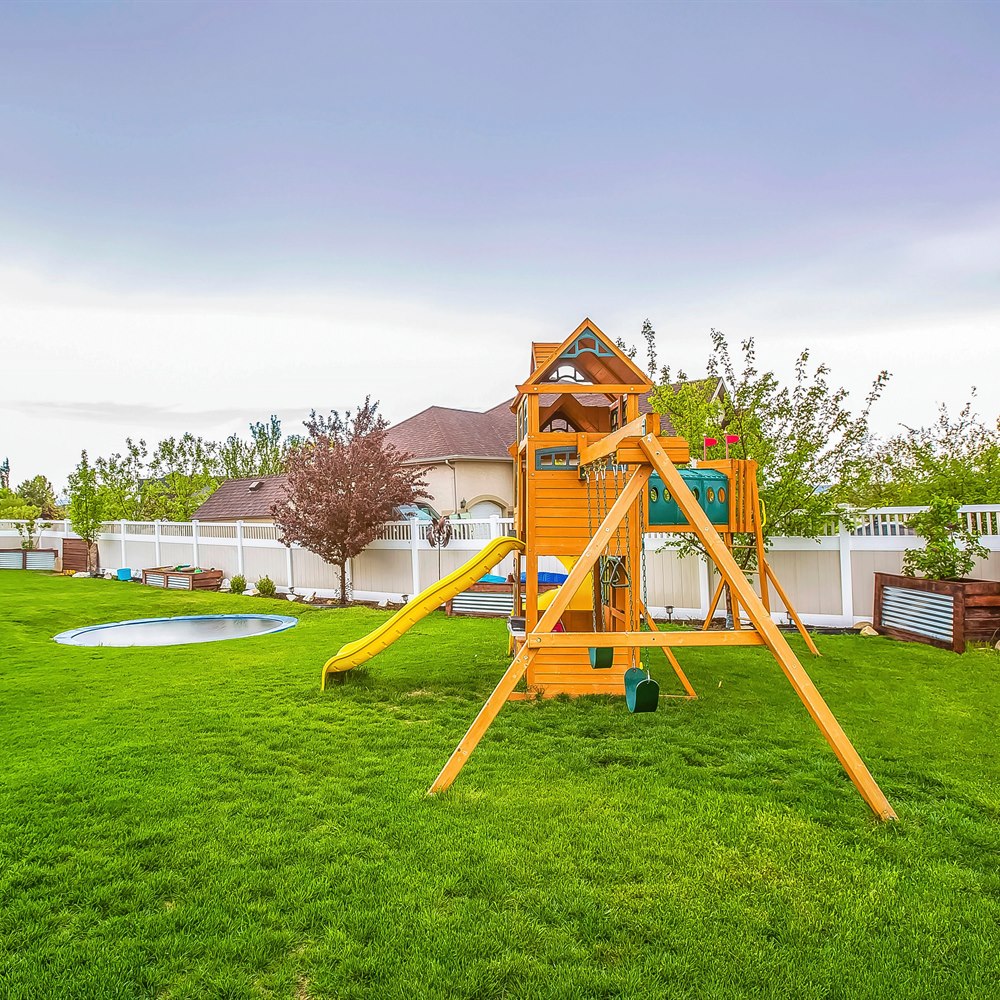
Material choice affects not just upfront cost but ongoing cost. Metal sets at the lowest price point rust, require earlier replacement, and provide limited play value. Residential wooden sets require periodic maintenance but last ten to fifteen years with reasonable care. Composite and commercial-grade equipment costs more upfront but is essentially maintenance-free. For most families buying residential-grade equipment, cedar or pressure-treated wood in the $1,500 to $3,500 range provides the best combination of durability, play value, and cost. (For more on this, see What Affects the Cost of Playground Equipment?.)
Consider Resale Value
Quality wooden playsets retain meaningful resale value if they’ve been maintained. A well-maintained mid-range wooden playset can sell for 30 to 50 percent of its original price when your children outgrow it. This reduces the effective ownership cost significantly. Choosing a reputable brand and maintaining the structure makes resale realistic. Metal sets and very low-end structures have limited resale value and are typically disposed of rather than sold.
DIY Assembly Is an Option, With Caveats
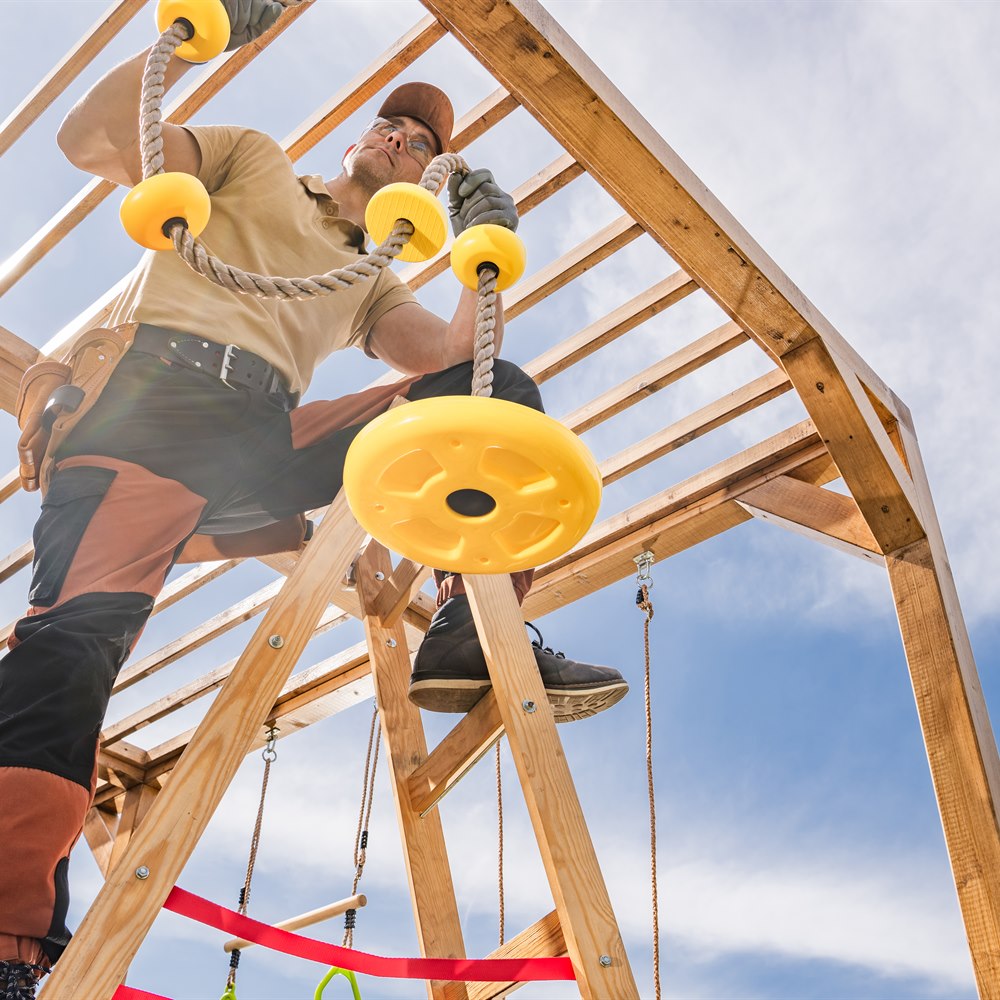
Assembly of simpler swing sets is manageable for capable DIYers over a weekend. Large wooden playsets with many components are significantly more challenging: they involve many pieces, detailed instructions, and require at least two adults for most lifting steps. Improperly tightened hardware or incorrect assembly creates safety hazards that aren’t visible until something fails. For mid-range and larger structures, professional assembly at $700 to $900 is a worthwhile investment in safety and a correct result.
Thinking About Cost Per Year of Use
The most useful frame for evaluating playground equipment cost is cost per year of meaningful use rather than purchase price. A $2,500 wooden playset that serves your children from ages 4 through 10 costs roughly $360 per year of primary use, plus annual maintenance. A $1,000 set sized for a toddler that your child outgrows at 5, leaving it unused for the next several years, costs $500 per year of use for two years and then nothing. The more expensive equipment often wins the cost-per-year comparison when it’s matched to the right age range and maintained to retain resale value. Adding potential resale value (quality wooden sets often sell for 30 to 50 percent of purchase price when children outgrow them) further improves the cost-per-year picture for the higher-quality investment. (For more on this, see How Much Does Playground Equipment Cost?.)
When to Buy and When to Wait
Timing the purchase of playground equipment to your children’s actual developmental stage matters for value. Buying a full playset when the youngest child is eighteen months, because it seems like the right time to invest in outdoor play, means several years of underuse while the child develops the motor skills and confidence for most of the features. Waiting until the primary user is three to four years old, and choosing a structure with features appropriate from that age forward, compresses the purchase closer to the start of real use and extends the active use period proportionally. If multiple children are involved, the oldest child’s current age sets the upper bound of what features make sense, and the youngest sets the lower bound, which together define the appropriate feature mix. (For more on this, see How to Choose the Right Playground Equipment for Your Family.)
The Smart Approach
Budget for the complete installed cost, size to your family’s actual ages and interests, choose material for the ownership period you plan, consider resale when maintaining the structure, and weigh DIY assembly honestly for the structure size. When you’re ready for options and quotes, connect with local pros below.
Cost figures on this page were checked against published pricing on August 24, 2026. How we source cost data.
Frequently Asked Questions
Budget for the total installed cost: equipment, professional assembly ($700-$900 for most structures), safety surfacing over the safety zone, site preparation if needed, and first-year maintenance supplies. The equipment price is only part of the total, and surfacing is quoted per square foot rather than per job -- $3 to $5 installed for engineered wood fiber up to $20 to $27 for poured-in-place rubber -- which across a full zone often makes it the largest single line in the project.
Size to your family's actual ages and interests, and how long you plan to use it. Choosing based on catalog appeal leads to either outgrowing the structure quickly or buying elaborate equipment that sits unused. An honest assessment of current ages and how long the structure will serve your children guides the right tier.
For most families, residential-grade cedar or pressure-treated wood in the $1,500 to $3,500 range provides the best combination of durability, play value, and cost. Metal sets at the lowest price point rust and provide limited play value. Composite costs more upfront but is maintenance-free. The right choice depends on your budget and ownership period.
Quality wooden playsets retain meaningful value when maintained. A well-maintained mid-range set can sell for 30 to 50 percent of original price when children outgrow it, meaningfully reducing effective ownership cost. Choosing a reputable brand and maintaining the structure makes resale realistic. Metal sets and very low-end structures have minimal resale value.
Simple swing sets are manageable DIY over a weekend. Large wooden playsets with many components are significantly more challenging, requiring at least two adults and many hours. Improperly assembled or anchored structures create safety hazards. For mid-range and larger structures, professional assembly at $700 to $900 is a worthwhile investment in safety and correct results.