
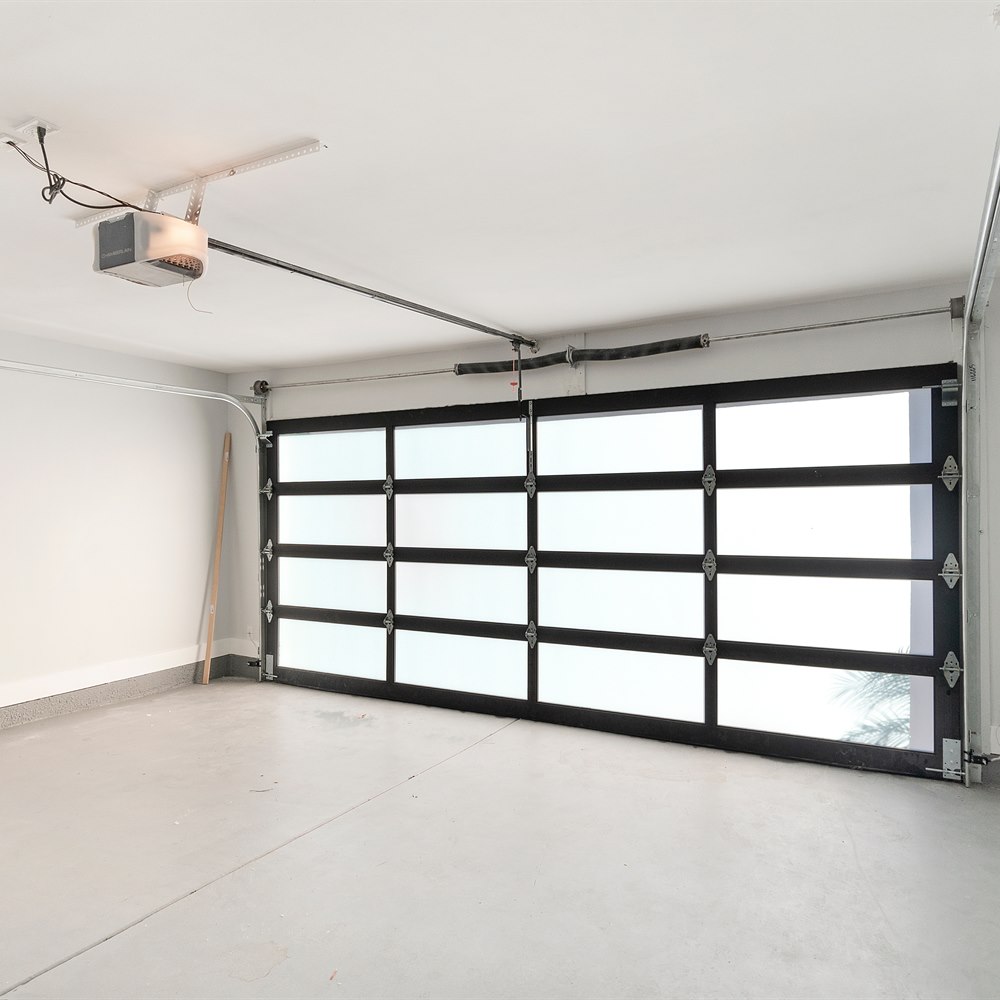
What Does a Garage Door Opener Cost?
A garage door opener typically costs $325 to $1,200 installed, averaging around $525 for a mid-range belt-drive or smart opener on a standard two-car door. Drive type and smart features are the two variables that set the price.
| Opener | Installed cost | Best for |
|---|---|---|
| Chain-drive (1/2 HP) | $325 to $550 | Detached garages, lowest-cost installations |
| Screw-drive | $350 to $600 | Quieter than chain, noisier than belt |
| Belt-drive (1/2 HP) | $350 to $600 | Attached garages next to bedrooms or living space |
| Smart opener (Wi-Fi, camera, battery backup) | $600 to $1,200 | Remote monitoring, delivery access, outage resilience |
| 3/4 HP motor upgrade | $50 to $150 over equivalent 1/2 HP | Heavy or wood doors, high-use applications |
Cost figures on this page were checked against published pricing on September 2, 2026. How we source cost data.
Opener Types Compared
Chain-Drive: $325 to $550
A chain-drive opener uses a metal chain, similar to a bicycle chain, to pull and push the trolley that moves the door. It is the most common, most economical, and mechanically the most durable type, and it is widely serviced. The trade-off is noise and vibration, which transmit through the garage into adjacent rooms. Chain-drive is the right choice for a detached garage, or an attached garage where the neighboring room is not a bedroom. Standard chain-drive units are rated at 1/2 HP and handle most single-car and two-car steel doors. (For more on this, see Chain vs. Belt vs. Smart Garage Door Opener: Which Is Right?.)
Belt-Drive and Screw-Drive: $350 to $600
A belt-drive opener replaces the metal chain with a rubber or polyurethane belt, cutting operating noise and vibration substantially. It is otherwise mechanically similar to a chain drive in reliability and capability. The step up from a chain drive is well justified for an attached garage with a bedroom, home office, or living area above or beside it, and belt-drive is the most common upgrade for homeowners replacing an aging chain drive. Screw-drive openers fall in the same price band and sit between the two on noise: quieter than chain, louder than belt. (For more on this, see What Affects the Cost of a Garage Door Opener?.)
Smart Openers: $600 to $1,200
Smart openers such as Chamberlain MyQ, LiftMaster, and Genie Aladdin Connect connect to your home Wi-Fi and allow you to open, close, and check the door from a smartphone app anywhere with a data connection. They add alerts when the door is left open, activity history showing who opened it and when, temporary access for delivery services or guests, built-in cameras for visual confirmation, and battery backup so the door still operates during a power outage. Many integrate with Amazon Alexa, Google Home, and Apple HomeKit.
The premium runs $100 to $300 over a comparable standard belt-drive. Battery backup is the feature homeowners most often single out, since a power outage previously meant using the manual release.
Horsepower and Door Weight
1/2 HP handles standard single-layer steel doors and most insulated single-car and two-car doors. 3/4 HP or more, up to 1-1/4 HP, is the right call for heavy insulated doors, large two-car doors, and solid wood or carriage-house doors. A 3/4 HP motor costs $50 to $150 more than the equivalent 1/2 HP unit and is required for two-car doors over roughly 160 pounds and for high-use applications. The installer should weigh and measure the door before recommending a motor. When in doubt, go one power level up: an under-powered opener strains against a heavy door and wears out faster. (For more on this, see Questions to Ask Before Buying a Garage Door Opener.)
Installation, Accessories, and Other Cost Factors
| Cost Factor | Typical Range | Notes |
|---|---|---|
| Installation labor | $178 to $238 | for a like-for-like replacement on a properly functioning door with an existing 120V ceiling outlet The quoted price normally covers the opener, installation, programming the remotes and keypad, and adjusting the force and travel settings. |
| New ceiling outlet | $100 to $300 | additional for an electrician if the garage has no outlet at the mounting location |
| Additional remotes | $25 to $60 each | Most openers include one remote and a wall button. |
| Exterior keypad | $30 to $80 |
Removal and disposal of the old opener, new ceiling mounting hardware where none exists, and compatibility work for heavy wood or carriage-house garage doors also add to the total. Most professional installations finish in 2 to 4 hours.
Lifespan and When to Replace
A quality residential opener lasts 10 to 15 years at typical use of three to four cycles per day. The motor and drive mechanism outlast everything else; circuit boards, logic boards, and safety sensors are the components that fail first on aging units. Most manufacturers discontinue parts after 10 to 15 years, and once an opener needs a circuit board or motherboard, the repair cost usually approaches the cost of a new unit. At that point replacement is the more economical choice.
Planning the replacement rather than waiting for a failure also gives you time to compare drive types and decide whether smart features are worth the premium in your household. An opener that fails with the car inside forces a same-day decision, which rarely produces the best price or the best fit.
Getting an Accurate Quote
Two quotes on what looks like identical scope can differ by 20 to 40 percent, usually because of different brands or grades within the same category, different hardware quality, different labor rates, or different assumptions about what is included versus billed separately. Normalize the scope before comparing prices: same drive type and horsepower, same accessories, removal and disposal handled the same way. A low bid that cannot explain why it is low is usually missing something.
Treat the firm quote issued after a site inspection, not the range given over the phone, as the basis for your decision. An installer who sees the door can weigh it, check the existing mounting and outlet, and confirm the horsepower you actually need. Get at least two written quotes and confirm what is covered, whether cleanup and disposal are included, and what the labor warranty is. Opener demand is fairly steady year-round, but booking a non-urgent replacement during a contractor’s slower months usually gets you scheduled faster than waiting for the unit to fail.
Frequently Asked Questions
$325 to $1,200 installed, averaging $525. A basic chain-drive runs $325 to $550, a belt-drive or quieter model $350 to $600, and a smart opener with app control, camera, and battery backup $600 to $1,200. Installation labor is typically $178 to $238 for a standard replacement.
Chain-drive for detached garages and lowest-cost installations; belt-drive for attached garages where the door sits next to a bedroom, home office, or living space. A belt drive replaces the metal chain with a rubber belt and is noticeably quieter. Belt drive runs $350 to $600 installed against $325 to $550 for chain, and the step up is well justified for an attached garage.
App-based remote operation, alerts if the door is left open, activity history, smart home integration with Alexa, Google Home, and HomeKit, built-in cameras, and battery backup for power outages. The premium is $100 to $300 over a comparable belt-drive. It pays off for homeowners who travel, forget to close the door, or want to grant delivery access remotely.
1/2 HP for standard single-layer steel doors and most single-car and two-car steel doors. 3/4 HP to 1-1/4 HP for heavy insulated doors, large two-car doors, or solid wood doors. A 3/4 HP motor costs $50 to $150 more and is required for two-car doors over roughly 160 pounds. Under-powered openers wear out faster.
Chain-drive at $325 to $550 installed. It is reliable and mechanically durable, and its only real drawback is noise. For a detached garage, or any garage where noise does not carry into living space, it is the best value on the market.
10 to 15 years at typical use of three to four cycles per day. The motor and drive mechanism last longest; circuit boards, logic boards, and safety sensors fail first. Most manufacturers discontinue parts after 10 to 15 years, and once a board needs replacing the repair usually costs close to a new opener.
Often, yes. A like-for-like replacement in a garage with existing wiring and mounting hardware is one of the more DIY-accessible projects: the unit mounts to the ceiling, connects to the door's top panel, plugs into a 120V ceiling outlet, and programs with the included remote. Budget 3 to 5 hours. A from-scratch installation with no existing mounting hardware is better left to a professional.
2 to 4 hours for most professional installations. Replacing an existing opener is faster than a new installation in a garage without mounting hardware. Adding a keypad or extra remotes adds only a few minutes.