
What Hidden Costs Come With Main Water Line Repair?
When a main water line fails, the quote to fix the pipe is only part of the story. Main water line repair runs $500 to $12,000 for the pipe work alone, and the reason for that huge spread is that most of the cost isn’t the pipe at all, it’s reaching the pipe and putting your property back together afterward. Knowing the hidden costs keeps a repair quote from turning into a much larger final bill.
Excavation Is Often the Biggest Line Item
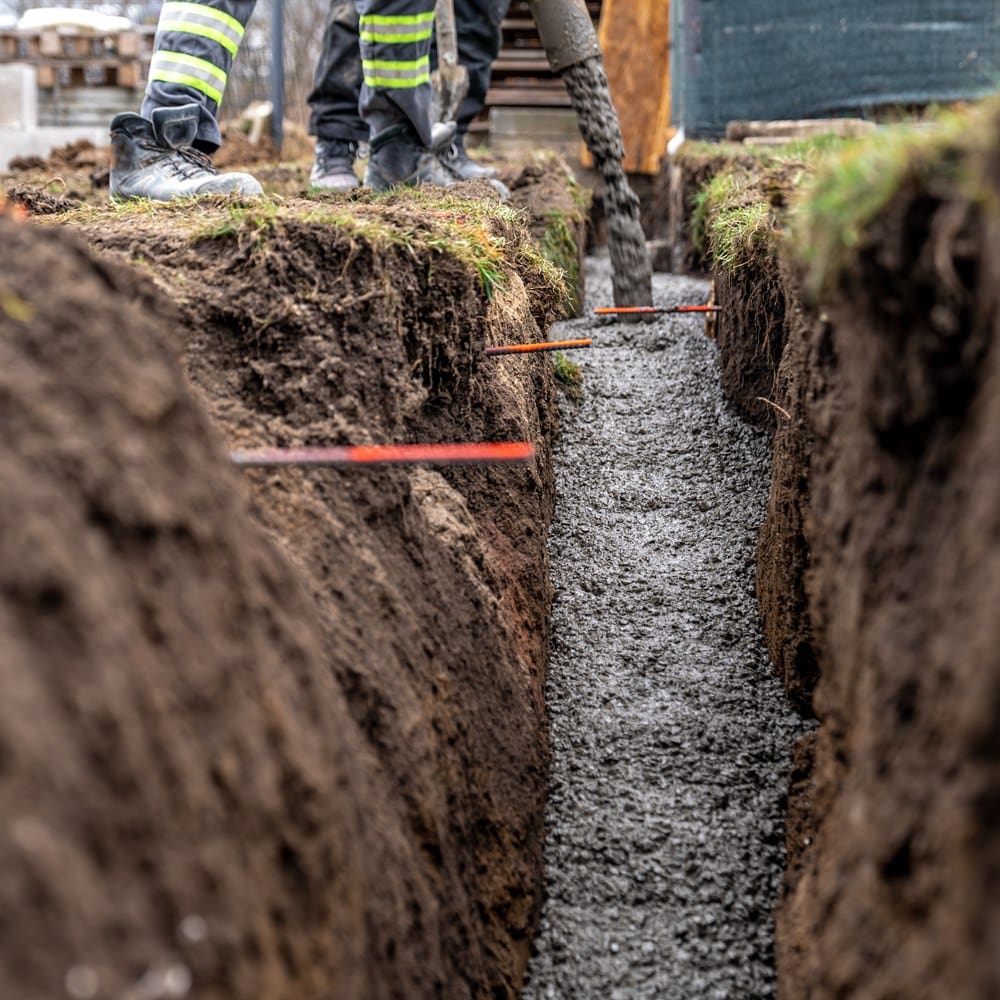
Your service line, the pipe that carries water from the utility’s main to your house, is buried, often several feet down to sit below the frost line. Reaching it means excavation, and on a traditional open-trench repair that means digging a continuous trench along the pipe’s path. The deeper the line and the longer the run, the more digging, and excavation labor frequently costs more than the pipe repair itself. This is why two “water line repairs” can differ by thousands: one is a shallow spot repair, the other a deep, long dig across the yard. The trench also has to be wide and safe enough for a person to work in at depth, so a deep line doesn’t just mean more vertical digging, it means moving considerably more soil overall, all of which has to be set aside and later backfilled and compacted. (For more on this, see What Makes Main Water Line Repair Cost More (or Less)?.)
Surface Restoration After the Dig
Digging a trench tears up whatever sits above the pipe, lawn, garden beds, a walkway, a patio, or a driveway, and putting that back is a separate cost the pipe quote may not include. Restoring sod is one thing; restoring a concrete driveway or a paved walkway the line runs beneath is another entirely, and it can rival the repair cost. Reconnecting a driveway means removing and repouring concrete or resetting pavers and then waiting for it to cure, and matching existing landscaping or a mature lawn can take a full season to look right again, so restoration is both a cost and a recovery-time consideration. Always ask whether surface restoration is included in the quote or whether you’ll be arranging (and paying for) it separately once the plumbers leave.
Permits and Inspections
Because the service line connects to the public water system, main water line work almost always requires a permit and an inspection, and sometimes coordination with the utility. Permit fees and inspection time add to the total, and they’re not optional, permitted work protects you and is often required before the utility will restore or approve the connection. Some jurisdictions also require the utility itself to inspect or make the final tap connection, which means scheduling around their availability, not just the plumber’s, and that coordination can stretch the timeline as well as the cost. (For more on this, see The Drawbacks of Main Water Line Repair: An Honest Look.)
The Spot Repair That Becomes a Replacement
This is the cost that catches people most off guard. A service line that has failed in one spot, especially an older line, is often deteriorating along its whole length, and once the plumber exposes it, they may find the pipe is corroded or brittle enough that a spot patch won’t hold. What you budgeted as a repair becomes a full line replacement. On an aging line, a single leak is frequently a symptom of a pipe reaching the end of its life, so budget for the possibility that the honest fix is replacement, not a patch. EPA WaterSense estimates the average household wastes about 9,300 gallons a year to leaks, and a single dripping faucet more than 3,000 gallons.
Locating the Leak First
Before anyone digs, the leak has to be located precisely, digging blindly along the line’s path is enormously destructive and wasteful. That location work, whether by pressure testing, acoustic equipment, or tracing the wet path, may be a separate diagnostic step. It’s money well spent, since pinpointing the leak means excavating one targeted spot rather than the whole run, but it’s a cost to anticipate on top of the repair. Because the service line can run a long, buried path from the meter to the house, the plumber may use pressure testing to confirm the line is losing water, then acoustic listening or a wet-path trace to narrow down the exact failure point before a single shovel goes in the ground.
Keeping Costs Predictable
The way to avoid surprises on a water line repair is to get the whole picture before work starts. Ask whether excavation and surface restoration are included, whether the quote assumes a spot repair or a full replacement, what permits cost, and whether a trenchless method could reduce the digging. A pro who itemizes these is giving you the real number; one who quotes only the pipe fix may be leaving the expensive parts, excavation and restoration, off the page. When you’re ready for an itemized quote you can actually compare, connect with local pros below. (For more on this, see Questions to Ask Before a Main Water Line Repair.)
Cost figures on this page were checked against published pricing on August 27, 2026. How we source cost data.
Frequently Asked Questions
Usually excavation. The service line is buried several feet down, and digging to reach it, especially a long or deep run, often costs more than the pipe repair itself.
Not always. Digging tears up lawn, walkways, or a driveway, and restoring them can be a separate cost, sometimes rivaling the repair. Ask whether surface restoration is included in the quote.
Almost always. Because the service line connects to the public water system, the work requires a permit and inspection, and sometimes utility coordination. Permit fees and inspection time add to the total.
Yes. An older line that failed in one spot is often deteriorating along its whole length. Once exposed, a corroded or brittle pipe may need full replacement rather than a patch that won't hold.
Digging blindly along the line is destructive and wasteful. Pinpointing the leak first, by pressure testing, acoustic tools, or tracing the wet path, means excavating one targeted spot rather than the whole run.


