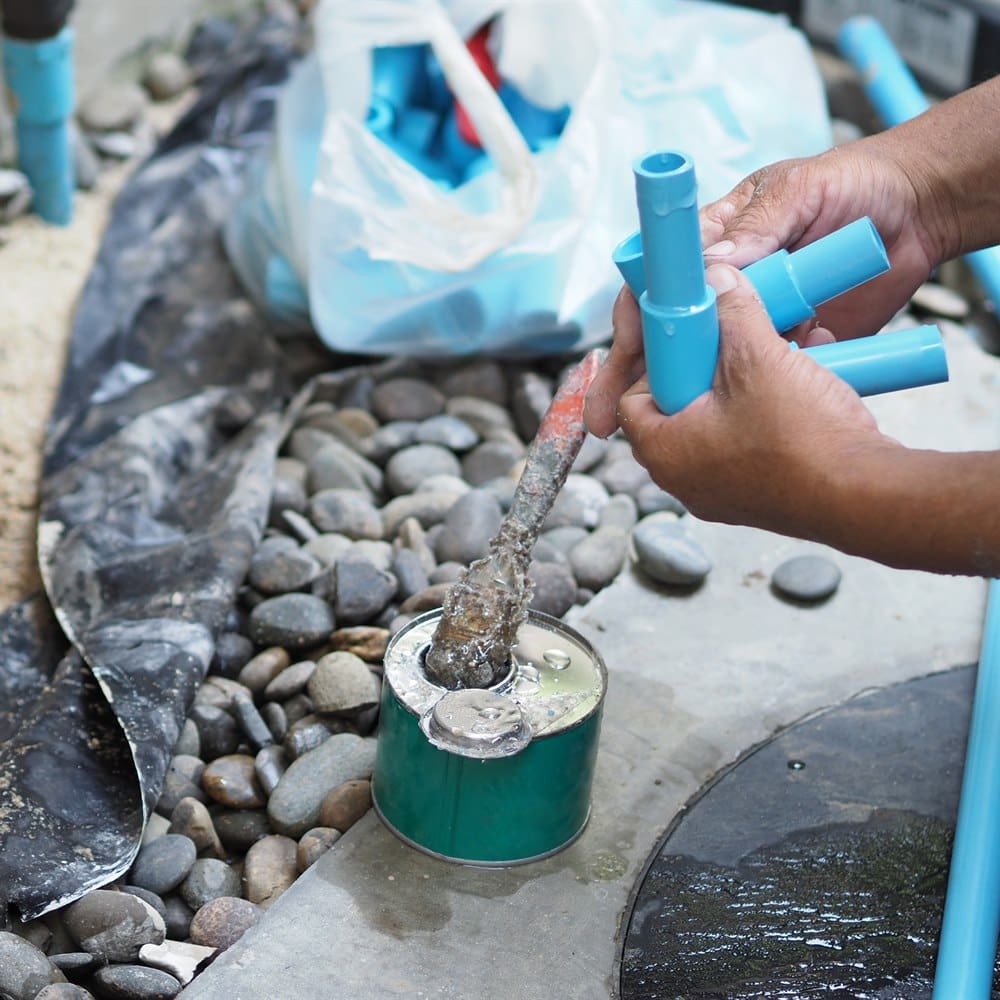

Which Pipe Material Is Best for Water Line Replacement?
PEX is the default for most main water line replacements at $0.50 to $2 per linear foot for the material, against $2 to $5 for copper. Material is a small share of the bill — the installed job runs $50 to $150 per linear foot open-cut. PEX is flexible, freeze-resistant, and corrosion-proof, but it degrades in sunlight and cannot run above ground. Copper carries a 50 to 70-year track record and is preferred where water chemistry is aggressive. HDPE is the standard for trenchless installation. Here is how the three compare on cost, longevity, and installation method.
PEX (Cross-Linked Polyethylene)
PEX has become the leading residential water line replacement material for a well-supported combination of reasons. It is flexible — long runs can be pulled with minimal fittings, reducing leak points. It is freeze-resistant — PEX expands when frozen and typically does not burst, unlike copper or rigid plastic. It resists corrosion from virtually all water chemistries. Installation is faster than copper (no soldering required). Cost: $0.50 to $2 per linear foot for the material, which is the least expensive option. Limitation: PEX degrades in UV exposure (not suitable for outdoor applications above ground) and is relatively new — long-term performance data extends only to the 1990s in North America, though European experience since the 1970s is positive. (For more on this, see How Much Does Water Line Repair Cost?.)
Copper
Copper is the traditional standard — durable, bacteriostatic (naturally inhibits bacterial growth), and with a 50 to 70-year track record in residential service lines. It is compatible with virtually all fittings and systems. Limitation: copper costs significantly more than PEX ($2 to $5 per linear foot) and requires soldering skill for most connections. In aggressive water chemistry conditions (soft, low-pH water, or waters with high dissolved oxygen): copper can experience pinhole corrosion that results in leaks. Copper remains the preferred choice for many plumbers and in jurisdictions with known aggressive water chemistry.
HDPE (High-Density Polyethylene)
HDPE is the material of choice for trenchless installations (pipe bursting and directional drilling) because it can be fused at joints rather than connected with mechanical fittings, creating a monolithic pipe with no leak-prone joints underground. It has exceptional flexibility for directional drilling and excellent pressure resistance. Limitation: connection to the home’s internal plumbing requires transition fittings from HDPE to PEX or copper. Cost is comparable to PEX for the material; installation by trenchless methods adds equipment cost offset by surface restoration savings. EPA WaterSense estimates the average household wastes about 9,300 gallons a year to leaks, and a single dripping faucet more than 3,000 gallons.
Working With a Contractor on This Project
Getting the right outcome on any home services project starts before the work begins. A few consistent practices make the difference between a smooth project and a frustrating one.
Get at least two or three quotes. A single quote gives you no basis for comparison. Two or three quotes reveal the market rate for the work, expose scope differences between bidders, and let you assess contractor communication quality before any commitment is made. The lowest bid is not automatically the best value if the scope is thin or the materials are underspecified.
Ask for licenses and insurance before work starts. Verify current general liability insurance and, for any work involving workers on your property, workers compensation coverage. Licensing requirements vary by state and trade; confirm the specific requirements in your jurisdiction. A licensed contractor who carries appropriate insurance protects both parties if something goes wrong during the project. (For more on this, see Questions to Ask Before Hiring a Water Line Repair Contractor.)
Get the scope in writing. A written proposal that specifies materials, labor scope, timeline, what is included (permits, cleanup, disposal), and warranty terms is the foundation of a professional engagement. Verbal agreements on any of these points invite misunderstanding. For any project over $500, written scope is non-negotiable.
Clarify the payment schedule upfront. A reasonable payment schedule ties major payments to project milestones: a deposit at signing, a payment at material delivery or project start, and a final payment at completion after a walkthrough confirms satisfaction. A contractor who requires full payment upfront before work begins is a red flag in any trade.
Making a Confident Decision
The information in this article is designed to help you ask better questions of the professionals you work with, evaluate their answers with more confidence, and understand the decisions involved in this type of home services project. It is not a substitute for professional assessment of your specific home.
Every home is different. Roof slopes, local weather, tree exposure, soil conditions, and existing system condition all affect what the right solution is for your specific situation. The general principles here apply broadly, but a professional who assesses your home in person will give you guidance that accounts for the details that general articles cannot.
When you are ready to move forward, getting at least two or three quotes from licensed, insured, local contractors is the most important practical step. It lets you compare approaches, assess contractor quality, and confirm that the solution proposed matches your specific situation and budget.
Water Line Repair Cost at a Glance
The main water line connects the meter at the street to your home. Repair cost depends on how much pipe is affected and how accessible it is. (For more on this, see What Affects Water Line Repair Cost?.)
Minor leak repair: $500 to $2,000 — patch or spot repair on an accessible section.
| Cost Factor | Typical Range | Notes |
|---|---|---|
| Partial line replacement | $1,500 to $4,000 | — depends on length, depth, and pipe material |
| Full line replacement, open-cut | $4,000 to $12,000 | — $50 to $150 per linear foot; more under a driveway than across open lawn |
| Full line replacement, trenchless | $3,200 to $8,000 | — pipe bursting or lining, $100 to $250 per linear foot, with far less surface to restore |
| Overall range | $500 to $12,000 | , averaging $4,000, for the pipe work only; surface restoration is usually quoted separately |
Cost figures on this page were checked against published pricing on August 29, 2026. How we source cost data.