
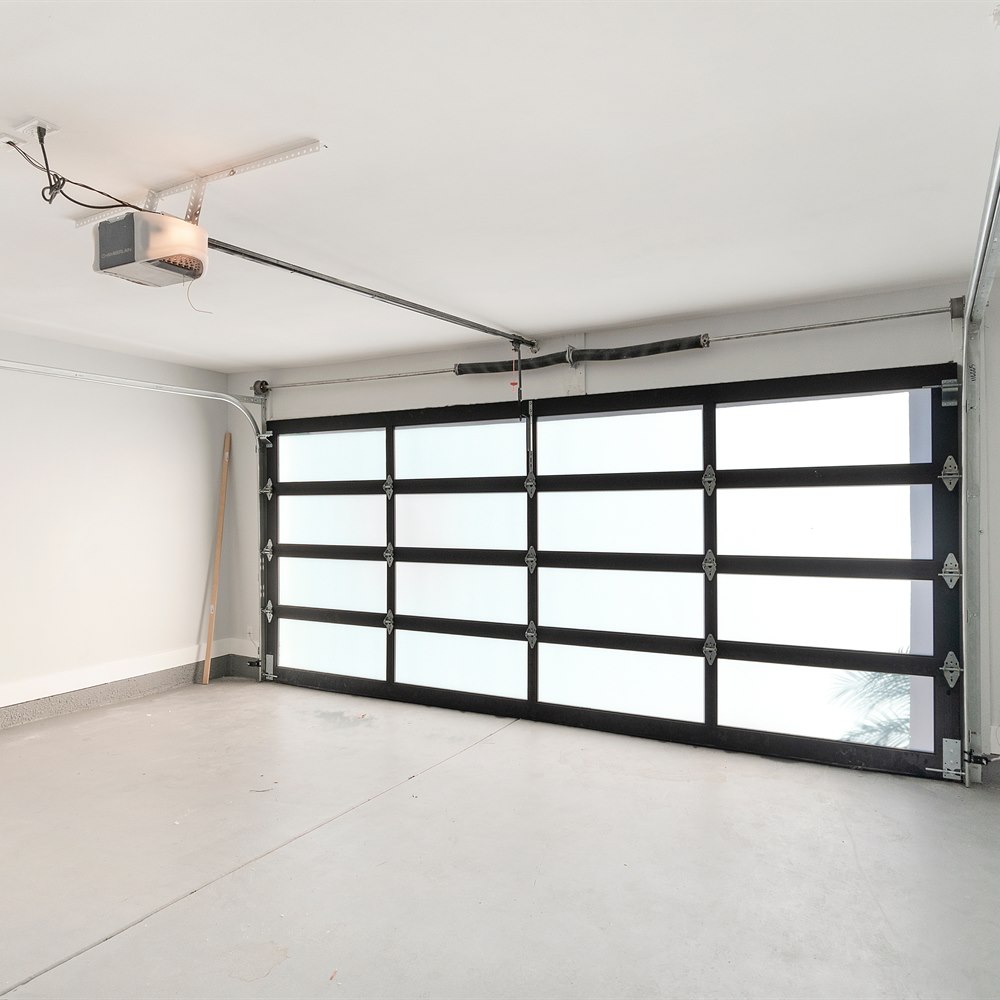
How Do You Maintain a Garage Door Opener?
A garage door opener is a mechanical and electrical system, and the maintenance it needs is straightforward. The full routine takes about 30 minutes a year and prevents the most common failures.
Lubricate the Drive
Chain-drive and screw-drive openers need lubrication twice per year, and at an absolute minimum once a year. Apply white lithium grease or a dedicated garage door lubricant to the chain or to the steel screw rod, with the opener unplugged, and wipe off the excess so it does not drip onto the floor or a vehicle. Belt drives need no belt lubrication because the rubber belt is maintenance-free, but the trolley and moving hardware still benefit from a light application. A dry chain gets progressively noisier and wears faster. This step takes five minutes and is the single most impactful thing you can do for the opener.
Test the Safety Reversal (Monthly)
Place a two-by-four flat on the floor in the door’s path and close the door with the opener. The door should contact the board and reverse immediately. If it does not reverse, or reverses with a delay, adjust the close force setting, which sits either behind the opener’s light cover panel or on the back of the motor unit depending on the model, or call a technician. A door that does not reverse on contact is a safety hazard. (For more on this, see Garage Door Opener Safety: What Every Homeowner Should Know.)
Clean and Align the Photo-Eye Sensors (Monthly)
The photo-electric sensors at the bottom of the door tracks are critical safety components. Wipe the lenses monthly with a soft dry cloth to remove dust and cobwebs, and check for obstructions in the beam path. Both indicator lights should be on steadily. A blinking light means the beam is broken or the sensors are misaligned; adjust the mounting bracket until the light holds steady. Misaligned sensors make the door reverse unexpectedly or refuse to close. Confirm the sensors actually work by waving a broom handle through the beam while the door is closing. The door should stop and reverse.
Check the Trolley and Hardware (Annually)
Inspect the trolley carriage, the bracket connecting the trolley to the door, and the rail assembly for loose fasteners, cracked components, or wear. Tighten any loose bolts in the rail. A cracked or worn trolley bracket should be replaced before it fails.
Replace the Remote Battery (Annually)
Do not wait for the remote to quit. Replace the battery once a year as a scheduled task; most remotes use a common 9V or 23A cell. A weak battery produces inconsistent range before failing outright, which is easily mistaken for an opener problem. Fresh batteries are the first diagnostic step for any remote response issue. Label the replacement date on the back of the remote with a piece of tape. (For more on this, see Common Garage Door Opener Problems and What They Mean.)
Listen for Changes in Operating Sound
An opener that is louder than normal, grinds, or hesitates during operation may have a worn drive component, loose hardware, or a trolley carriage problem. Catching a noise change early keeps a minor issue from progressing to a full mechanism failure. Lubrication and hardware tightening resolve most sound changes; noise that persists or worsens warrants an inspection.
The Maintenance Schedule at a Glance
| Task | Frequency |
|---|---|
| Lubricate chain or screw drive | Twice per year |
| Safety reversal test with a two-by-four | Monthly |
| Clean and check photo-eye sensors | Monthly |
| Inspect trolley, bracket, and rail hardware | Annually |
| Replace remote battery | Annually |
When to Call a Technician
Cleaning, lubricating, battery replacement, and visual inspection are homeowner tasks. Call a professional when the safety reversal does not function correctly, the door does not operate consistently on command, grinding persists after lubrication, or the motor shows strain by hesitating to lift the door or running slower than it used to. Spring adjustment, mechanical balance adjustment, and track realignment are also professional work. Garage door springs are under high tension, and the cost of a diagnostic service call is modest next to a DIY repair that makes the problem worse or creates a safety issue.
How Long an Opener Lasts and When to Replace It
Most residential openers last 10 to 15 years with regular maintenance. High-use installations running four or more cycles per day see shorter motor life, and an opener that is consistently under-powered for the door it lifts fails sooner. Higher-end units with DC motors and better drive components tend to reach the upper end of the range. Keeping the drive lubricated and the door springs balanced protects the motor from excess load, which is what actually determines service life.
Replace the opener when it is past 10 to 15 years old and showing reliability problems, when the motor strains to lift the door, when it lacks current minimum safety features such as auto-reverse on contact and photo-eye sensors, or when a repair quote approaches replacement cost. Current models add smart connectivity, battery backup, and quiet belt drives, which make replacement worth considering even before outright failure. (For more on this, see Common Garage Door Opener Problems and How to Fix Them.)
Making the Schedule Stick
The barrier to preventive maintenance is not cost or difficulty, it is consistency. Maintenance that is intended but not scheduled does not happen. Write the tasks down rather than relying on memory: note the installation date, the first due date for each task, and the recurring interval. Record the spring type and cycle rating at installation so you have a reference point for proactive spring replacement later. Tie the annual items to a season or an existing routine and set calendar reminders for the monthly ones. Thirty to sixty minutes of maintenance time per year prevents failures that cost hundreds to thousands of dollars to repair or replace, which makes it one of the highest-return uses of an hour in home ownership.
Frequently Asked Questions
Lubricate the chain or screw drive twice per year with white lithium grease, test the auto-reverse monthly with a two-by-four in the door's path, clean and check the photo-eye sensors monthly, inspect the trolley and hardware annually, and replace the remote battery annually. The full routine takes about 30 minutes a year.
Twice per year with white lithium grease or a dedicated garage door lubricant, and at minimum once a year. A dry chain becomes progressively noisier and wears faster. Belt drives need no belt lubrication but benefit from light lubrication of the trolley and moving hardware.
Unplug the opener, apply garage door lubricant spray or white lithium grease to the chain, work it into the links, and wipe off any excess so it does not drip on the floor or your vehicle. Screw drives get the same treatment on the steel rod.
Place a two-by-four flat on the floor in the door's path and close the door with the opener. It should contact the board and reverse immediately. Also wave a broom handle through the sensor beam while the door closes; the door should stop and reverse. Test both monthly.
A blinking indicator light means the beam between the two sensors is interrupted or the sensors are misaligned. Clean both lenses, clear any obstructions such as leaves or cobwebs, then adjust the sensor mounting bracket until the light is steady.
10 to 15 years for most residential openers with regular maintenance. High-use applications of four or more cycles per day shorten motor life, while higher-end units with DC motors often reach the top of that range. Maintaining drive lubrication and spring balance produces the longest life.
Replace it when the unit is more than 10 to 15 years old and having reliability issues, when the motor strains to lift the door, when it lacks auto-reverse on contact and safety sensors, or when the repair cost approaches replacement cost.
Call one when the safety reversal does not work, the door operates inconsistently, grinding persists after lubrication, or the motor hesitates. Spring adjustment, balance adjustment, and track realignment are always professional work because the springs are under high tension.