What Are the Drawbacks of Each Foundation Type?
Every foundation type, slab, crawl space, and basement, has advantages, but each also has real drawbacks. Understanding them helps you choose the right one for your situation. There’s no universally “best” foundation; the right choice depends on your needs, climate, and site. Here’s the honest look at each type’s downsides.
Slab Foundation Drawbacks
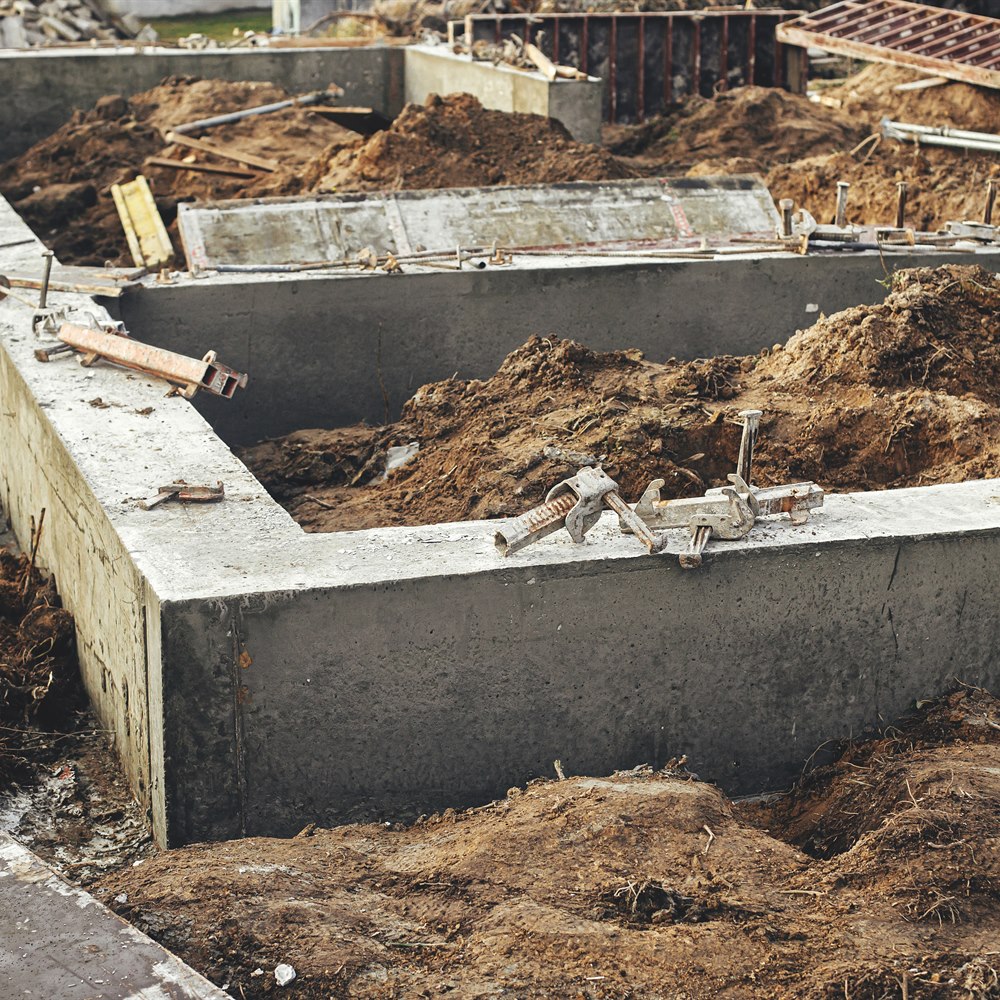
A slab is affordable and low-maintenance, but has trade-offs. There’s no under-floor access, so plumbing and wiring run through or under the slab, making repairs harder and more expensive (you may have to cut into the slab). Slabs can be less comfortable in cold climates (the floor is cold without proper insulation), and offer no storage or shelter space beneath. If the slab cracks or the soil beneath shifts, repairs can be difficult. For a warm climate and a budget priority, these drawbacks may be acceptable; in other situations, they matter more. The buried-utilities issue is the slab’s most consequential drawback in practice, because with the plumbing and sometimes electrical runs cast into or beneath the concrete, a leak or repair down the line can mean cutting through the finished floor to reach the problem, so a slab that saves money upfront can make a future plumbing repair considerably more disruptive and costly than the same repair under an accessible crawl space. Before any digging begins, call 811 — the free national before-you-dig service — to have underground utilities located and marked.
Crawl Space Drawbacks
A crawl space provides under-floor access and works where a slab isn’t ideal, but has downsides. The crawl space can collect moisture, leading to mold, wood rot, and pest issues if not properly sealed and ventilated, an ongoing maintenance concern. Floors can be colder and less energy-efficient without proper insulation. And a crawl space offers limited usable space, it’s for access, not living. Proper encapsulation and moisture control address the biggest concerns but add cost. Crawl spaces need moisture management to avoid problems. Encapsulation is the modern answer to the crawl space’s central weakness, sealing the space with a heavy vapor barrier over the ground and up the walls, sometimes adding a dehumidifier or conditioned air, so that ground moisture can’t feed the mold, wood rot, and pest problems an open, damp crawl space is prone to, and while it adds cost, it converts the type’s biggest liability into a controllable one.
Basement Drawbacks
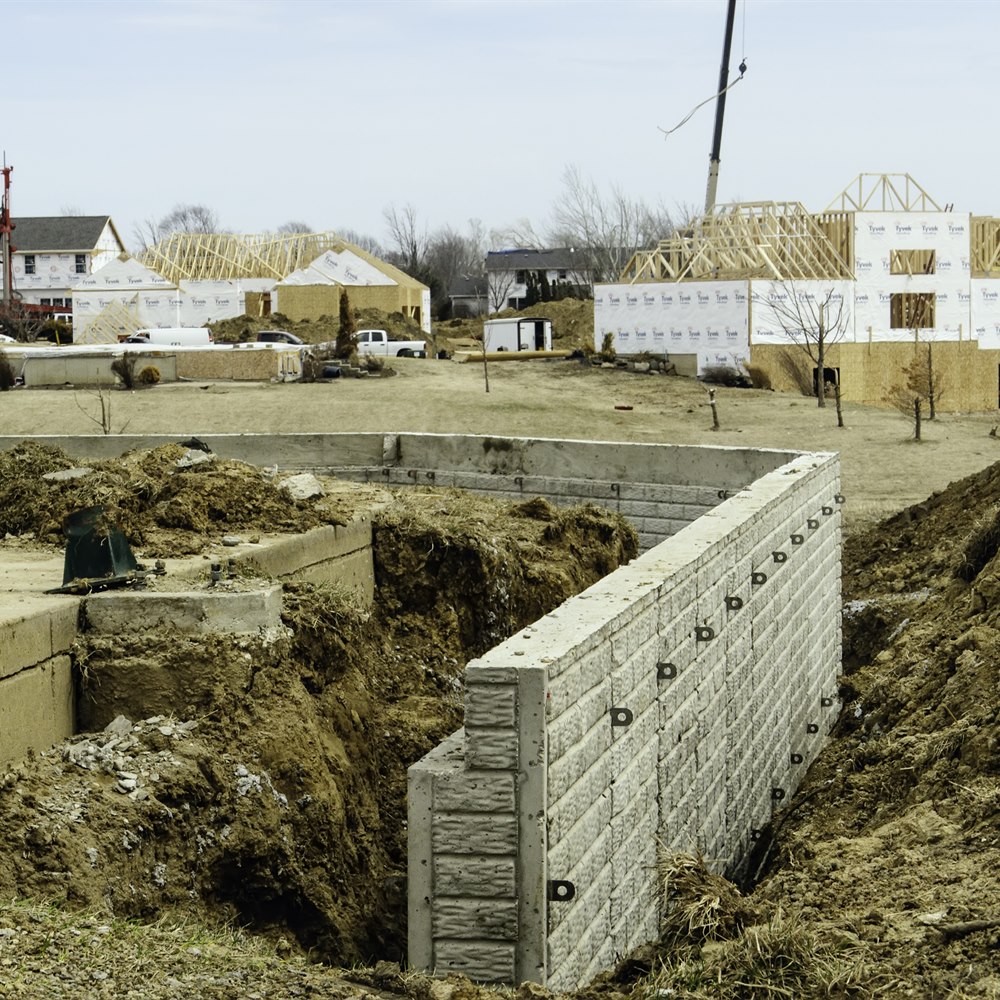
A basement adds valuable space but has the most significant drawbacks. It’s by far the most expensive to build (deep excavation, extensive concrete). Basements are prone to water issues and require proper waterproofing and drainage, an ongoing concern and cost. They can be damp or require dehumidification. And in areas with a high water table or certain soils, a basement may be impractical or very costly. The added space is valuable, but it comes with the highest cost and the water-management burden. A basement is the most rewarding and the most demanding foundation. The water burden is inherent to putting living space below grade, because a basement’s walls and floor sit surrounded by soil that holds water and, when saturated, exerts hydrostatic pressure inward, so keeping it dry demands a system, exterior waterproofing, footing drains, proper grading, and often a sump, whose cost and ongoing attention are simply part of what owning a basement entails rather than optional extras.
The Common Thread: Site and Climate Matter
Which drawbacks matter most depends heavily on your site and climate. In a cold climate, a slab’s cold floor and a crawl space’s efficiency matter. In a wet area or high water table, a basement’s water risk is a serious concern. In expansive or poor soil, any foundation needs careful engineering. There’s no drawback-free choice, only the right trade-offs for your situation. Match the foundation to your specific conditions. This is why a foundation choice that’s obviously right in one place can be clearly wrong in another, a basement that adds cheap space in a cold northern climate can be an impractical, water-prone liability on a high-water-table coastal lot, and a slab that’s perfect in a warm dry region can mean cold floors and buried-pipe headaches elsewhere, so the conditions, not a general ranking, decide which drawbacks you’ll actually live with. (For more on this, see Slab vs. Crawl Space vs. Basement: Which Foundation Is Best?.)
Choosing Despite the Drawbacks
The goal isn’t a perfect foundation (none exists) but the right foundation for your needs, budget, climate, and site. A slab for affordability in a warm climate, a crawl space for access and moderate cost, or a basement for space where conditions allow, each is the right choice in the right situation despite its drawbacks. Weighing the trade-offs against your priorities leads to the right decision. The best foundation is the one whose drawbacks you can live with. Framing the decision this way is genuinely useful, because since no type is drawback-free, the real question isn’t which foundation is best in the abstract but which set of trade-offs best fits your priorities and site, so a buyer who values cheap space and lives where basements work well accepts the water-management burden gladly, while one in a warm climate on a budget happily takes a slab’s limitations in exchange for its low cost. (For more on this, see When Each Foundation Type Is the Right Choice.)
Making an Informed Choice
Each foundation type has real drawbacks, a slab’s lack of access, a crawl space’s moisture concerns, a basement’s cost and water risk, but each is the right choice in the right situation. Understanding the trade-offs, and matching them to your needs, climate, and site, leads to a sound decision. An honest professional helps you weigh them. When you’re ready for that guidance, connect with a local pro below. (For more on this, see Slab vs. Crawl Space vs. Basement: Which Foundation Is Right?.)
Frequently Asked Questions
No under-floor access (plumbing and wiring run through or under the slab, making repairs harder, sometimes requiring cutting into it), colder floors in cold climates without insulation, no storage or shelter beneath, and difficult repairs if the slab cracks or soil shifts. For a warm climate and budget priority, these may be acceptable.
It can collect moisture, leading to mold, wood rot, and pest issues if not properly sealed and ventilated, an ongoing maintenance concern. Floors can be colder and less efficient without insulation, and the space is for access, not living. Proper encapsulation and moisture control address the biggest concerns but add cost.
It's by far the most expensive (deep excavation, extensive concrete), prone to water issues requiring proper waterproofing and drainage (an ongoing concern and cost), can be damp, and may be impractical or very costly in areas with a high water table or certain soils. The valuable space comes with the highest cost and water-management burden.
There's no universally best foundation, the right choice depends on your needs, climate, and site. A slab suits a warm climate and budget priority, a crawl space offers access at moderate cost, and a basement adds space where conditions allow. Each is the right choice in the right situation despite its drawbacks.
Weigh each type's trade-offs against your priorities, budget, climate, and site. A slab for affordability in a warm climate, a crawl space for access and moderate cost, or a basement for space where conditions allow. The best foundation is the one whose drawbacks you can live with for your situation.