What Does Aging-in-Place Remodeling Cost?
Aging-in-place remodeling, adapting a home so you can live in it safely as you age, costs from $500 to $2,000 for basic safety upgrades to $35,000 to $120,000 or more for a comprehensive whole-home retrofit, with one fully accessible bathroom — the project most households actually buy — at $15,000 to $45,000 and typically landing near $25,000. The spread is that wide because the term covers everything from adding a few grab bars to reconfiguring an entire home for full wheelchair accessibility. Where you land depends on current mobility, the home’s existing layout, and how many rooms need modification.
| Tier | Cost | What it covers |
|---|---|---|
| Safety essentials | $500 to $2,000 | Grab bars, comfort-height toilet, lever hardware, lighting, non-slip flooring |
| Accessible bathroom remodel | $15,000 to $45,000 installed | Curbless shower, accessible fixtures, roll-under vanity; a typical project lands near $25,000 |
| Whole-home retrofit | $35,000 to $120,000 or more | Multiple rooms as one coordinated project: doorway widening at $600 to $2,500 each, ramps at $1,500 to $5,000, accessible kitchen |
| Stair lift or residential elevator | $3,200 to $20,000 installed for a stair lift | A straight lift is $3,200 to $7,500 and a curved one $9,000 to $20,000; a residential elevator is a separate purchase at $30,000 to $60,000 or more |
Cost figures on this page were checked against published pricing on September 2, 2026. How we source cost data.
Safety Essentials: $500 to $2,000
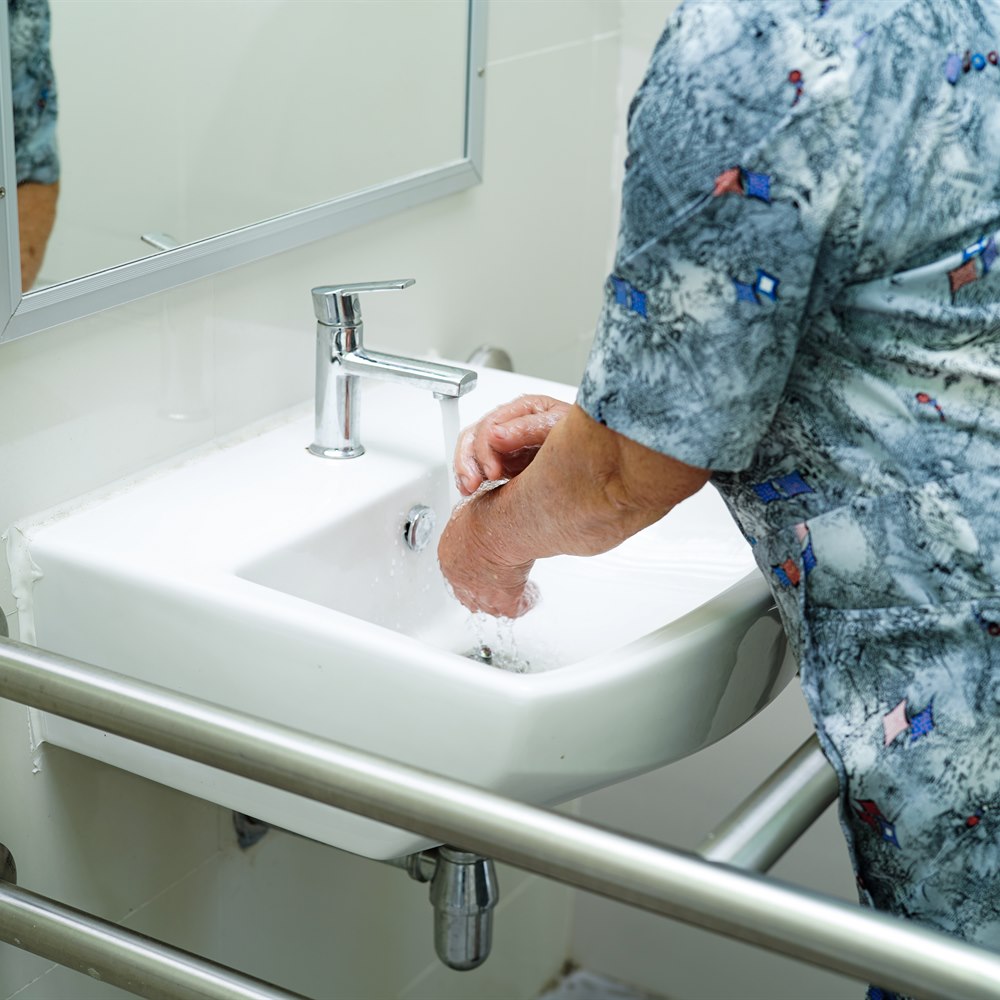
The most cost-effective improvements address the highest-risk fall hazards immediately, and because they are add-ons rather than construction they can usually be installed in a day or two without permits.
| Cost Factor | Typical Range | Notes |
|---|---|---|
| Grab bars at the toilet and shower | $150 to $300 per bar installed | The bar must anchor into studs or solid blocking, not drywall alone. |
| Comfort-height toilet | $300 to $1,200 installed | A seat around 17 to 19 inches is far easier to sit down onto and rise from than a standard-height one. |
| Lever-style door and faucet hardware | $500 to $1,500 | throughout the home depending on fixture count Levers replace the round grips that arthritic hands struggle with. |
| Non-slip flooring treatments or backed bath mats | $50 to $200 | |
| Improved lighting | $100 to $400 | for LED nightlights and motion-sensor lighting in hallways |
These targeted improvements address the most common fall scenarios at minimal cost, and they make sense as an immediate first step regardless of any larger renovation plan.
Accessible Bathroom Remodel: $15,000 to $45,000
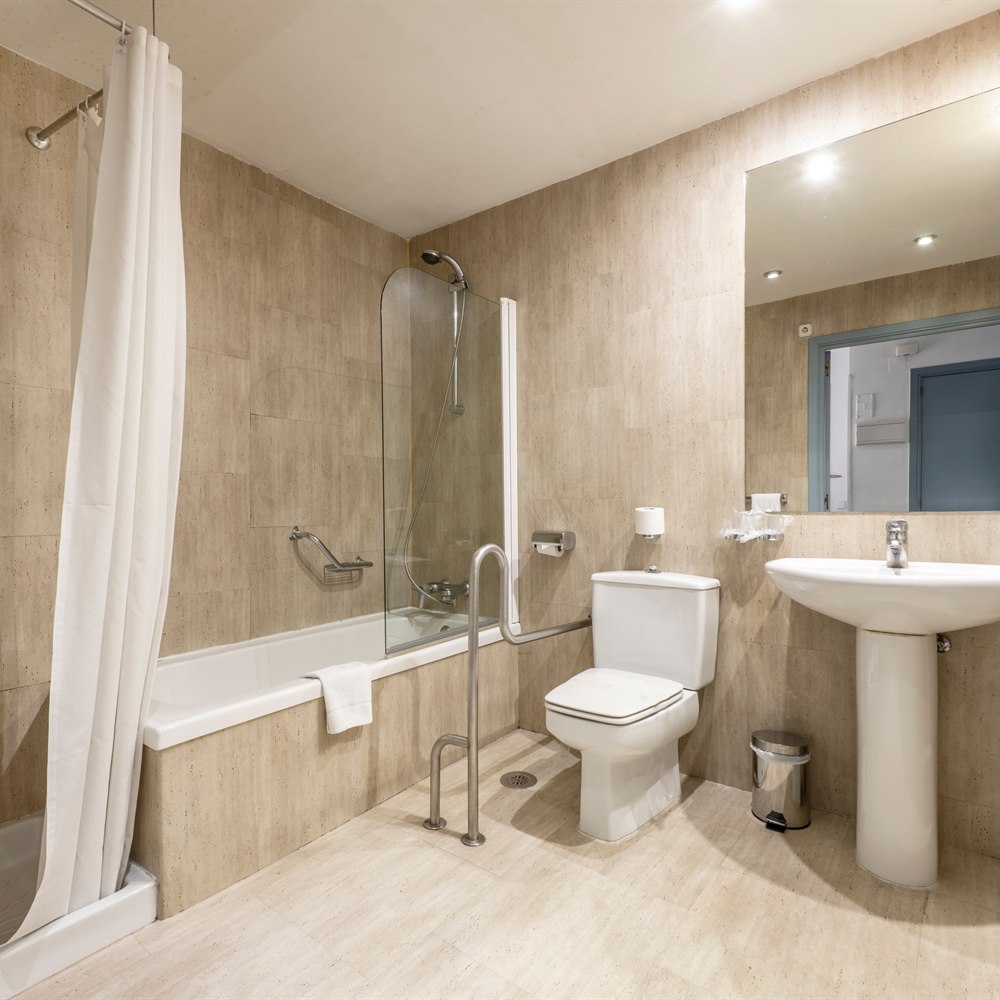
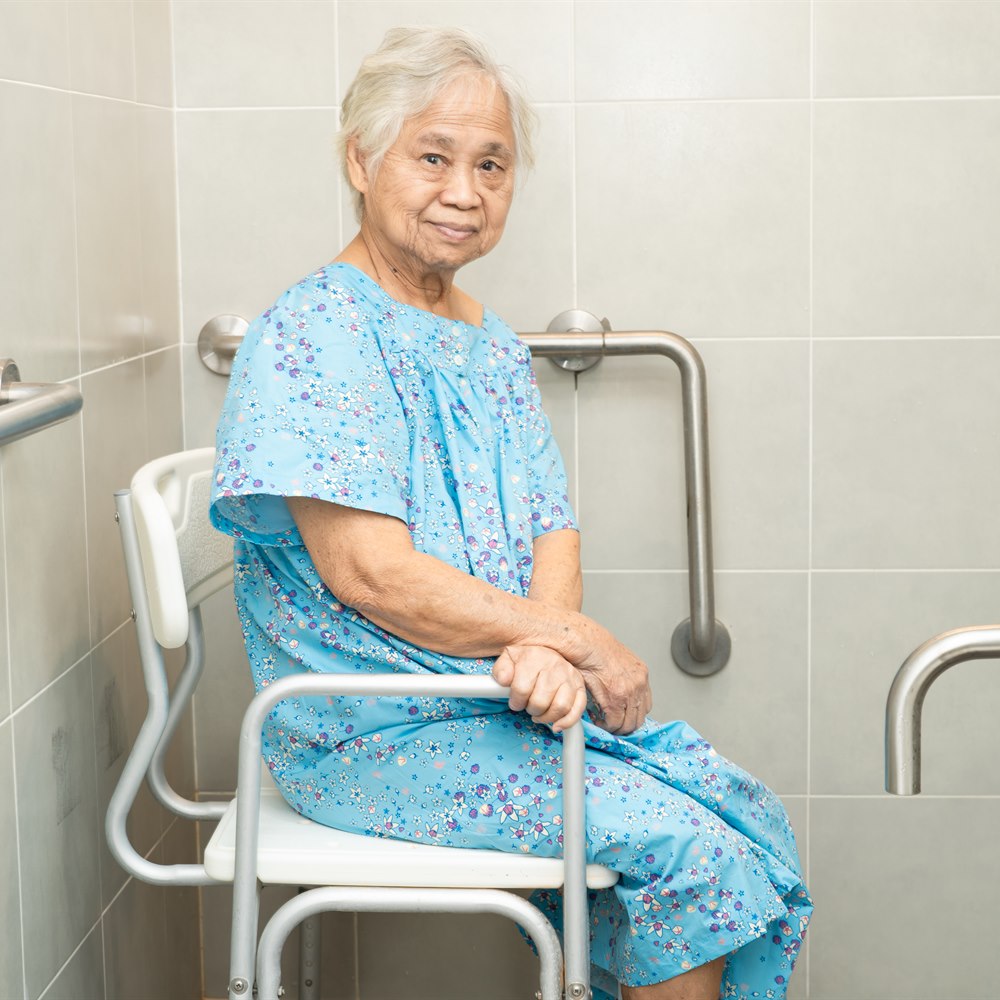
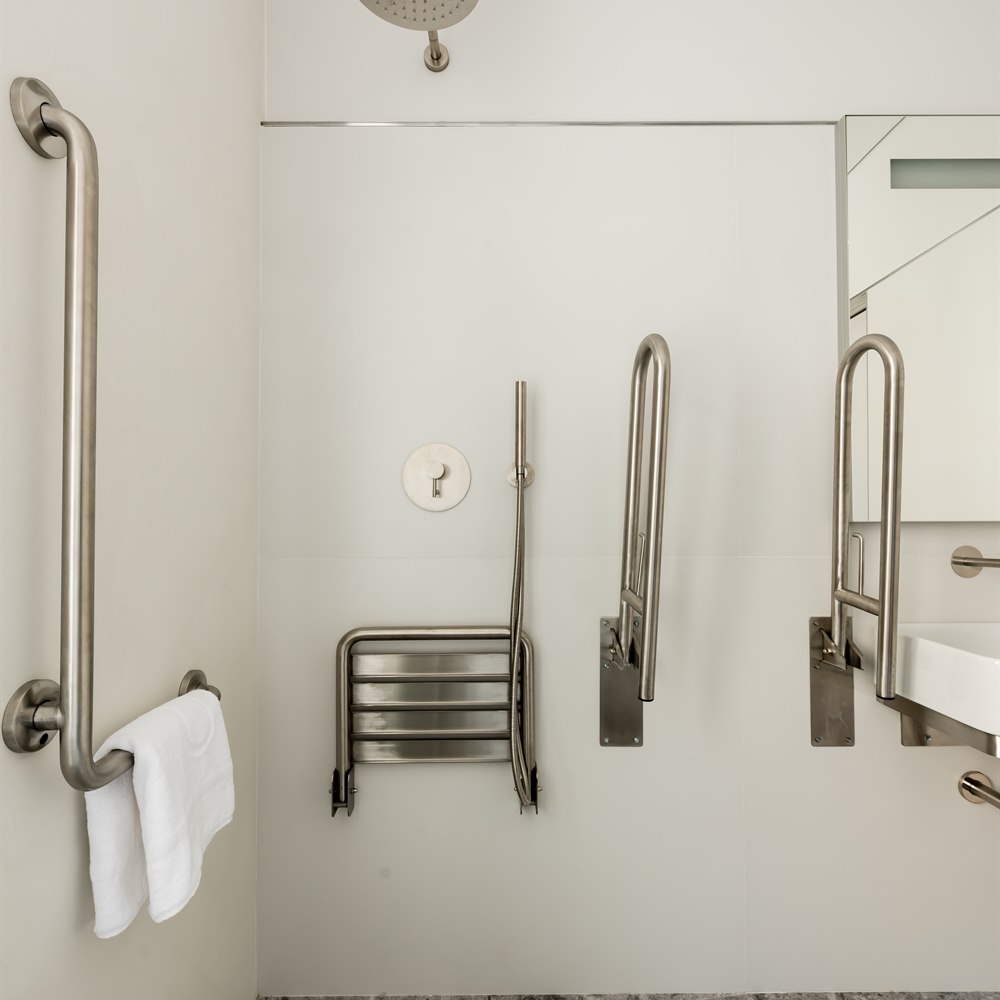
The bathroom concentrates the most fall risk in the home: wet surfaces, hard fixtures, and the awkward transition of getting in and out of a tub. Most aging-in-place investment is appropriately concentrated here. A full accessible bathroom remodel includes a curbless zero-threshold shower with a fold-down bench, reinforced grab bars anchored to blocking, a handheld showerhead, a comfort-height toilet with grab bars on both sides, a roll-under vanity accessible from a wheelchair, and non-slip flooring. Cost climbs into this range because it is real construction: modifying the floor, waterproofing, and sometimes moving the drain. Existing bathroom size and the extent of tile work determine where in the range you land. The CDC’s STEADI initiative treats home modification as a core part of reducing fall risk for older adults.
Whole-Home Retrofit: $35,000 to $120,000
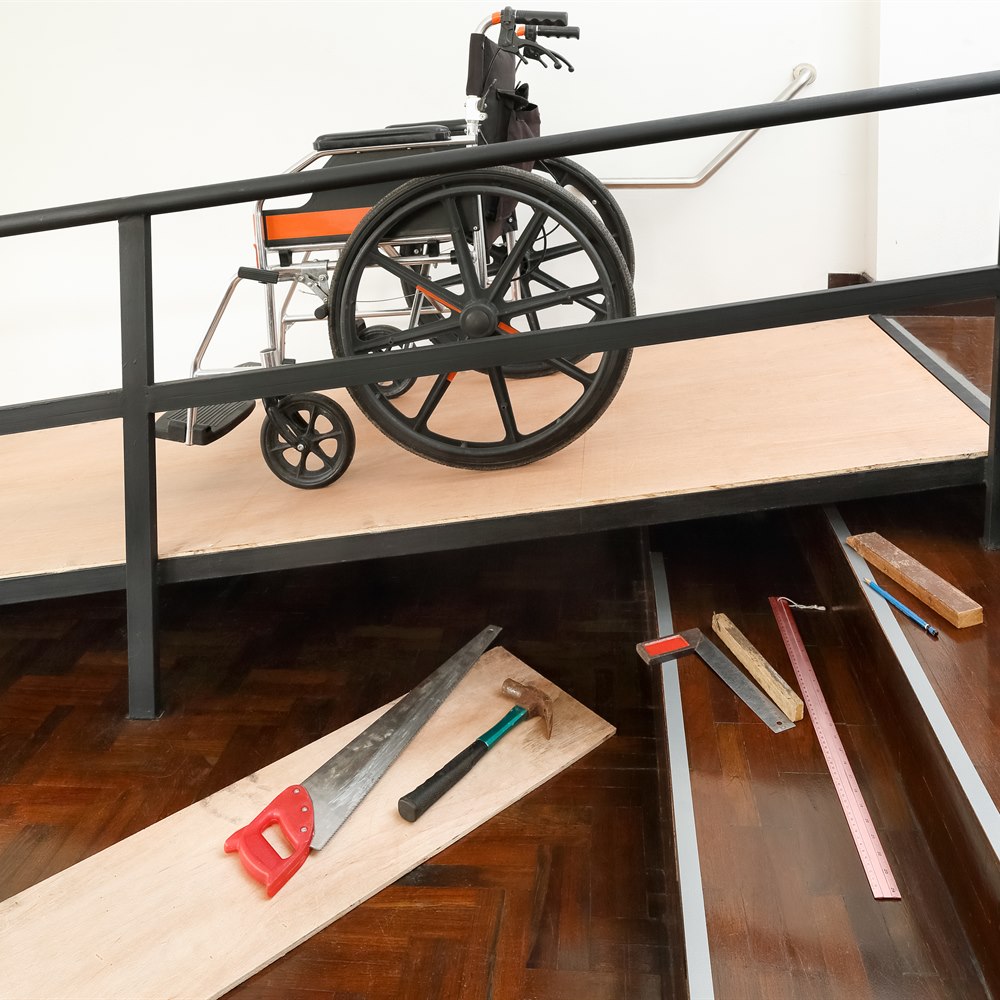
A comprehensive retrofit addresses every barrier in the house: doorways widened throughout, ramped or no-step entries, laundry relocated to the main floor, a bedroom addition or conversion to create single-floor living, accessible kitchen modifications such as lowered countertop sections, pull-out shelves, and knee space under the sink, and a stair lift or home elevator for an accessible route between floors. Hitting accessibility targets across an entire home, rather than in one room, is what drives a project to the top of the range.
The Dimensions That Make a Modification Work
Accessible modifications only deliver their benefit when they are built to the right specifications. Grab bars mounted at roughly 33 to 36 inches and anchored into studs or blocking give a secure handhold exactly where falls happen. A comfort-height toilet seat sits around 17 to 19 inches. A curbless shower entry keeps the threshold under about half an inch, paired with slip-resistant flooring rated for wet areas at DCOF 0.60 or higher. Doorways widen to 32 to 36 inches of clear width, with 32 inches the minimum and 36 preferred for wheelchair access. Ramps are built to a slope no steeper than about 1 in 12 with level landings, and a wheelchair turning space is provided where needed.
What Moves the Number
Within any tier, cost depends on how much structural change is involved. Widening a doorway means altering framing; a curbless shower means modifying the floor. Fixture selection matters, since accessible fixtures range widely in price. So does how many rooms you address and what your home already offers: a house that already has a first-floor bedroom and bath is far cheaper to adapt than one that needs a stair lift or an entirely new accessible route.
This is where an occupational therapist earns their fee at the assessment stage. They evaluate the person’s actual mobility and daily routines against the home’s specific layout, which prevents both overspending on features that are not needed and underspending on the ones that genuinely prevent injury.
Financial Assistance and Tax Credits
Several programs help offset the cost. The Home Modification Tax Credit varies by state and is not a federal program. Medicaid Home and Community-Based Services waivers are income-dependent and pay for modifications that prevent nursing home placement. The VA Home Improvements and Structural Alterations (HISA) grant provides veterans up to $6,800 for service-connected disabilities and up to $2,000 for non-service-connected. Most counties have an Area Agency on Aging offering free or low-cost modification programs for low-income seniors, and the USDA Section 504 Home Repair Program serves rural areas. (For more on this, see Essential Aging-in-Place Modifications: What Makes the Biggest Difference.)
Planning and Hiring
The best time to make these modifications is before they are urgently needed. Installing blocking in bathroom walls during any planned remodel, at any age, costs $150 to $300 extra and lets grab bars be added later without opening walls. Widening a doorway during a kitchen or bathroom remodel costs far less than a dedicated doorway-widening project later. (For more on this, see Aging-in-Place Kitchen Modifications.)
When you gather quotes, ask specifically whether the contractor holds CAPS certification, the Certified Aging in Place Specialist designation from the National Association of Home Builders. A CAPS-certified contractor has completed coursework on accessible design and is more likely to implement modifications correctly than a general contractor without it. Get at least two written quotes on equivalent defined scope, and for any project over $500 get the scope in writing, including materials, timeline, what is included, and the warranty on labor. (For more on this, see Hidden Costs of Aging-in-Place Remodeling.)
Frequently Asked Questions
$500 to $2,000 for safety essentials such as grab bars, a comfort-height toilet, and lever hardware. $15,000 to $45,000 installed for an accessible bathroom remodel, typically landing near $25,000. $35,000 to $120,000 or more for a whole-home retrofit with doorway widening, ramps, and an accessible kitchen. A stair lift is priced on top of either one, at $3,200 to $20,000 installed.
The bathroom grab bar. Falls in the bathroom are the most common cause of home-related injury in adults over 65, and a bar at the toilet and at the shower entry costs $150 to $300 installed while preventing a fall that can cost $30,000 to $100,000 in medical care. If budget is limited, start with grab bars in every bathroom.
The safety essentials tier, $500 to $2,000 in total: grab bars anchored to studs or blocking at $150 to $300 each, a comfort-height toilet at $300 to $1,200, lever handles at $500 to $1,500, non-slip flooring treatments at $50 to $200, and improved lighting at $100 to $400.
Because it is real construction rather than an add-on. A curbless walk-in shower means modifying the floor and waterproofing it, sometimes moving the drain, plus a comfort-height toilet, reinforced grab bars, a fold-down bench, a roll-under vanity, and slip-resistant flooring. That puts a full accessible bathroom at $15,000 to $45,000 installed, typically near $25,000.
Several programs exist. The Home Modification Tax Credit varies by state and is not federal. Medicaid Home and Community-Based Services waivers are income-dependent. The VA HISA grant pays veterans up to $6,800 for service-connected disabilities and up to $2,000 for non-service-connected. Area Agency on Aging programs and the USDA Section 504 Home Repair Program cover low-income and rural homeowners.
CAPS stands for Certified Aging in Place Specialist, a designation from the National Association of Home Builders for contractors trained in accessible design and construction. A CAPS-certified contractor has completed coursework on accessibility standards and is more likely to implement modifications correctly. Ask about it specifically when you gather quotes.
Before the modifications are urgently needed. Installing blocking in bathroom walls during any planned remodel costs $150 to $300 extra and allows grab bars to be added later without opening walls. Widening a doorway during a kitchen or bathroom remodel costs less than a dedicated project later.
How much structural change is involved, since widening a doorway alters framing and a curbless shower modifies the floor. Fixture selection, the number of rooms addressed, and the existing layout also matter. A home that already has a first-floor bedroom and bath is much cheaper to adapt than one needing a stair lift or a new accessible route.