What Are the Different Types of Mulch?
Mulch comes in several varieties that differ in appearance, longevity, cost, and how they affect the soil beneath. Choosing well means matching the material to your beds, your climate, and how much maintenance you want. Here’s how the main options compare.
Shredded Hardwood
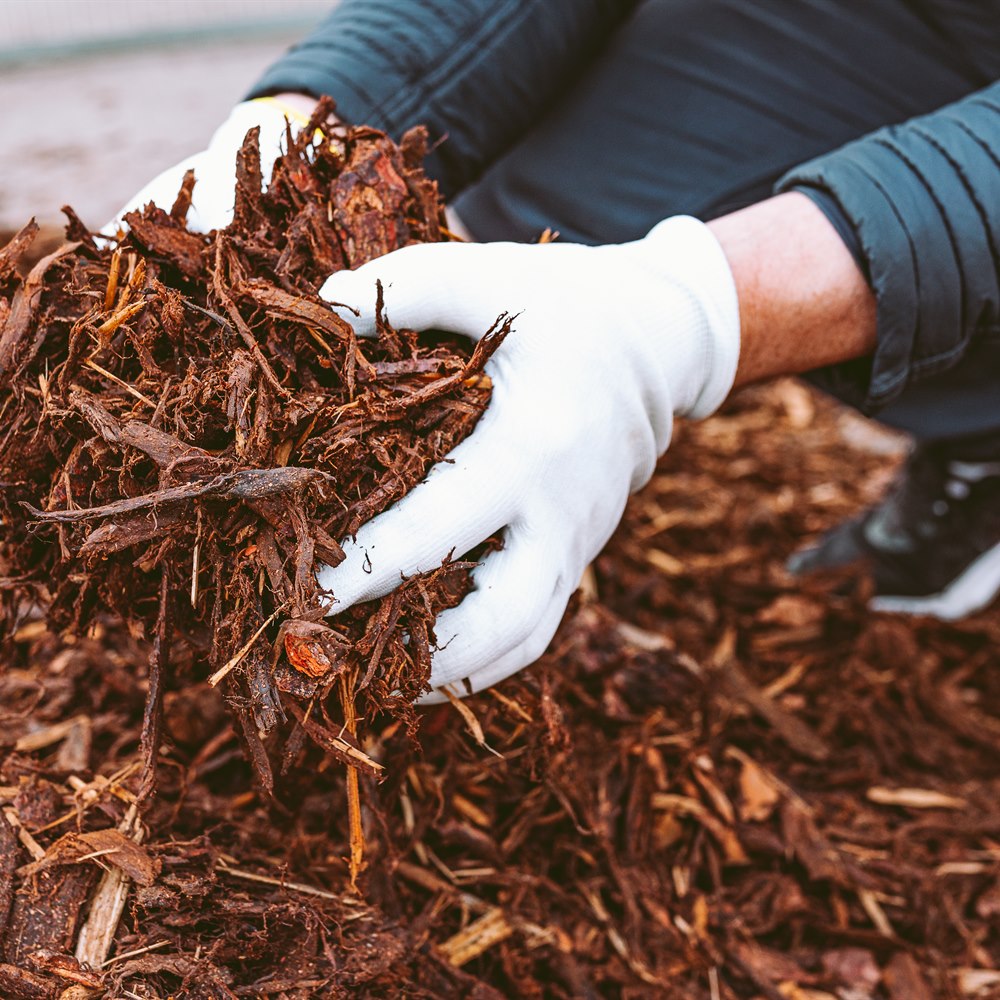
Shredded hardwood is the most common and generally most economical mulch, made from hardwood bark and wood processed into a shredded texture. It knits together well, which helps it stay in place on slopes and resist blowing, and it breaks down over time to add organic matter to the soil. The trade-off is that it fades to gray within a season and decomposes relatively quickly, meaning more frequent refreshing. For general bed coverage on a budget, it’s the default choice for good reason.
Cedar and Cypress
Cedar and cypress mulches cost more but resist decay longer than standard hardwood, meaning they hold their appearance and function for a longer stretch before needing refreshing. Cedar carries a distinctive aroma that some homeowners like, and both materials have natural properties that slow breakdown. Because they last longer, their higher price per yard doesn’t necessarily mean higher cost over several years, which is worth considering when comparing options for beds you’d rather not re-mulch annually. (For more on this, see Mulch Types Compared: Which Is Best for Your Yard?.)
Dyed Mulches
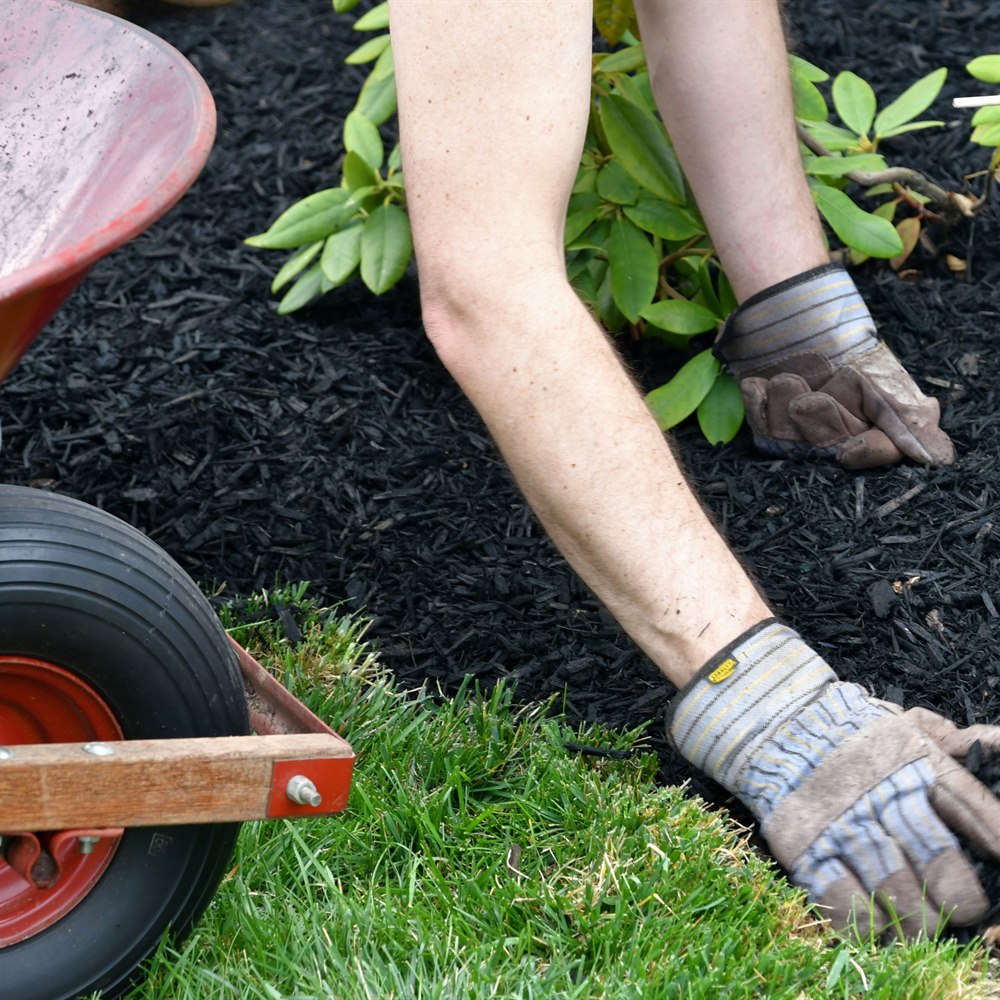
Dyed mulches, commonly black, dark brown, or red, are treated with colorants to maintain a consistent appearance through the season rather than fading to gray. They cost more than undyed material and are popular where a crisp, uniform look matters, such as around commercial properties or in formal landscape designs. The color choice is largely aesthetic, though darker mulches absorb more heat, which can be a consideration in hot climates or around heat-sensitive plants.
Pine Bark and Pine Straw
Pine bark comes in nugget or shredded forms, with nuggets being chunkier, longer-lasting, and slower to break down but more prone to floating away in heavy rain or washing off slopes. Pine straw, made of pine needles, is common in regions where it’s readily available, is light to handle, knits together on slopes, and gradually acidifies soil as it breaks down, which suits acid-loving plants like azaleas and rhododendrons but may not suit every bed.
Stone and Inorganic Options
Decorative stone, gravel, and rubber mulch don’t decompose, so they don’t need annual refreshing, which appeals to homeowners tired of the yearly cycle. The trade-offs are significant, though: they add no organic matter to the soil, stone absorbs and radiates heat which stresses many plants, weeds that establish in accumulated debris are harder to remove, and the material is difficult and expensive to remove if you later change your mind. Stone suits some applications well but isn’t a universal substitute for organic mulch.
Matching Mulch to Your Beds
The right choice depends on your priorities. If cost matters most and you don’t mind annual refreshing, shredded hardwood makes sense. If you want longer life between applications, cedar or cypress is worth the premium. If consistent color through the season matters, dyed mulch delivers it. If you have acid-loving plants, pine products suit them. And if you want a permanent, low-maintenance surface for a specific area and understand the trade-offs, stone may fit. Many properties use different materials in different areas. (For more on this, see Why Mulch Matters: Benefits for Your Beds and Plants.)
Practical Considerations Beyond Appearance
Choosing a mulch type involves several practical factors that don’t show up in a showroom sample or a photograph, and they often matter more than color. Slope behavior is one: fine, shredded materials like hardwood and pine straw knit together and stay in place on inclines, while chunky materials like bark nuggets tend to roll and wash downhill in heavy rain, ending up in walkways and lawns. If your beds are on any meaningful slope, this alone may determine the right material regardless of which you prefer visually. (For more on this, see Types of Mulch: How to Choose the Right One.)
Wind is another consideration, since lighter materials can blow around in exposed locations, and so is proximity to hard surfaces, because materials that scatter easily end up needing regular sweeping off walks and drives. Drainage interacts with material choice too: in beds that already stay damp, finer materials that compact and hold moisture can worsen the problem, while chunkier materials that stay loose allow better air movement. Fire considerations matter in some regions, where certain mulches near structures are discouraged or regulated, and it’s worth checking local guidance if you live in a wildfire-prone area. Pest considerations occasionally arise as well, since some materials provide better habitat for certain insects than others, particularly when piled deeply against structures. Cost per year rather than cost per yard is worth calculating, since a material lasting substantially longer may be cheaper over time despite a higher purchase price. And availability matters practically, since regionally abundant materials are cheaper and easier to source than ones trucked in from elsewhere, which is why pine straw is common in some regions and rare in others. Weighing these practical factors, slope, wind, proximity to surfaces, drainage, local conditions, longevity, and availability, alongside appearance and price produces a better choice than selecting on color alone, and it’s exactly the sort of guidance a knowledgeable local provider can offer, since they know which materials perform well in your specific conditions.
Making the Choice
Match the mulch to your beds, budget, climate, and how often you’re willing to refresh, and consider that different areas of a property may warrant different materials. When you’re ready to choose and have mulch installed, connect with a local pro below.
Frequently Asked Questions
Shredded hardwood (most common and economical), cedar and cypress (costlier but longer-lasting), dyed mulches (colored to hold appearance through the season), pine bark nuggets and pine straw (with pine straw gradually acidifying soil), and inorganic options like decorative stone and gravel that don't decompose but add no organic matter.
Shredded hardwood is generally the most economical, made from hardwood bark and wood processed into a shredded texture. It knits together well, helping it stay in place on slopes and resist blowing, and it breaks down to add organic matter to the soil. The trade-off is that it fades to gray within a season and decomposes relatively quickly, meaning more frequent refreshing.
It depends on whether consistent color matters to you. Dyed mulches, commonly black, dark brown, or red, are treated with colorants to maintain uniform appearance through the season rather than fading to gray, which is popular where a crisp look matters. The choice is largely aesthetic, though darker mulches absorb more heat, a consideration in hot climates or around heat-sensitive plants.
Neither is universally better. Stone doesn't decompose so it doesn't need annual refreshing, which appeals to homeowners tired of the yearly cycle, but it adds no organic matter to the soil, absorbs and radiates heat which stresses many plants, makes weeds harder to remove once established in accumulated debris, and is difficult and expensive to remove if you change your mind.
Pine products. Pine straw, made of pine needles, gradually acidifies soil as it breaks down, which suits acid-loving plants like azaleas and rhododendrons, and it's light to handle and knits together well on slopes. Pine bark also works well in these settings. These may not suit every bed, though, so match the material to what's planted there.