Which Type of Mulch Is Best?
The right mulch depends on your beds’ purpose, climate, budget, and aesthetic preferences. Here is how the main types compare.
Hardwood Bark Mulch
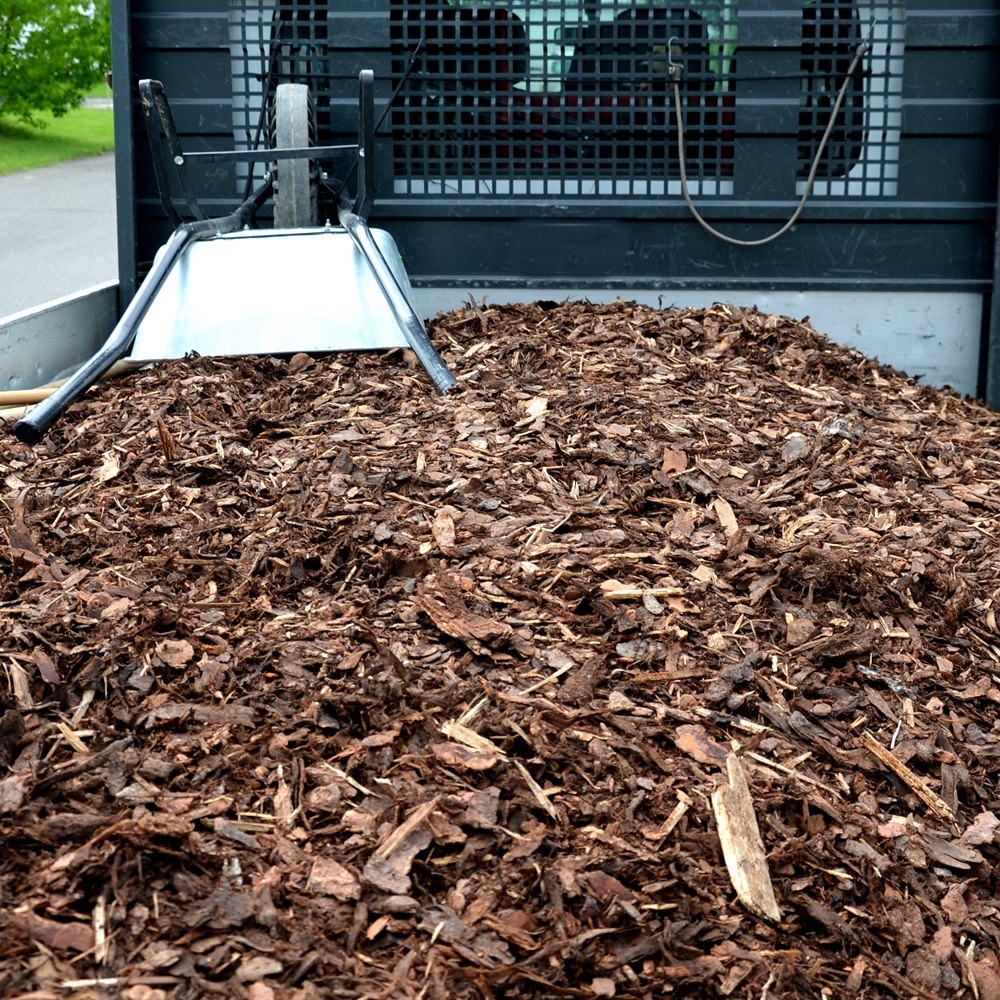
The most widely used residential mulch. Shredded or chipped from hardwood trees. Breaks down to improve soil in 1 to 2 years. Provides good weed suppression and moisture retention. Basic brown color that fades to gray as it weathers. Widely available, lowest cost ($30 to $40 per cubic yard). Best for general ornamental beds where annual topping is acceptable. (For more on this, see DIY Mulching: How to Mulch Your Own Yard.)
Cedar and Cypress Mulch
More decay-resistant than standard hardwood, lasting 2 to 3 years before significant decomposition. Naturally repels some insects. Lighter color that fades to silver-gray. Costs $40 to $55 per cubic yard. Best for homeowners who want to extend the replacement interval and for beds in humid climates where faster decomposition is an issue.
Dyed (Colored) Mulch
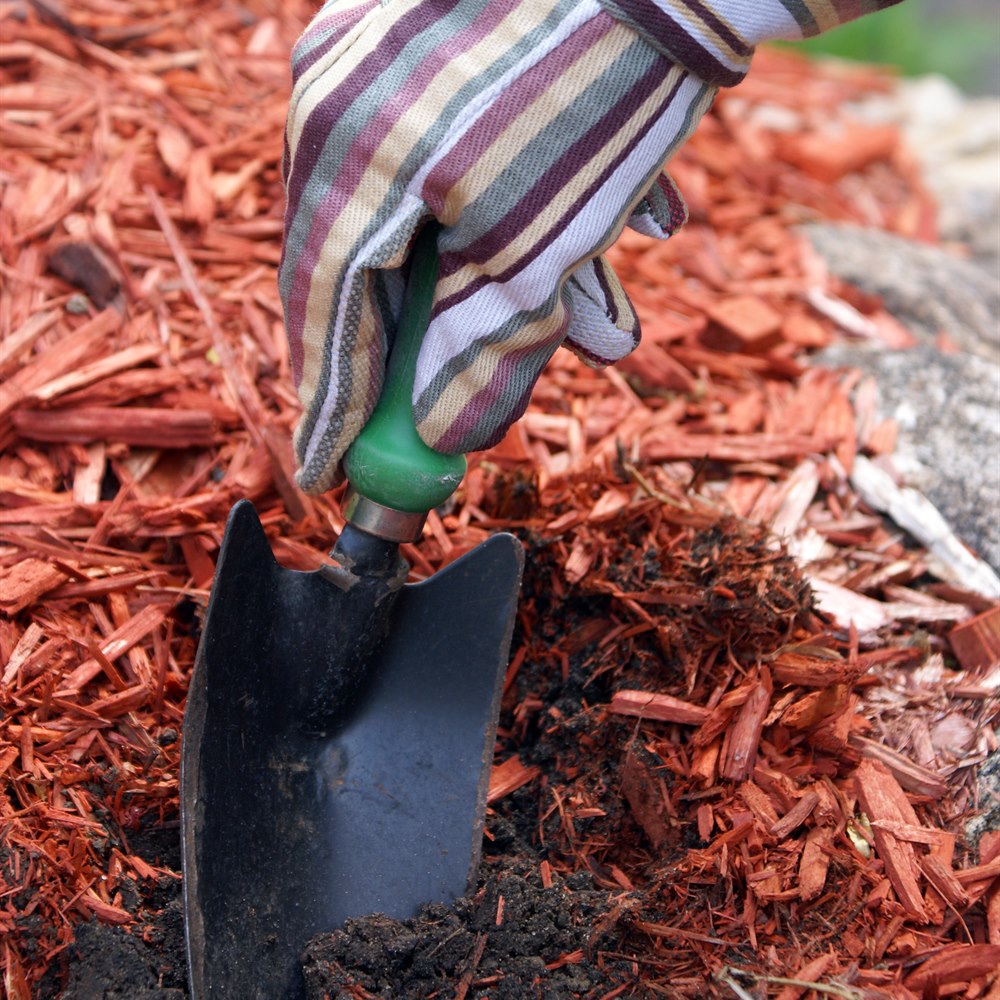
Hardwood mulch treated with colorfast dye to maintain a consistent black, red, or brown color through the season. Costs $45 to $60 per cubic yard. The color lasts one growing season before fading. Aesthetically popular for front-of-house beds where consistent color is valued. Modern dyes are generally safe; check that the base wood source is not recycled construction lumber, which may contain treatments. (For more on this, see Types of Mulch: How to Choose the Right One.)
Pine Straw
Regional to the Southeast US, where pine trees produce abundant needles. Low cost ($5 to $10 per bale in the Southeast, covering 35 to 45 square feet; $14 or more where it has to be trucked in from outside the region). Lightweight, easy to apply, and effective for slopes where heavier mulch slides. Breaks down faster than bark mulch (6 to 12 months) but is also the cheapest to replace. Slightly acidic, which benefits acid-loving plants (azaleas, blueberries, hollies) but can be counterproductive for plants preferring neutral pH.
Rubber Mulch
Made from recycled tires. Does not decompose, requires no annual replacement, and does not attract insects or rodents. Used primarily for play areas under equipment where impact absorption matters. Not recommended for ornamental planting beds it provides no soil benefit, may leach chemicals near food crops, and prevents the organic matter cycling that healthy garden soil depends on.
Working With a Contractor on This Project
Getting the right outcome on any home services project starts before the work begins. A few consistent practices make the difference between a smooth project and a frustrating one.
Get at least two or three quotes. A single quote gives you no basis for comparison. Two or three quotes reveal the market rate for the work, expose scope differences between bidders, and let you assess contractor communication quality before any commitment is made. The lowest bid is not automatically the best value if the scope is thin or the materials are underspecified.
Ask for licenses and insurance before work starts. Verify current general liability insurance and, for any work involving workers on your property, workers compensation coverage. Licensing requirements vary by state and trade; confirm the specific requirements in your jurisdiction. A licensed contractor who carries appropriate insurance protects both parties if something goes wrong during the project.
Get the scope in writing. A written proposal that specifies materials, labor scope, timeline, what is included (permits, cleanup, disposal), and warranty terms is the foundation of a professional engagement. Verbal agreements on any of these points invite misunderstanding. For any project over $500, written scope is non-negotiable.
Clarify the payment schedule upfront. A reasonable payment schedule ties major payments to project milestones: a deposit at signing, a payment at material delivery or project start, and a final payment at completion after a walkthrough confirms satisfaction. A contractor who requires full payment upfront before work begins is a red flag in any trade.
Making a Confident Decision
The information in this article is designed to help you ask better questions of the professionals you work with, evaluate their answers with more confidence, and understand the decisions involved in this type of home services project. It is not a substitute for professional assessment of your specific home. (For more on this, see Questions to Ask a Mulching Company.)
Every home is different. Roof slopes, local weather, tree exposure, soil conditions, and existing system condition all affect what the right solution is for your specific situation. The general principles here apply broadly, but a professional who assesses your home in person will give you guidance that accounts for the details that general articles cannot.
When you are ready to move forward, getting at least two or three quotes from licensed, insured, local contractors is the most important practical step. It lets you compare approaches, assess contractor quality, and confirm that the solution proposed matches your specific situation and budget.
Cost figures on this page were checked against published pricing on August 29, 2026. How we source cost data.