What Should You Ask Before Buying Access Equipment?
A stair lift or elevator is a significant purchase, and the right questions before buying ensure you get equipment that fits your staircase, meets your mobility needs, and comes with proper support. Here’s what to ask any provider.
Is a Straight or Curved Lift Right for My Staircase?
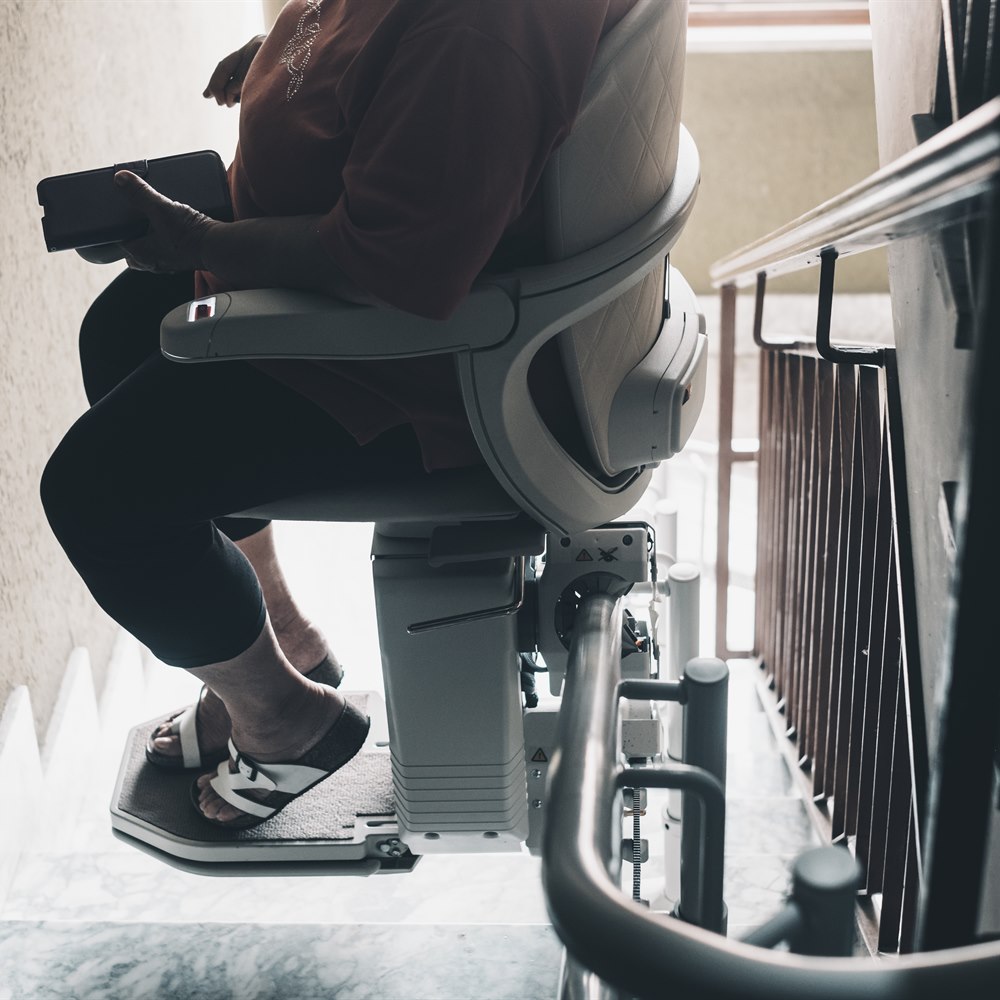
For a stair lift, confirm which type your staircase requires, straight lifts are for straight stairs, curved lifts (custom-built and pricier) for stairs with bends or landings. A reputable provider assesses your staircase and tells you honestly which you need. This matters for both fit and cost, so make sure the provider has actually evaluated your specific staircase rather than quoting generically. Getting the right type for your stairs is the starting point. A thorough provider will physically measure or photo-survey the staircase rather than relying on a description, because details that determine the correct type and rail, the exact width, the presence of a landing or turn, obstructions at the top or bottom, are easy to miss in conversation, so an in-person evaluation protects you from a quote based on incomplete information. (For more on this, see Straight vs. Curved Stair Lifts: Common Questions Answered.)
Do I Actually Need an Elevator, or Would a Lift Suffice?
If you’re considering an elevator, ask honestly whether your needs truly require one or whether a stair lift would meet them at a fraction of the cost. A trustworthy provider won’t push an elevator on someone a stair lift would serve. The answer depends on your mobility, whether you need wheelchair access and full between-floor mobility (elevator) or just help with stairs while seated (lift). A provider willing to recommend the less expensive option when it fits is one you can trust. The honest answer often hinges on the transfer question, whether the user can safely move between a wheelchair and a lift seat, so a provider who asks about the user’s actual mobility before recommending an elevator is demonstrating that they’re matching the solution to the person rather than steering toward the larger sale by default. (For more on this, see How to Find the Best Stair Lift or Elevator Installer.)
What’s the Weight Capacity, and Does It Fit the User?
Ask the weight capacity and confirm it comfortably exceeds the intended user’s weight. Standard lifts handle around 350 to 450 pounds, with heavy-duty options for more. Ensuring the equipment’s capacity suits the user is a basic but essential check. A provider should confirm this fits the specific person who’ll use it. Standard lifts generally handle somewhere in the range of 350 to 450 pounds, with heavy-duty models available above that, so asking for the specific model’s rating and confirming it leaves a comfortable margin over the user’s weight is a simple check that ensures safe operation rather than pushing the equipment to the edge of its limit.
What About Power Outages and Battery Backup?
Ask how the equipment handles power outages. Stair lifts should have a battery backup rated for a number of trips; elevators should have backup power. Understanding the backup ensures you won’t be stranded during an outage. A provider who explains the battery/backup clearly is addressing a legitimate and common concern. For a stair lift, it’s reasonable to ask roughly how many trips the battery supports on backup and how you’ll know when it needs replacing, and for an elevator, how the backup power behaves in an outage, whether it brings the cab to a landing and keeps the doors operable, since the specifics of the backup are what determine how the equipment actually behaves when the power goes out.
What Maintenance and Service Do You Provide?
Access equipment needs ongoing maintenance, so ask about service plans, warranties, and support. Who services the equipment? Is there a maintenance plan? What’s the warranty? A provider who services what they sell, and offers a clear maintenance and warranty arrangement, is one who’ll support the equipment over its life. This ongoing support matters as much as the initial purchase, so don’t overlook it. It’s worth asking specifically who performs the servicing, the same company or a subcontractor, how quickly they respond to a breakdown, and whether a maintenance plan is available, because access equipment that someone depends on daily needs prompt, reliable support, and a provider’s answers here reveal whether they’re set up to deliver it over the years you’ll own the equipment. (For more on this, see The Best Access Solution for Your Home and Needs.)
What’s the Total Cost, Including Installation and Extras?
Ask for the complete cost: the equipment, installation, any electrical work, permits (especially for an elevator), and ongoing maintenance. For an elevator, this includes the significant construction. Getting the all-in cost, not just the equipment price, lets you budget accurately and compare providers fairly. A transparent provider gives you the full picture upfront rather than a base price that grows. For an elevator especially, ask them to itemize the equipment separately from the construction, the shaft, the electrical, the permits, so you can see how much of the total is the machine and how much is the building work, since that breakdown both makes the quote easier to compare against others and reveals whether any large cost has been left out of the headline figure.
Putting It Together
These questions, especially whether you need a lift or an elevator, the right type for your staircase, and the service and total cost, ensure you buy equipment that genuinely fits your home and needs, from a provider who’ll support it. A trustworthy provider answers them clearly and recommends what actually suits you. When you’re ready to get quotes from qualified local pros, connect below.
Frequently Asked Questions
Whether your staircase needs a straight or curved lift, straight for straight stairs, curved (custom-built, pricier) for bends or landings. Make sure the provider has actually assessed your specific staircase rather than quoting generically. It matters for both fit and cost.
Yes. Ask honestly whether your needs require an elevator or whether a stair lift would serve at a fraction of the cost. A trustworthy provider won't push an elevator on someone a lift would suit, one willing to recommend the cheaper option when it fits is one you can trust.
Ask the capacity and confirm it comfortably exceeds the intended user's weight. Standard lifts handle around 350 to 450 pounds, with heavy-duty options for more. Ensuring the equipment suits the specific person who'll use it is a basic but essential check.
Definitely. Access equipment needs ongoing maintenance, so ask about service plans, warranties, and who services it. A provider who services what they sells and offers clear maintenance and warranty arrangements will support the equipment over its life.
Yes. Ask for the all-in cost, equipment, installation, electrical work, permits (especially for an elevator, including its construction), and ongoing maintenance, not just the equipment price. A transparent provider gives the full picture upfront rather than a base price that grows.