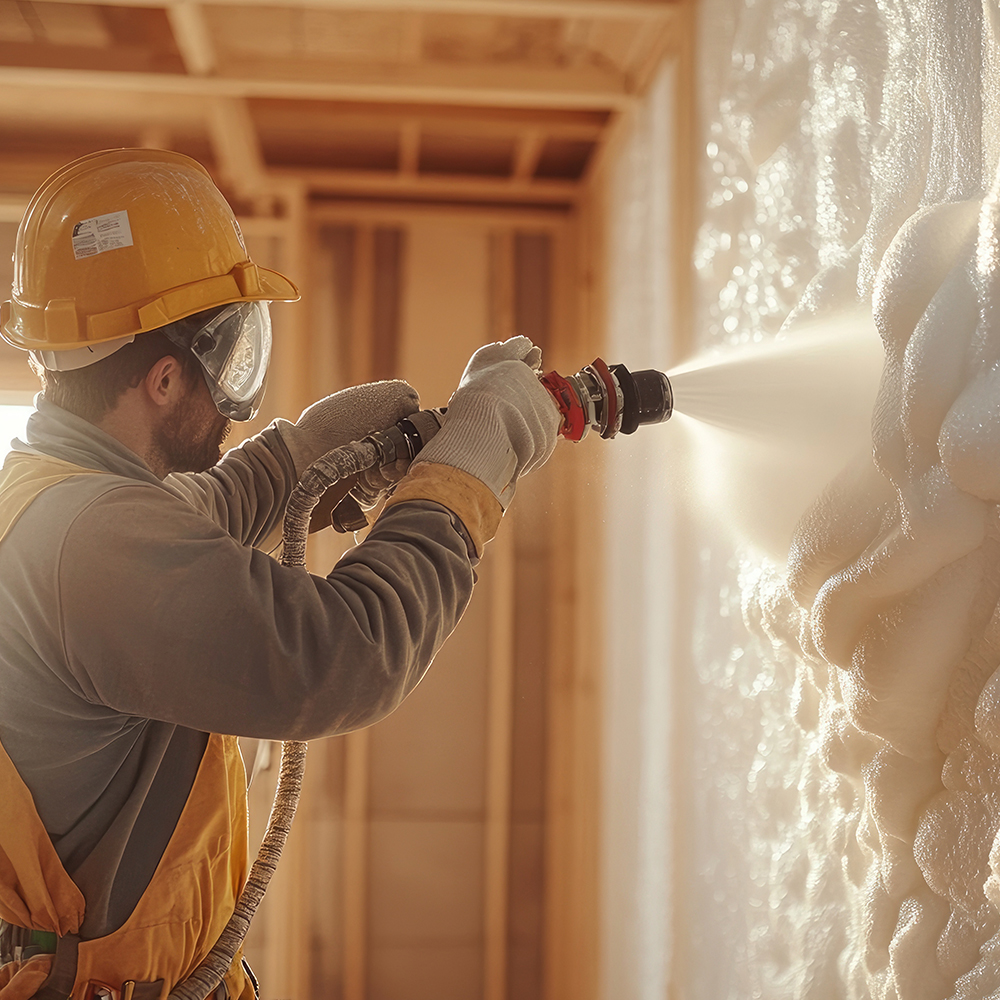

How Long Does Spray Foam Insulation Last?
Spray foam insulation is among the most durable insulation products when installed correctly, it outlasts most other building components.
Closed-Cell Foam: 30 to 50+ Years
Properly installed closed-cell spray foam maintains its structural integrity and insulating properties for 30 to 50 years or more. It does not settle, does not absorb moisture, does not provide food for mold or insects, and adheres firmly to the substrate without degrading. The blowing agents in closed-cell foam migrate out of the cells slowly over the first few years, causing a modest R-value reduction (5 to 10 percent) that stabilizes after the initial period. Manufacturer published R-values account for this aging. (For more on this, see How Much Does Spray Foam Insulation Cost?.)
Open-Cell Foam: 20+ Years
Open-cell foam is structurally stable and does not settle or compact. In interior applications without moisture exposure, it maintains its insulating properties for 20 or more years. It is vapor-permeable moisture can pass through it which means it should not be used in moisture-exposed applications where the moisture would degrade surrounding materials over time.
UV and Mechanical Damage
All spray foam types degrade rapidly when exposed to direct UV radiation the foam yellows, becomes brittle, and loses integrity within months of direct sun exposure. The thermal barrier (drywall) protects the foam from UV in habitable spaces. In any application where spray foam will be exposed (some utility storage areas), UV-resistant coatings or physical protection must be provided. Physical impact can chip or crack cured foam, though this does not significantly affect performance unless large areas are affected. (For more on this, see Common Spray Foam Insulation Problems and How to Avoid Them.) The Department of Energy publishes recommended R-values by climate zone and where insulation pays back fastest.
Working With a Contractor on This Project
Getting the right outcome on any home services project starts before the work begins. A few consistent practices make the difference between a smooth project and a frustrating one.
Get at least two or three quotes. A single quote gives you no basis for comparison. Two or three quotes reveal the market rate for the work, expose scope differences between bidders, and let you assess contractor communication quality before any commitment is made. The lowest bid is not automatically the best value if the scope is thin or the materials are underspecified.
Ask for licenses and insurance before work starts. Verify current general liability insurance and, for any work involving workers on your property, workers compensation coverage. Licensing requirements vary by state and trade; confirm the specific requirements in your jurisdiction. A licensed contractor who carries appropriate insurance protects both parties if something goes wrong during the project. (For more on this, see Questions to Ask Before Hiring a Spray Foam Contractor.)
Get the scope in writing. A written proposal that specifies materials, labor scope, timeline, what is included (permits, cleanup, disposal), and warranty terms is the foundation of a professional engagement. Verbal agreements on any of these points invite misunderstanding. For any project over $500, written scope is non-negotiable.
Clarify the payment schedule upfront. A reasonable payment schedule ties major payments to project milestones: a deposit at signing, a payment at material delivery or project start, and a final payment at completion after a walkthrough confirms satisfaction. A contractor who requires full payment upfront before work begins is a red flag in any trade.
Making a Confident Decision
The information in this article is designed to help you ask better questions of the professionals you work with, evaluate their answers with more confidence, and understand the decisions involved in this type of home services project. It is not a substitute for professional assessment of your specific home.
Every home is different. Roof slopes, local weather, tree exposure, soil conditions, and existing system condition all affect what the right solution is for your specific situation. The general principles here apply broadly, but a professional who assesses your home in person will give you guidance that accounts for the details that general articles cannot.
When you are ready to move forward, getting at least two or three quotes from licensed, insured, local contractors is the most important practical step. It lets you compare approaches, assess contractor quality, and confirm that the solution proposed matches your specific situation and budget.
Spray Foam Insulation Cost at a Glance
| Cost Factor | Typical Range | Notes |
|---|---|---|
| Open-cell foam | $0.44 to $0.65 per board foot | , lighter and more affordable |
| Closed-cell foam | $1.00 to $1.50 per board foot | , denser with better insulation and moisture resistance |
| Labor | $50 to $100 per hour | for experienced application |
| Overall range | $1,500 to $3,000, averaging $2,200 |
Ranges here are national ballpark figures, not quotes. Actual pricing varies by region, home condition, materials, and contractor. How we source cost data.