Which Countertop Material Should You Choose?
Countertops come in several materials, quartz, granite, laminate, solid surface, and others, each with different costs, durability, maintenance, and appearance. Choosing the right material is a major kitchen decision, balancing budget against durability and looks. Here’s how the main countertop materials compare so you can pick the one that suits your kitchen, budget, and lifestyle.
Quartz: Durable and Low-Maintenance
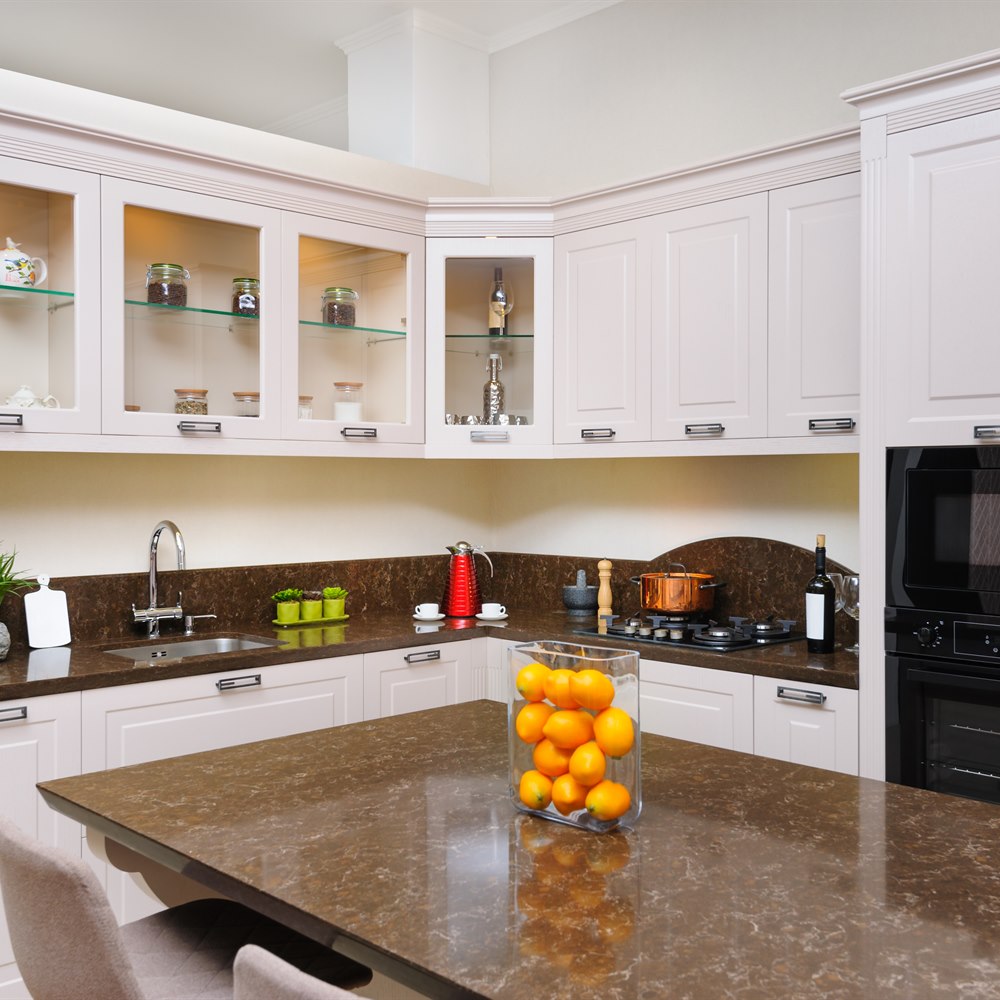
Quartz (engineered stone made of ground quartz and resin) is a premium, popular choice prized for being extremely durable and low-maintenance. It’s hard, scratch- and stain-resistant, and non-porous, so it doesn’t need sealing, unlike natural stone, and it resists bacteria. Quartz comes in a huge range of colors and patterns, including options mimicking marble or granite, with consistent appearance. It’s a premium material with a higher cost. For homeowners wanting a durable, beautiful, low-maintenance countertop that doesn’t require sealing and comes in many looks, quartz is an excellent, widely popular choice at the premium end. (For more on this, see Quartz vs. Granite vs. Marble Countertops.)
Granite: Natural and Heat-Resistant
Granite (natural stone) offers a distinctive, natural appearance with unique variation in every slab, and it’s very durable and heat-resistant. Each granite countertop is one of a kind, prized for its natural beauty. Granite is hard and durable but is porous, so it needs periodic sealing to resist stains, and it requires some care. It’s a premium material. For homeowners who want the natural beauty and uniqueness of real stone, with excellent durability and heat resistance, and don’t mind periodic sealing, granite is a premium, classic countertop choice valued for its authentic natural character.
Laminate: Economical and Versatile
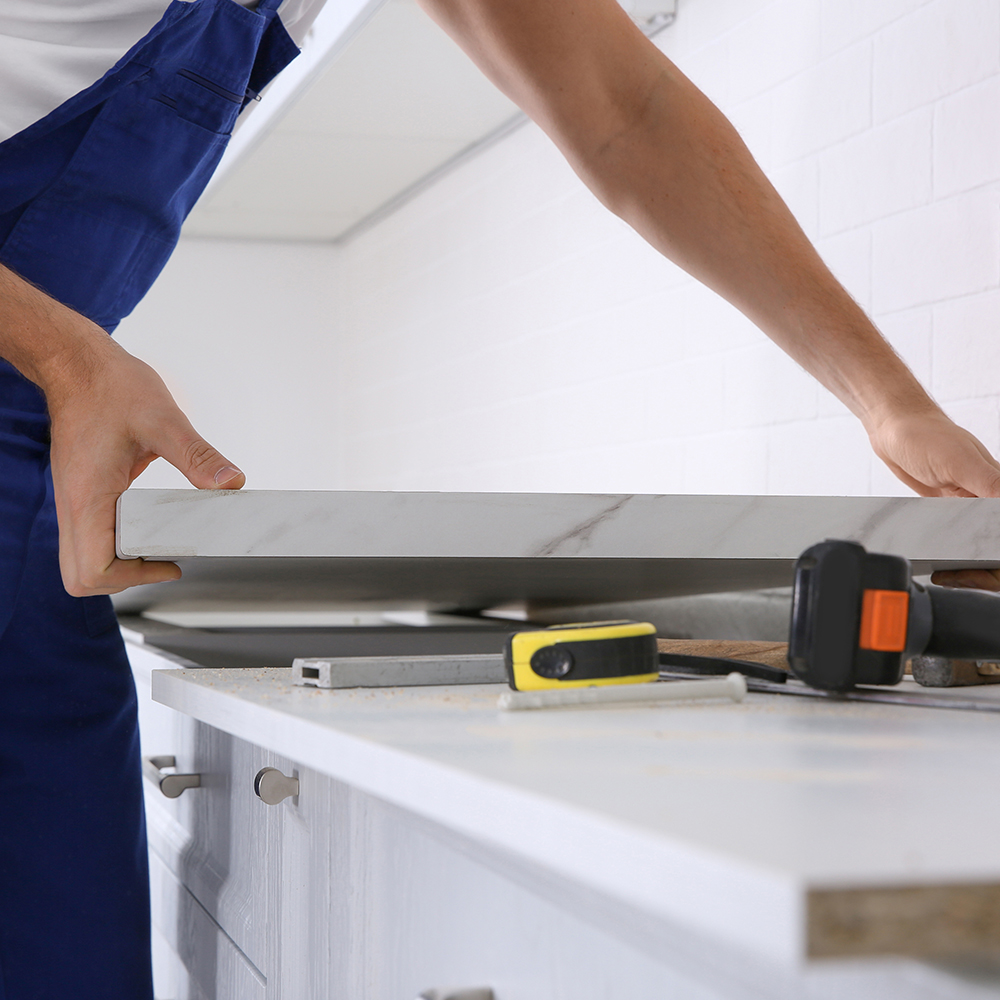
Laminate is the most economical countertop option, offering a budget-friendly surface in a huge range of colors and patterns, including options mimicking stone or wood. Modern laminate looks better than older versions. It’s easy to clean and low-maintenance, but it’s less durable than stone, can scratch, burn, or chip, and can’t be repaired like stone. For a budget-conscious kitchen, a rental, or anywhere cost is the priority, laminate delivers an attractive, functional countertop at the lowest cost, though it lacks the durability and premium appeal of stone, a practical, economical choice.
Solid Surface and Other Options
Solid surface (a synthetic material) offers a seamless look, easy repairability (scratches can be sanded out), and integrated sinks, at a mid-range cost, though it’s less heat- and scratch-resistant than stone. Other options include butcher block (warm wood, needs maintenance), marble (beautiful but soft and stain-prone, higher-maintenance), tile, and concrete. Each has its own balance of cost, durability, appearance, and maintenance. These alternatives suit specific preferences and uses, so beyond the main quartz, granite, and laminate choices, there are options for particular looks, budgets, and needs worth considering.
Comparing Cost and Durability
On cost, laminate is cheapest, solid surface is mid-range, and granite and quartz are premium. On durability, quartz and granite are the most durable (quartz slightly edging with no sealing needed), solid surface is moderate and repairable, and laminate is the least durable. The most durable materials cost more, so there’s a cost-durability trade-off. Consider how much durability you need (a busy family kitchen versus light use) against your budget. Weighing cost against durability, and how the counter will be used, helps point toward the right material for your situation.
Comparing Maintenance and Looks
On maintenance, quartz is lowest (no sealing), laminate is low (but not repairable), granite needs periodic sealing, and some materials (marble, butcher block) need more care. On looks, granite and marble offer natural stone beauty, quartz offers consistent engineered looks in many styles, laminate offers versatility at low cost, and each material has its aesthetic. Your priorities, budget, durability, maintenance willingness, and desired look, point to the right material. Being honest about what matters most for your kitchen and lifestyle helps you choose the countertop material that fits best. (For more on this, see Best Countertop Material for Your Kitchen.)
Matching the Countertop Material to How You Use Your Kitchen
Beyond comparing the countertop materials in the abstract, the most practical way to choose is to match the material to how you actually use your kitchen, since your cooking habits and household determine which material’s strengths matter most to you. If you cook frequently and intensively, with hot pots, sharp knives, and heavy use, durability and heat resistance rise in importance, favoring quartz or granite that can withstand the demands of a serious cooking kitchen, and you might weigh granite’s heat resistance (you can set a hot pan on it) against quartz’s superior scratch and stain resistance. If you have a busy family kitchen with kids, spills, and constant use, the low maintenance and stain resistance of quartz, which needs no sealing and shrugs off spills, may be the deciding advantage, sparing you the upkeep that granite’s sealing or a more delicate material would require. (For more on this, see Kitchen Countertop Materials: Full Comparison.)
Conversely, if your kitchen sees lighter use, or if budget is the overriding concern, a more economical material like laminate may serve perfectly well, since the premium durability of stone matters less in a kitchen that isn’t heavily used, and the savings can go toward other priorities. Your maintenance willingness is another practical factor: if you’ll happily reseal granite periodically to enjoy its natural beauty, that’s fine, but if you want a surface you can install and largely forget, quartz’s no-sealing convenience suits better. Even aesthetic preferences connect to use, if you love to cook and want an inspiring, beautiful workspace, investing in a material whose look you adore may enhance your enjoyment of the kitchen daily. The point is that the “best” countertop material isn’t universal but personal, determined by how you cook, your household, your maintenance willingness, and your budget. By honestly assessing how you actually use your kitchen and what matters most to you, durability for heavy cooking, low maintenance for a busy family, economy for a tight budget, or natural beauty you’ll enjoy, you can match the material to your real situation and choose a countertop you’ll be genuinely happy with, rather than defaulting to whatever’s most popular or expensive. Matching the material to your actual kitchen life is what makes the choice successful.
Making the Choice
Quartz, granite, laminate, solid surface, and other materials each offer a different balance of cost, durability, maintenance, and appearance. Match the material to your budget, how you use your kitchen, and your maintenance willingness, quartz for durable low-maintenance premium, granite for natural beauty, laminate for economy. When you’re ready to choose your countertops, connect with a local pro below.
Frequently Asked Questions
There's no single best, it depends on your priorities. Quartz is extremely durable, low-maintenance (no sealing), and comes in many looks, at a premium cost. Granite offers natural beauty and heat resistance but needs periodic sealing. Laminate is the most economical but least durable. Solid surface is repairable and mid-range. Choose based on your budget, how you use the kitchen, durability needs, and maintenance willingness.
They offer different strengths. Quartz (engineered stone) is extremely durable, scratch- and stain-resistant, non-porous (no sealing needed), and comes in consistent patterns and many looks. Granite (natural stone) offers unique natural variation and heat resistance but is porous and needs periodic sealing. Quartz wins on low maintenance; granite wins on natural, one-of-a-kind beauty. Both are premium and very durable, so the choice is about maintenance versus natural character.
Laminate, offering a budget-friendly surface in a huge range of colors and patterns, including options mimicking stone or wood. Modern laminate looks better than older versions and is easy to clean and low-maintenance. However, it's less durable than stone, can scratch, burn, or chip, and can't be repaired like stone. For a budget-conscious kitchen or rental, laminate delivers an attractive, functional countertop at the lowest cost.
Yes, granite is porous, so it needs periodic sealing to resist stains, and it requires some care. This is a key difference from quartz, which is non-porous and doesn't need sealing. Granite's natural beauty and uniqueness, plus excellent durability and heat resistance, make it a premium classic choice, but the periodic sealing is a maintenance consideration to weigh if you prefer a lower-maintenance surface like quartz.
Match it to your budget, how you use your kitchen, and your maintenance willingness. Consider cost (laminate cheapest, granite and quartz premium), durability (quartz and granite most durable, laminate least), maintenance (quartz lowest with no sealing, granite needs sealing), and looks (natural stone versus engineered versus economical). Weighing these against what matters most for your kitchen and lifestyle points to the right material.