When Should You Call a Roof Repair Professional?
Not every roof issue requires an emergency service call. But some roof situations need immediate professional attention to prevent far more expensive interior damage. Here is how to tell the difference and when to act without delay.
Call Immediately: Active Water Infiltration During Rain
If water is actively entering the home during a rain event, contact a roofing professional immediately for an emergency assessment. An active leak causes damage with every rain event: wet insulation loses its effectiveness, drywall absorbs and weakens, and prolonged moisture creates mold that can cost thousands more to remediate than the roof repair. Place containers under drip points and move valuable items away from the area, but do not delay the professional call. The EPA treats moisture control as the decisive factor — mold returns unless the water source is fixed.
Call This Week: Storm Damage You Can See
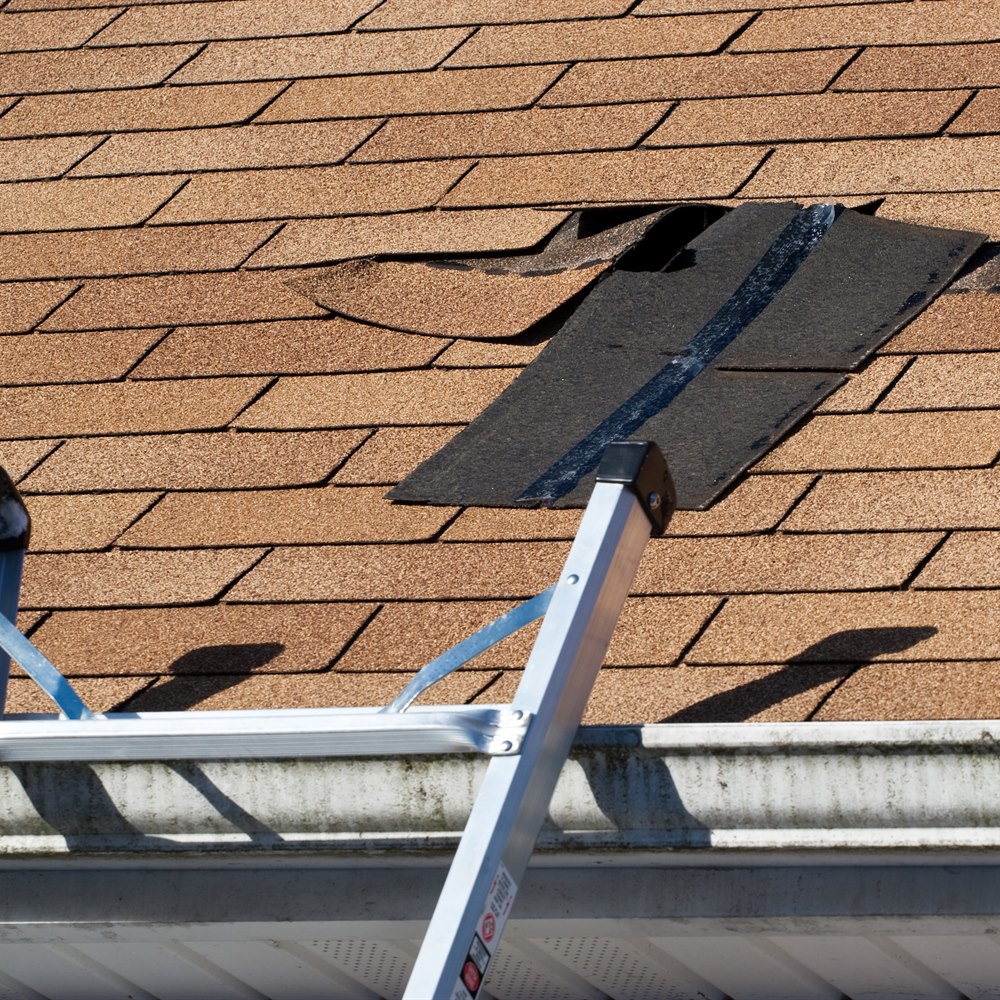
Visibly missing shingles, shingles curled back from wind, or displaced flashing visible from the ground after a storm warrant a professional inspection within days, not weeks. Storm damage that is not immediately leaking can become a leak with the next rain event. Scheduling a prompt assessment captures any insurance claim documentation while the storm damage is clearly attributable to the event, and prevents a small repair from becoming a larger one after water infiltration begins.
Call This Season: Granule Loss and Early Aging Signs
Significant granule accumulation in gutters or downspout splash areas indicates shingle deterioration that should be assessed by a professional within the current season. This is not an emergency, but it is information about remaining roof life that should inform planning. A professional can assess the roof’s overall condition, remaining service life, and whether any sections need repair versus whether full replacement should be budgeted in the near term. (For more on this, see Emergency Roof Repair: What to Do When Your Roof is Leaking.)
Call Before You Sell: Pre-Listing Inspection
If listing a home for sale, a professional roof inspection before listing produces one of two outcomes: either confirmation that the roof is in good condition (a selling point), or identification of issues that are better addressed proactively before a buyer’s inspector finds them and demands a price concession or credit. Proactive repairs before listing typically cost less than the price concessions negotiated after a buyer’s inspection reveals problems.
Do Not Wait: Any Suspected Leak After an Ice Dam
If an ice dam has formed and interior water staining appears after it melts, contact a professional promptly. Ice dam damage involves water that has traveled under shingles and into the building envelope; the damage is often more extensive than the interior staining suggests, and the underlying ventilation problem that caused the ice dam should be diagnosed alongside the immediate repair.
The Rule of Thumb
When in doubt, call. A professional inspection costs $150 to $300 for most homes and provides either peace of mind that the roof is sound or an accurate assessment of what needs attention. That investment is always less than the cost of deferring a problem until interior damage requires remediation alongside the roof repair. Connect with a local roofing professional below when you are ready. (For more on this, see What Affects Roof Repair Cost?.)
Working With a Contractor on This Project
Getting the right outcome on any home services project starts before the work begins. A few consistent practices make the difference between a smooth project and a frustrating one.
Get at least two or three quotes. A single quote gives you no basis for comparison. Two or three quotes reveal the market rate for the work, expose scope differences between bidders, and let you assess contractor communication quality before any commitment is made. The lowest bid is not automatically the best value if the scope is thin or the materials are underspecified.
Ask for licenses and insurance before work starts. Verify current general liability insurance and, for any work involving workers on your property, workers compensation coverage. Licensing requirements vary by state and trade; confirm the specific requirements in your jurisdiction. A licensed contractor who carries appropriate insurance protects both parties if something goes wrong during the project. (For more on this, see Questions to Ask a Roof Repair Contractor.)
Get the scope in writing. A written proposal that specifies materials, labor scope, timeline, what is included (permits, cleanup, disposal), and warranty terms is the foundation of a professional engagement. Verbal agreements on any of these points invite misunderstanding. For any project over $500, written scope is non-negotiable.
Clarify the payment schedule upfront. A reasonable payment schedule ties major payments to project milestones: a deposit at signing, a payment at material delivery or project start, and a final payment at completion after a walkthrough confirms satisfaction. A contractor who requires full payment upfront before work begins is a red flag in any trade.
Making a Confident Decision
The information in this article is designed to help you ask better questions of the professionals you work with, evaluate their answers with more confidence, and understand the decisions involved in this type of home services project. It is not a substitute for professional assessment of your specific home.
Every home is different. Roof slopes, local weather, tree exposure, soil conditions, and existing system condition all affect what the right solution is for your specific situation. The general principles here apply broadly, but a professional who assesses your home in person will give you guidance that accounts for the details that general articles cannot.
When you are ready to move forward, getting at least two or three quotes from licensed, insured, local contractors is the most important practical step. It lets you compare approaches, assess contractor quality, and confirm that the solution proposed matches your specific situation and budget.
Ranges here are national ballpark figures, not quotes. Actual pricing varies by region, home condition, materials, and contractor. How we source cost data.