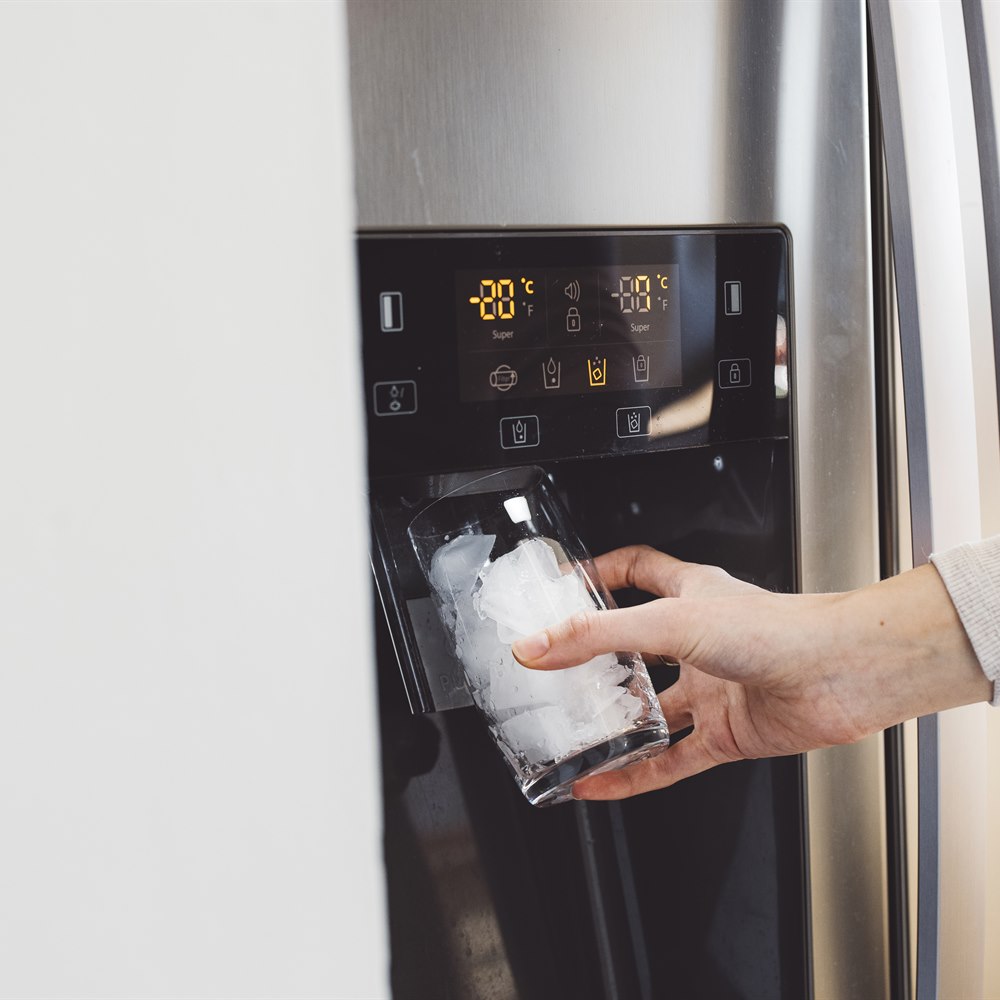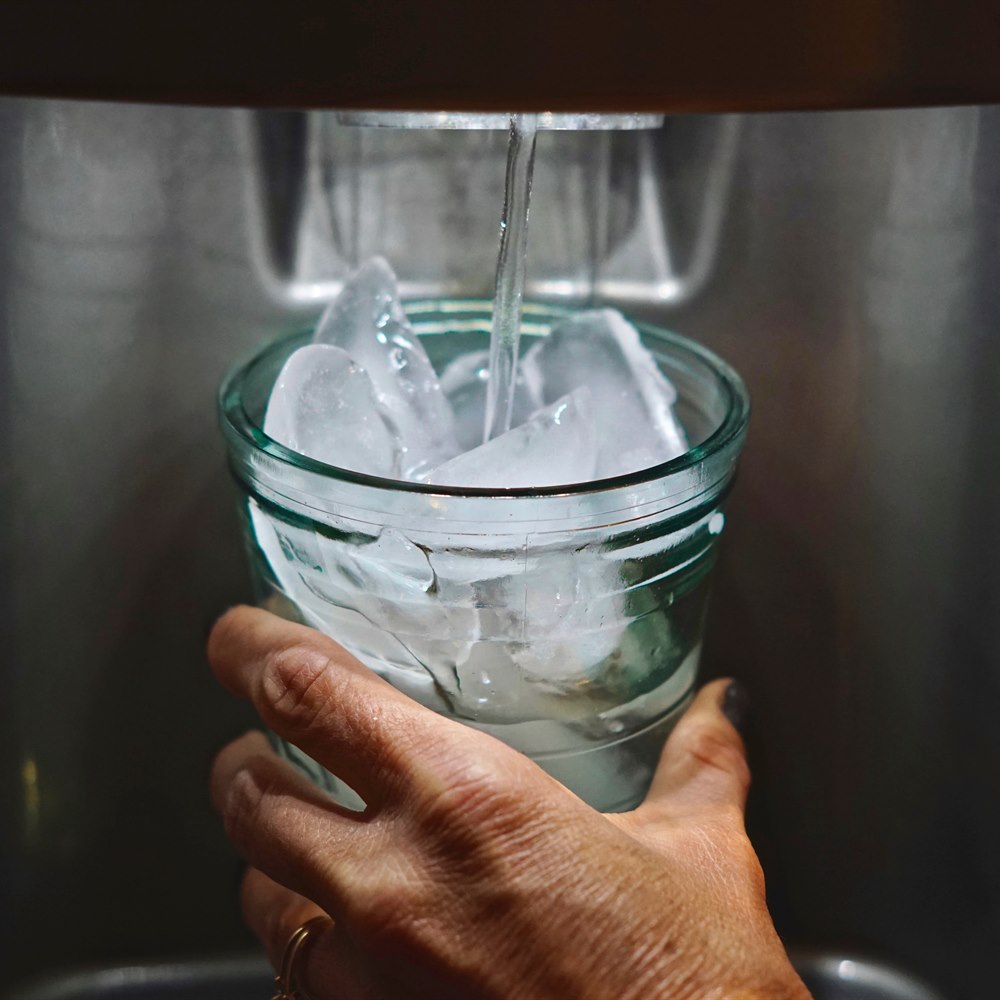
What Causes the Most Common Ice Maker Problems?
Ice maker failures follow a predictable set of causes. Knowing which cause matches which symptom helps you decide what to check first and whether a technician is needed.
No Ice Production
The ice maker arm is in the up (off) position check and lower it. The water filter is clogged replace it ($30 to $60). The water supply saddle valve behind the refrigerator is closed or partially blocked inspect and open. The fill tube from the water valve to the ice maker tray has frozen over thaw with a hair dryer on low heat from a safe distance. The water inlet valve has failed professional replacement at $150 to $275. The ice maker control module has failed assembly replacement at $300 to $550. (For more on this, see Common Ice Maker Problems and Quick Fixes.)
Slow or Small Ice Production
Low water pressure (under 20 PSI): check home water pressure and the supply line saddle valve. Clogged water filter restricting flow replace. Partially failed water inlet valve that opens but does not allow full flow professional replacement. Freezer temperature set too warm (above 10 degrees F) set to 0 degrees F and allow several hours to stabilize.
Ice Maker Overflows or Ice Clumps
The ice maker arm is stuck in the down (on) position, not stopping production when the bin is full a minor repair at $150 to $275. The water inlet valve is sticking open and overfilling the tray professional replacement. Ice cubes are clumping together in the bin because they are melting and refreezing from door opening frequency or warm freezer temperature not a mechanical failure, addressed by adjusting temperature and ice usage frequency. (For more on this, see How Much Does Ice Maker Repair Cost?.)
Ice Has Bad Taste or Smell
Almost always an overdue water filter. Replace the filter. If the taste persists after a new filter and 24 hours of production, flush the lines by discarding the first two batches of ice. If the taste is still present after this, inspect the ice bin itself for mold or food odors from adjacent freezer contents.
Ice Maker Repair Cost at a Glance
| Cost Factor | Typical Range | Notes |
|---|---|---|
| Diagnostic/service call | $80 to $150 | A separate charge for the visit, typically credited toward the repair |
| Minor repair (water valve, switch, drive blade) | $150 to $275 including parts and labor | |
| Ice maker assembly replacement | $300 to $550 installed | The usual fix, since the assembly is a modular part |
| Overall range | $175 to $425 for the repair itself, averaging $300 | Diagnostic fee billed separately |
Cost figures on this page were checked against published pricing on August 28, 2026. How we source cost data.
Planning Your Project Budget
The cost ranges in this article are based on industry data and are intended as planning benchmarks, not fixed prices. The actual cost for your project depends on your specific home, your local labor market, the current price of materials, and the scope the contractor confirms after a site inspection.
Always get at least two written quotes on equivalent defined scope before committing to any home services project. Wide price variation between quotes usually reflects differences in material quality, scope completeness (what is included and what is not), or contractor overhead and experience level rather than simple price competition.
Use the cost data in this article to ask better questions during the quoting process: What material is included? What does that per-square-foot or per-linear-foot rate include and exclude? Are permits, cleanup, and disposal included? What is the warranty on labor? These questions turn a quote into a comparable basis for decision-making. (For more on this, see Questions to Ask an Ice Maker Repair Technician.)
Working With a Contractor on This Project
Getting the right outcome on any home services project starts before the work begins. A few consistent practices make the difference between a smooth project and a frustrating one.
Get at least two or three quotes. A single quote gives you no basis for comparison. Two or three quotes reveal the market rate for the work, expose scope differences between bidders, and let you assess contractor communication quality before any commitment is made. The lowest bid is not automatically the best value if the scope is thin or the materials are underspecified.
Ask for licenses and insurance before work starts. Verify current general liability insurance and, for any work involving workers on your property, workers compensation coverage. Licensing requirements vary by state and trade; confirm the specific requirements in your jurisdiction. A licensed contractor who carries appropriate insurance protects both parties if something goes wrong during the project.
Get the scope in writing. A written proposal that specifies materials, labor scope, timeline, what is included (permits, cleanup, disposal), and warranty terms is the foundation of a professional engagement. Verbal agreements on any of these points invite misunderstanding. For any project over $500, written scope is non-negotiable.
Clarify the payment schedule upfront. A reasonable payment schedule ties major payments to project milestones: a deposit at signing, a payment at material delivery or project start, and a final payment at completion after a walkthrough confirms satisfaction. A contractor who requires full payment upfront before work begins is a red flag in any trade.