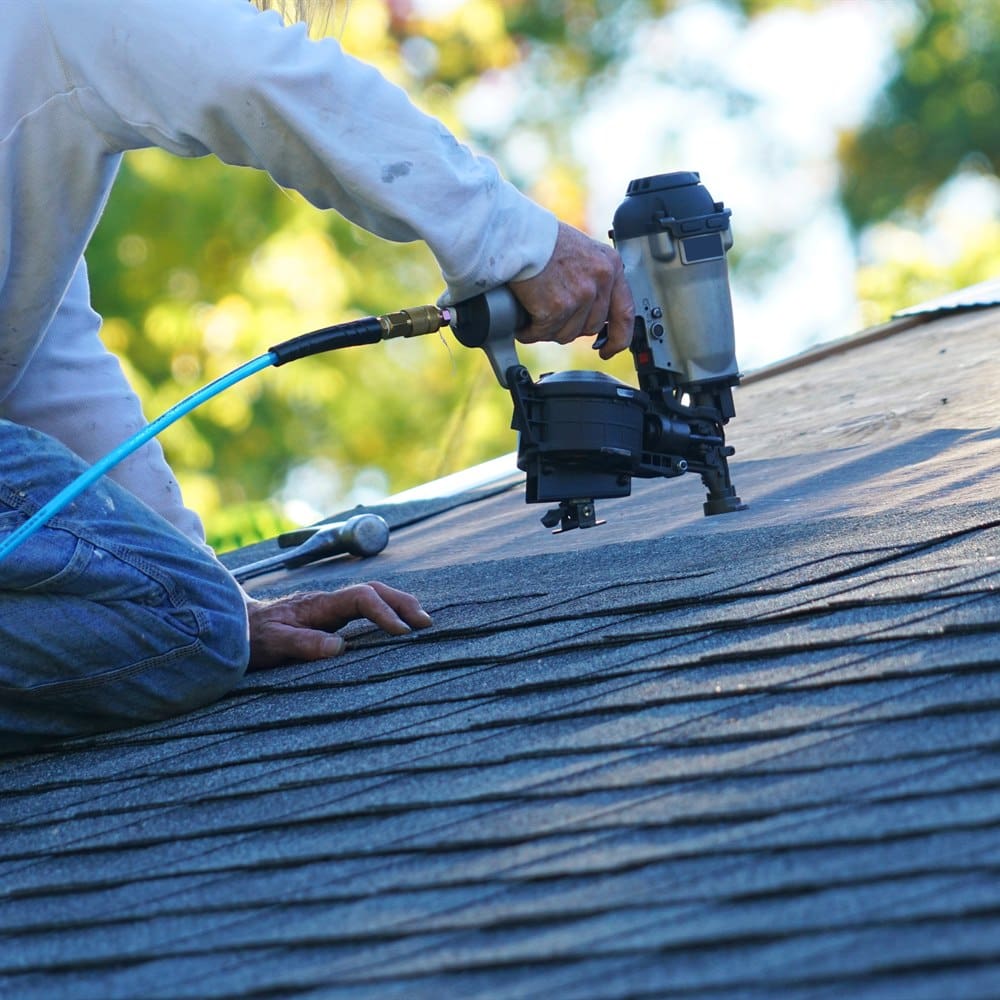
What Drives Roof Replacement Costs?
Roof replacement costs from $9,000 to $30,000 based on a combination of factors that are specific to each home. Here is what moves the price.
Roof Size and Pitch
Larger roofs require more material and more labor. Steeper roofs are more dangerous and slower to work on — labor costs increase with pitch. A roof with a 4:12 pitch (rises 4 inches per 12 inches of run, a gentle slope) is much faster to work on than a 10:12 pitch (a steep, almost walking-on-a-ladder pitch). Steep roofs require safety equipment, slower movement, and more careful material handling. The combination of size and pitch is the most significant driver of total labor cost for a given material choice.
Roof Complexity: Number of Facets and Penetrations
A simple gable roof with two large flat planes is the fastest and least expensive to roof. A complex roof with multiple valleys, hips, dormers, skylights, and chimneys requires more cuts, more flashing work, more material waste, and more skilled labor. Each valley, dormer, and penetration adds time and flashing cost. A complex roof may cost 20 to 40 percent more per square than a simple gable roof of the same total area due to the additional detail work.
Existing Roof Condition
If the existing shingles can be roofed over (one layer of shingles in place and the decking is sound): some jurisdictions allow a second layer of shingles over the first, which skips the tear-off labor cost (saving the $1,000 to $3,000 tear-off line item on a typical roof). Most jurisdictions limit total layers to two; a third layer requires complete tear-off. If the decking (the plywood or OSB sheathing under the shingles) has water damage and rot: decking replacement adds $3 to $11 per square foot of decking replaced. Decking condition is often discovered during tear-off — budget a contingency for decking replacement on older roofs.
New Roof Cost at a Glance
Most homeowners replace a deteriorated roof with asphalt shingles — the cost-effective standard for most homes.
| Cost Factor | Typical Range | Notes |
|---|---|---|
| Asphalt shingles | $9,000 to $18,000 | installed on an average home |
| Metal roofing | $10,000 to $30,000+ installed | exposed-fastener corrugated panels at the low end; standing seam runs $20,000 to $32,000 for a whole roof |
| Tile or slate | $20,000 to $30,000+ installed | |
| Overall range | $9,000 to $30,000 | , averaging $16,000 for a standard asphalt shingle roof on an average home |
Cost figures on this page were checked against published pricing on September 2, 2026. How we source cost data.
Planning Your Project Budget
The cost ranges in this article are based on industry data and are intended as planning benchmarks, not fixed prices. The actual cost for your project depends on your specific home, your local labor market, the current price of materials, and the scope the contractor confirms after a site inspection.
Always get at least two written quotes on equivalent defined scope before committing to any home services project. Wide price variation between quotes usually reflects differences in material quality, scope completeness (what is included and what is not), or contractor overhead and experience level rather than simple price competition. The FTC advises hiring only licensed, insured contractors, getting the full scope in writing, and never paying the full amount up front.
Use the cost data in this article to ask better questions during the quoting process: What material is included? What does that per-square-foot or per-linear-foot rate include and exclude? Are permits, cleanup, and disposal included? What is the warranty on labor? These questions turn a quote into a comparable basis for decision-making. (For more on this, see Questions to Ask a Roofing Contractor.)
Working With a Contractor on This Project
Getting the right outcome on any home services project starts before the work begins. A few consistent practices make the difference between a smooth project and a frustrating one.
Get at least two or three quotes. A single quote gives you no basis for comparison. Two or three quotes reveal the market rate for the work, expose scope differences between bidders, and let you assess contractor communication quality before any commitment is made. The lowest bid is not automatically the best value if the scope is thin or the materials are underspecified.
Ask for licenses and insurance before work starts. Verify current general liability insurance and, for any work involving workers on your property, workers compensation coverage. Licensing requirements vary by state and trade; confirm the specific requirements in your jurisdiction. A licensed contractor who carries appropriate insurance protects both parties if something goes wrong during the project.
Get the scope in writing. A written proposal that specifies materials, labor scope, timeline, what is included (permits, cleanup, disposal), and warranty terms is the foundation of a professional engagement. Verbal agreements on any of these points invite misunderstanding. For any project over $500, written scope is non-negotiable.
Clarify the payment schedule upfront. A reasonable payment schedule ties major payments to project milestones: a deposit at signing, a payment at material delivery or project start, and a final payment at completion after a walkthrough confirms satisfaction. A contractor who requires full payment upfront before work begins is a red flag in any trade.