
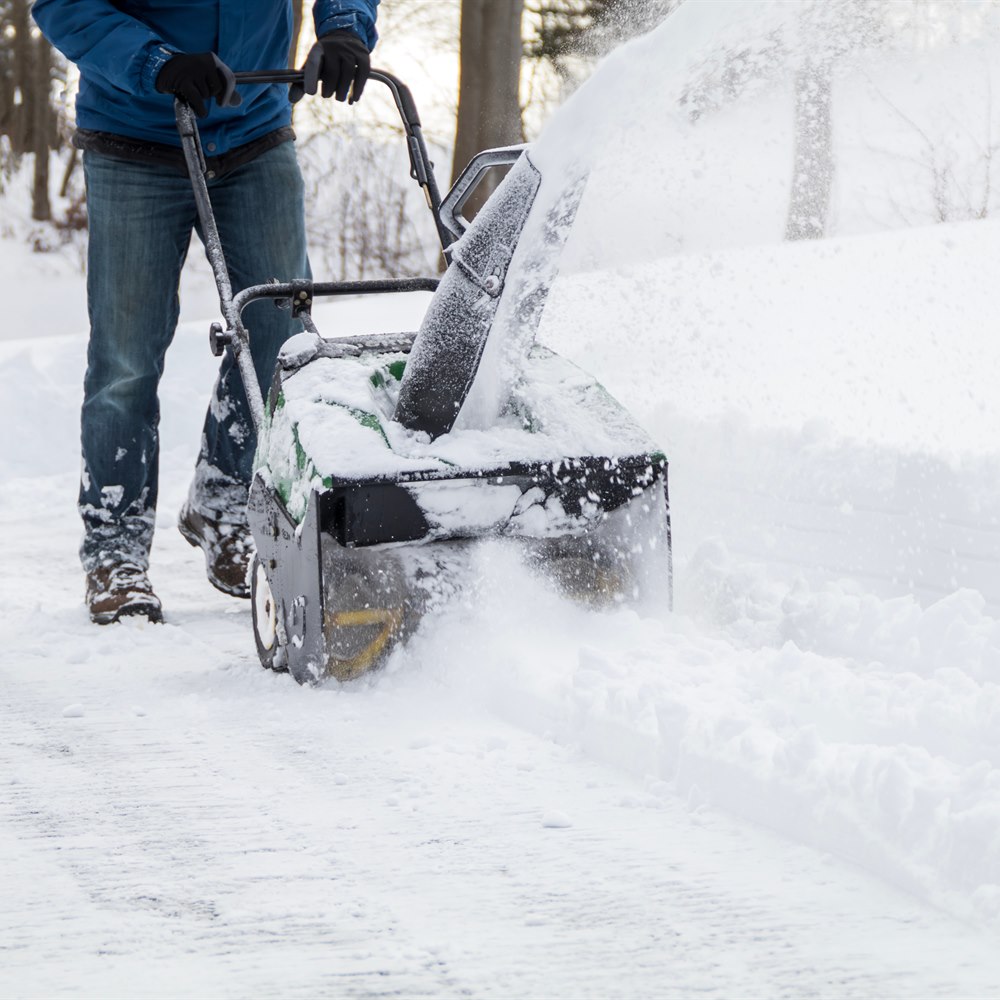
What Drives Driveway Plowing Costs?
Driveway plowing runs from about $30 to $250 per visit (or a flat seasonal rate of about $300 to $1,000 for the winter, with salting and de-icing billed separately at $20 to $50 per application), and where you land depends on your driveway’s size, your local snowfall, the layout, and your pricing model. Here’s what moves the number.
The Driveway’s Size
Size sets the base per-visit rate, but storm depth moves it just as much. A small, standard driveway is $30 to $75 for a 2 to 4 inch trigger push and $65 to $110 once a full 6 inches has fallen; deeper storms are their own tiers, $95 to $165 at 7 to 12 inches and $125 to $250 once a storm passes a foot, with roughly $30 added for each additional 6 inches. A large or long one is $75 to $150. More area, a longer drive, a wider parking area, more space to clear, means more time and passes with the plow. The square footage of pavement to clear is the single largest factor in the per-visit cost. Small driveways are cheap; large ones cost more per visit.
The Snowfall Amount and Frequency
How much and how often it snows drives your total winter cost. Deep, heavy snow takes longer to clear than a light dusting, and frequent snowfalls mean more visits (on per-event pricing) or make a seasonal contract more valuable. Your local climate and a given winter’s severity heavily influence what you’ll spend overall. More snow, more often, means more cost across the season. Snowfall is the biggest driver of seasonal totals.
The Layout and Slope
A straight, flat, open driveway is quick to plow; a curved, steep, or obstacle-filled one (tight spaces, landscaping, multiple sections) takes more care and time. Slope especially matters, a steep driveway is harder and may need extra attention or de-icing. Your driveway’s shape and grade affect the difficulty and cost. Complex or steep driveways cost more to plow.
The Pricing Model
Per-event pricing means you pay each visit, good for occasional snow. A seasonal contract is a flat rate for the winter, often better value in snowy areas and offering priority service. Which model you choose affects your total cost, and the best choice depends on how much snow you get. The pricing model shapes what you pay over a winter. Match the model to your snowfall for the best value. (For more on this, see How to Choose a Snow Removal Service.)
De-Icing and Extras
Adding salting, de-icing, or ice management increases the cost beyond plain plowing. If you want ice handled (for safety or a slope), that’s an added service. Extras like hand-clearing walkways, priority timing, or hauling snow away also add cost. The services you bundle beyond basic plowing affect the total. Extras and ice management add to the base plow cost. (For more on this, see Questions to Ask a Driveway Plowing Service.)
Priority and Response Time
How fast you need clearing matters. Standard service clears you in turn along the plow route; guaranteed early or on-demand clearing can cost more. During a big storm, being first has a premium. If timing is critical, priority service raises the cost. Response-time guarantees are a cost factor. Faster clearing costs more.
Surface Type and Contract Structure
Your driveway’s surface quietly shapes the cost. Asphalt and concrete give the plow a hard, predictable edge to work against, so they clear cleanly and quickly. Gravel is slower and more delicate: the blade rides high to avoid flinging stone, more hand-finishing is often needed, and the job can carry a small premium. Heated driveways, at the other extreme, may need little or no plowing at all. Surface condition matters too, a cracked or heaved driveway with uneven sections forces the operator to slow down and lift the blade to avoid catching, adding time. (For more on this, see How Much Does Driveway Plowing Cost?.)
Contract structure is the other big lever. Beyond simple per-event and flat-seasonal pricing, some services offer per-inch tiers (a two-to-six-inch storm costs one rate, six-to-twelve another, and so on), which fairly reflects that deeper snow is more work but makes your cost less predictable. Others cap the number of visits a seasonal contract covers, with extra storms billed on top, something worth checking in a heavy winter. Understanding exactly how a given service structures its pricing, and matching that structure to your typical snowfall, is often worth more than shopping for the lowest headline rate, because the cheapest per-visit price can still cost the most over a snowy season if the terms don’t fit how much you actually get plowed.
It’s also worth remembering that the cheapest headline rate rarely reflects the true seasonal cost. A low per-visit price paired with an unfavorable trigger depth, extra charges for deep snow, and no road-plow throwback clearing can easily total more across a winter than a slightly higher rate with better terms, so weigh the full structure, not just the single number, when you compare quotes.
Getting an Accurate Price
Because size, snowfall, layout, pricing model, extras, and priority all move the number, an accurate quote depends on your specific driveway and local winter. A small flat driveway plowed occasionally sits at the low end; a large steep one on a priority seasonal contract with de-icing runs higher. When you’re ready for an assessment, connect with a local pro below.
Cost figures on this page were checked against published pricing on August 28, 2026. How we source cost data.
Frequently Asked Questions
Per visit, it's the driveway's size, a small standard driveway is $30-$75, a large or long one is $75-$150, since more area means more time and passes. Over a whole winter, snowfall amount and frequency drive the total, since more snow means more visits or a more valuable seasonal contract.
Yes, heavily, for your seasonal total. Deep, heavy snow takes longer to clear than a dusting, and frequent snowfalls mean more per-event visits or make a seasonal contract more worthwhile. Your local climate and a winter's severity strongly influence what you spend overall. More snow, more often, means more cost.
It can. A straight, flat, open driveway is quick to plow, while a curved, steep, or obstacle-filled one takes more care and time. Slope especially matters, a steep driveway is harder and may need extra attention or de-icing. Your driveway's shape and grade affect the difficulty and cost.
Yes. Adding salting, de-icing, or ice management increases the cost beyond plain plowing, since plowing clears snow but doesn't handle ice. If you want ice managed (for safety or a slope), it's an added service. Extras like hand-clearing walkways or priority timing also add to the base plow cost.
Per-event pricing (pay each visit) suits occasional snow; a seasonal contract (flat winter rate) is often better value in snowy areas and includes priority service. Which model you choose affects your total, and the best choice depends on how much snow you get. Match the model to your snowfall for the best value.
