How Do You Design a Landscape for a Small Yard?
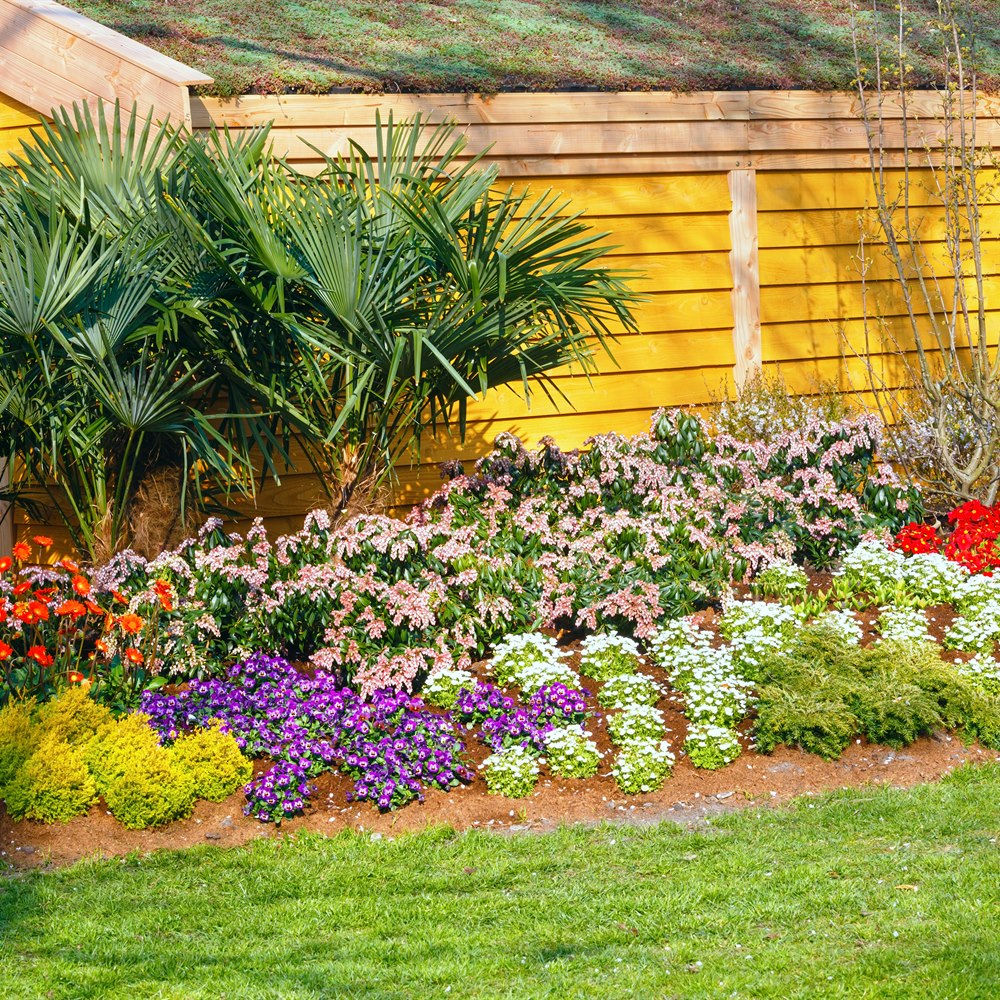
In a small yard, plant fewer and larger — a limited palette of 3 to 5 species in 5-gallon sizes rather than a collection of 1-gallon shrubs planted 2 feet apart. Every element has to work harder here: multifunctional hardscape, vertical interest, light-colored paving, and one strong focal point, all balanced against the competing demands of privacy, usable space, and visual appeal.
Scale and Proportion
The most common small-yard mistake: filling the space with too many small plants. A collection of 2-gallon nursery shrubs planted 2 feet apart creates a cluttered, chaotic appearance that makes the yard feel smaller. Instead: choose fewer plants at larger sizes (5-gallon containers, not 1-gallon), with bold forms that hold visual interest. One specimen Japanese maple at the corner of a patio: more impactful than six dwarf shrubs along the same fence. Simplicity in plant selection — a limited palette of 3 to 5 species used repeatedly — makes a small space feel intentional and unified rather than collected and crowded.
Multifunctional Features
In a small yard: every square foot of hardscape must justify itself. A raised planting bed with a wide, flat cap: functions as both a planting bed and a seating ledge. A small patio table surface: doubles as a potting bench when entertaining season is over. Built-in bench seating around a patio: provides seating without the visual bulk of free-standing furniture that makes a small space feel crowded. A small water feature (a self-contained fountain): provides sound that masks urban noise and creates a focal point that draws the eye.
Vertical Interest and Visual Tricks
Vertical elements (wall-mounted planters, trellises with climbing vines, a small ornamental tree with high canopy) draw the eye upward, making a small yard feel taller and less confined. Lighter colors (light-colored paving, pale-foliaged plants, white or cream furniture) reflect light and make a small space feel larger than darker alternatives. Diagonal lines (a path or patio edge placed at 45 degrees to the fence line) visually expand a small rectangular space by disrupting the parallel lines that emphasize its boundaries.
Working With a Contractor on This Project
Getting the right outcome on any home services project starts before the work begins. A few consistent practices make the difference between a smooth project and a frustrating one.
Get at least two or three quotes. A single quote gives you no basis for comparison. Two or three quotes reveal the market rate for the work, expose scope differences between bidders, and let you assess contractor communication quality before any commitment is made. The lowest bid is not automatically the best value if the scope is thin or the materials are underspecified.
Ask for licenses and insurance before work starts. Verify current general liability insurance and, for any work involving workers on your property, workers compensation coverage. Licensing requirements vary by state and trade; confirm the specific requirements in your jurisdiction. A licensed contractor who carries appropriate insurance protects both parties if something goes wrong during the project.
Get the scope in writing. A written proposal that specifies materials, labor scope, timeline, what is included (permits, cleanup, disposal), and warranty terms is the foundation of a professional engagement. Verbal agreements on any of these points invite misunderstanding. For any project over $500, written scope is non-negotiable.
Clarify the payment schedule upfront. A reasonable payment schedule ties major payments to project milestones: a deposit at signing, a payment at material delivery or project start, and a final payment at completion after a walkthrough confirms satisfaction. A contractor who requires full payment upfront before work begins is a red flag in any trade.
Making a Confident Decision
The information in this article is designed to help you ask better questions of the professionals you work with, evaluate their answers with more confidence, and understand the decisions involved in this type of home services project. It is not a substitute for professional assessment of your specific home. (For more on this, see Questions to Ask a Landscape Design Company.)
Every home is different. Roof slopes, local weather, tree exposure, soil conditions, and existing system condition all affect what the right solution is for your specific situation. The general principles here apply broadly, but a professional who assesses your home in person will give you guidance that accounts for the details that general articles cannot.
When you are ready to move forward, getting at least two or three quotes from licensed, insured, local contractors is the most important practical step. It lets you compare approaches, assess contractor quality, and confirm that the solution proposed matches your specific situation and budget.
Landscape Design Cost at a Glance
Here is a quick reference for landscape design and installation costs, from a design-only plan to a full design-build renovation.
| Cost Factor | Typical Range | Notes |
|---|---|---|
| Virtual or remote design consultation | $100 to $800 | for a 30- or 60-minute session. |
| Design-only professional | $70 to $150 per hour | , or a flat fee by scope: $300 to $800 for a planting plan, $700 to $3,700 for a mid-size property, $3,700 to $11,000 or more for a full-property master plan. Established high-end firms bill $150 to $250 per hour. |
| Basic planting installation (no hardscape) | $2,000 to $8,000 professionally | installation, quoted separately from the design fee. |
| Full front yard renovation | $5,000 to $15,000 professionally installed | installation, quoted separately. |
| Full landscape renovation with hardscape and irrigation | $15,000 to $40,000 installed | installation, quoted separately. |
| High-end custom design-build | $50,000 to $200,000+ | design and construction contracted together. |
Cost figures on this page were checked against published pricing on August 29, 2026. How we source cost data.
Even a $300 to $500 online design plan is the highest-ROI investment before a large installation — unplanned planting of plants at wrong mature sizes requires costly removal and replacement within 5 to 10 years. (For more on this, see Landscape Design: What to Expect During Installation.)
Frequently Asked Questions
Use a limited plant palette (3 to 5 species rather than 20). Choose a few large specimens rather than many small ones. Use light-colored paving and pale-foliaged plants (they reflect light). Add vertical interest (trellises, wall planters, tall columnar plants). Diagonal lines in the hardscape layout disrupt the parallel fence lines that emphasize the yard's small dimensions.
A simple, unified design with a small patio (12 to 14 feet square is adequate for a small dining area), one strong focal point (a specimen plant, a water feature, or a sculptural element), generous planting beds (not leftover strips), and a limited plant palette. Avoid: too many different materials, too many different plant species, and too much lawn (lawn looks great in large yards but in small yards it requires mowing a tiny area and rarely looks as good as paving or planting).
Generally not worth it -- a lawn smaller than 300 to 400 sq ft requires as much maintenance as a larger lawn (mowing, watering, fertilizing) while providing minimal functional value. Replace small lawn areas with paving, permeable gravel, or planted ground cover. A small amount of lawn (200 to 300 sq ft) as a green panel adjacent to the patio: can work aesthetically but requires commitment to maintenance.
Plants with multiple seasons of interest (serviceberry, Japanese maple, ornamental grasses). Vertical or columnar forms (columnar hornbeam, sky pencil holly, columnar arborvitae) that provide height without horizontal spread. Dwarf or slow-growing varieties of otherwise large plants. Climbing plants on walls and fences (clematis, climbing hydrangea, roses) that use vertical space without taking up ground area.
A small patio (150 to 200 sq ft in pavers or flagstone): $3,000 to $8,000 installed. Planting and bed preparation (100 to 200 sq ft of beds): $1,500 to $4,000 installed. A complete small yard design-build (patio, beds, one specimen tree, mulch, lighting): $8,000 to $20,000 professionally. DIY patio with professional planting: $3,000 to $8,000 for the patio materials and a $500 to $1,500 professional planting consultation.