
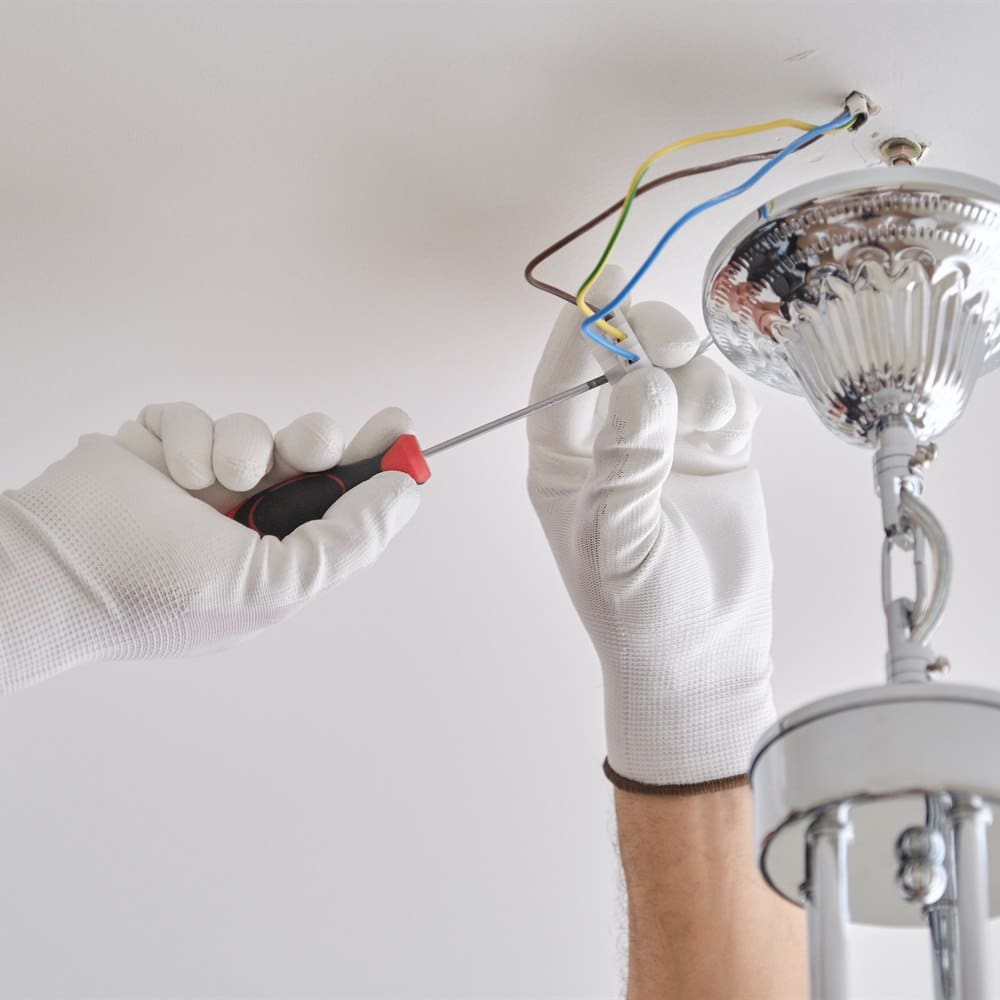
How Do You Know If Your Home Needs Electrical Wiring Work?
Home electrical wiring problems are often silent until they become serious. Here is how to recognize the warning signs that indicate professional attention is needed.
Frequently Tripped Breakers
A breaker that trips occasionally during high-load conditions (running the microwave and coffee maker simultaneously on a kitchen circuit) is doing its job. A breaker that trips repeatedly on a circuit without an obvious high-load trigger indicates an overloaded circuit, a failing breaker, or a wiring problem creating excess current draw. Repeated tripping on the same circuit should be assessed by an electrician a it is a symptom, not a feature to work around by resetting. (For more on this, see Home Electrical Wiring: What to Expect During the Project.)
Burning Smell or Discoloration at Outlets or Switches
A burning smell at an outlet, switch, or panel a particularly one not associated with an obvious external source a indicates an arcing or overheating connection. Discoloration (brown or black marks) around outlets or switch faceplates confirms heat damage at the connection. Both are fire hazard conditions requiring immediate electrician assessment. Do not reset a breaker that trips after a burning smell a the trip may be protecting the wiring from further overheating. The Electrical Safety Foundation covers where GFCI and AFCI protection is required and which jobs need a licensed electrician.
Flickering Lights Throughout the Home
Occasional single-fixture flickering is usually a bulb or local wiring issue. Flickering throughout the home or across multiple circuits simultaneously a particularly when large appliances cycle on a indicates a voltage fluctuation from a utility issue or a loose main service connection. The latter is a potentially dangerous condition that warrants a prompt electrician call, not monitoring. (For more on this, see How to Budget for a Home Electrical Wiring Project.)
No GFCI Protection in Required Locations
Bathrooms, kitchens, garages, outdoor outlets, and areas near water sources without GFCI-protected outlets are a code deficiency in any home. Retrofit GFCI installation is a straightforward correction, priced per opening like any device work at $100 to $300 or more per outlet, so covering every required location in the house is a multiple of that rather than a flat few hundred dollars. It eliminates a real shock hazard.
Working With a Contractor on This Project
Getting the right outcome on any home services project starts before the work begins. A few consistent practices make the difference between a smooth project and a frustrating one.
Get at least two or three quotes. A single quote gives you no basis for comparison. Two or three quotes reveal the market rate for the work, expose scope differences between bidders, and let you assess contractor communication quality before any commitment is made. The lowest bid is not automatically the best value if the scope is thin or the materials are underspecified.
Ask for licenses and insurance before work starts. Verify current general liability insurance and, for any work involving workers on your property, workers compensation coverage. Licensing requirements vary by state and trade; confirm the specific requirements in your jurisdiction. A licensed contractor who carries appropriate insurance protects both parties if something goes wrong during the project. (For more on this, see Questions to Ask Before Hiring an Electrician for Wiring Work.)
Get the scope in writing. A written proposal that specifies materials, labor scope, timeline, what is included (permits, cleanup, disposal), and warranty terms is the foundation of a professional engagement. Verbal agreements on any of these points invite misunderstanding. For any project over $500, written scope is non-negotiable.
Clarify the payment schedule upfront. A reasonable payment schedule ties major payments to project milestones: a deposit at signing, a payment at material delivery or project start, and a final payment at completion after a walkthrough confirms satisfaction. A contractor who requires full payment upfront before work begins is a red flag in any trade.
Making a Confident Decision
The information in this article is designed to help you ask better questions of the professionals you work with, evaluate their answers with more confidence, and understand the decisions involved in this type of home services project. It is not a substitute for professional assessment of your specific home.
Every home is different. Roof slopes, local weather, tree exposure, soil conditions, and existing system condition all affect what the right solution is for your specific situation. The general principles here apply broadly, but a professional who assesses your home in person will give you guidance that accounts for the details that general articles cannot.
When you are ready to move forward, getting at least two or three quotes from licensed, insured, local contractors is the most important practical step. It lets you compare approaches, assess contractor quality, and confirm that the solution proposed matches your specific situation and budget.
Electrical Wiring Cost at a Glance
| Cost Factor | Typical Range | Notes |
|---|---|---|
| Small wiring work | $250 to $900 per dedicated circuit | a single outlet, switch, or fixture is $100 to $300+ per opening |
| Panel (breaker box) upgrade | $1,300 to $4,500 | installed, for upgrading service capacity |
| Partial rewiring | $600 to $10,000 | one room $600 to $2,500; kitchen $1,500 to $4,000; one to two floors $3,000 to $10,000 |
| Whole-home rewire | $10,000 to $30,000 | installed, or $5 to $17 per sq ft |
| Drywall and plaster repair after rewiring | $300 to $1,500+ per patch | usually excluded from the rewire quote; adds 20 to 30% to the labor |
| Knob-and-tube or aluminum wiring | $8,000 to $40,000 | aluminum remediation $8,000 to $20,000; knob-and-tube replacement $12,000 to $40,000 |
| Permit and municipal inspection | $75 to $1,500 per permit | paid to the jurisdiction rather than to the electrician |
| Overall range | $1,500 to $30,000, averaging $2,500 |
Cost figures on this page were checked against published pricing on August 27, 2026. How we source cost data.