How Do You Choose Tile for a Tub-to-Shower Conversion?
Porcelain with a wet DCOF of 0.60 or higher on the floor is the right tile for most tub-to-shower conversions. It is fully vitrified, so it never needs sealing, absorbs less than 0.5 percent water, and comes in formats from 2×2 mosaic to 48×48 slabs. ANSI A137.1 sets 0.42 as the wet-floor minimum, and the Tile Council of North America recommends 0.60 for barefoot areas. Ceramic is acceptable on walls but not on the floor, and natural stone is a premium look that trades maintenance for it — annual sealing for marble, every 2 to 3 years for harder stones.
Material: Porcelain Is the Standard for Good Reason
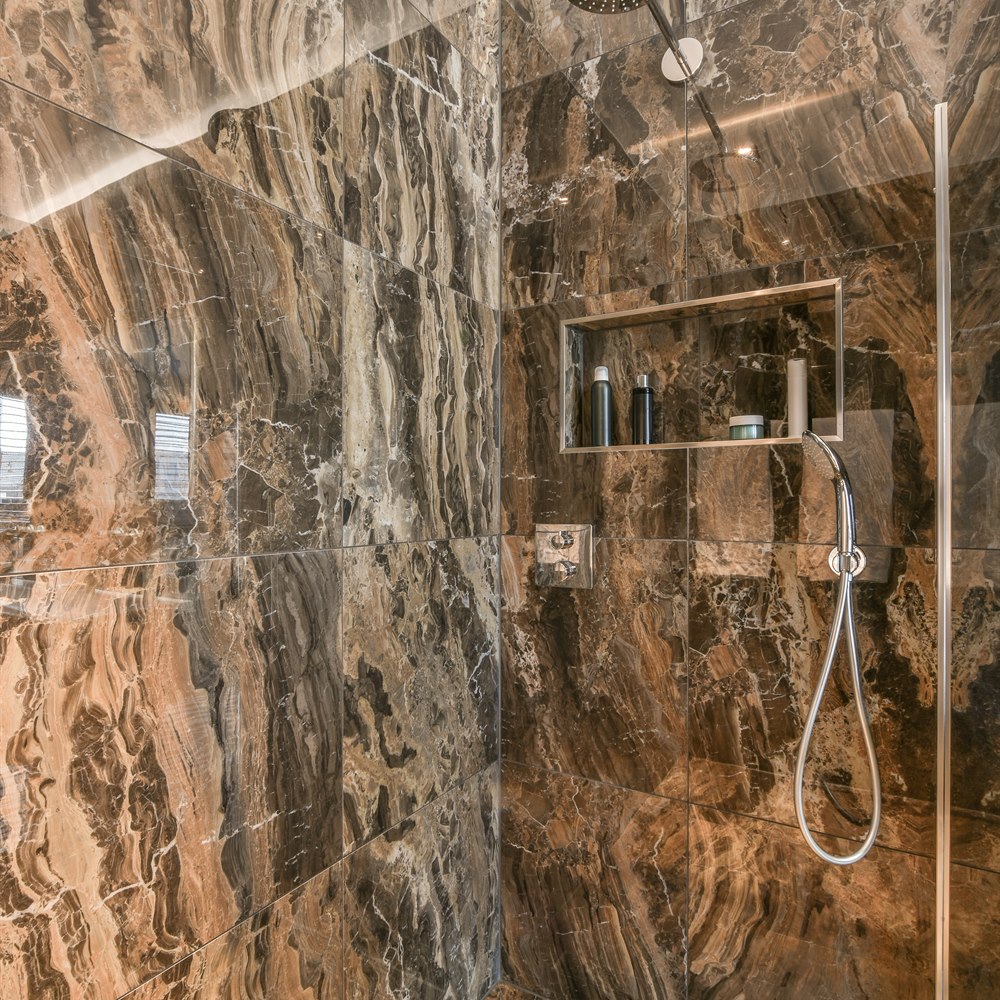
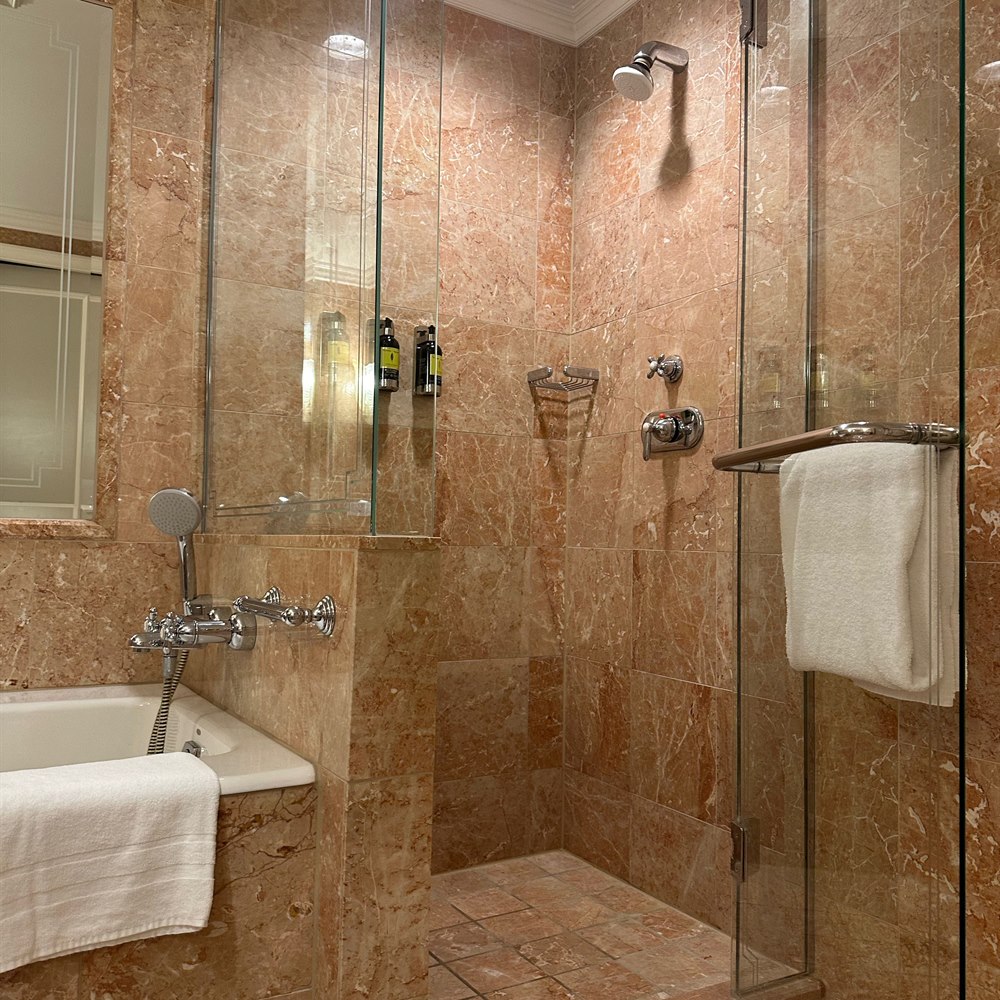
Porcelain tile is the leading shower tile material and the appropriate default for most conversions. Advantages: fully vitrified (non-porous) surface that does not require sealing, hard and scratch-resistant, available in formats from 2×2 mosaic to 48×48 slabs, water absorption rate less than 0.5 percent (required for shower applications), and available in an enormous range of colors, textures, and looks. Ceramic tile (slightly more porous than porcelain) is acceptable for shower walls but is not recommended for shower floors in wet applications — specify porcelain for the floor specifically. Natural stone (marble, travertine, slate) is a premium option with higher maintenance requirements: all natural stone requires periodic sealing (annually for marble, every 2 to 3 years for harder stones like slate), and some stones (particularly marble) etch from the acidic nature of shampoos and soaps. (For more on this, see How to Maintain a Tile Shower After Conversion.)
Slip Resistance: The Non-Negotiable Floor Spec
Shower floor tile must meet a minimum wet dynamic coefficient of friction (DCOF) of 0.42 under ANSI A137.1 — the standard for wet floor applications. For barefoot wet areas (shower floors): 0.60 or higher is recommended by the Tile Council of North America (TCNA). Mosaic tile (1×1, 2×2, or penny-round) provides higher friction through the numerous grout joints that create texture. Matte or textured large-format tiles may meet the 0.60 recommendation on their surface. Polished or glossy tiles — regardless of size — typically do not meet the wet DCOF recommendation for shower floors and should not be specified for the floor (they are fine for shower walls where they are not walked on). (For more on this, see Prefab vs. Custom Tile Shower: Which Is Right for Your Conversion?.)
Size and Format: Balancing Aesthetics and Installation
Small mosaic tiles (1×1, 2×4, penny-round): inherently high slip resistance, many grout lines that require regular cleaning, affordable material cost, can be installed on curved or sloped surfaces easily. Standard format (4×4, 6×6, 4×12, 12×12): the workhouse of shower tile, easy installation, moderate grout maintenance. Large format (18×18, 24×24, 12×24): fewer grout joints (easier cleaning), premium contemporary aesthetic, requires more skill to install correctly on sloped shower floors (lippage prevention requires leveling clips and more experienced setting), adds 20 to 40 percent to labor cost. Wall tiles can be almost any format and finish; floor tiles must meet the DCOF specification. (For more on this, see What Makes a Tub-to-Shower Conversion Cost More (or Less)?.)
Working With a Contractor on This Project
Getting the right outcome on any home services project starts before the work begins. A few consistent practices make the difference between a smooth project and a frustrating one.
Get at least two or three quotes. A single quote gives you no basis for comparison. Two or three quotes reveal the market rate for the work, expose scope differences between bidders, and let you assess contractor communication quality before any commitment is made. The lowest bid is not automatically the best value if the scope is thin or the materials are underspecified.
Ask for licenses and insurance before work starts. Verify current general liability insurance and, for any work involving workers on your property, workers compensation coverage. Licensing requirements vary by state and trade; confirm the specific requirements in your jurisdiction. A licensed contractor who carries appropriate insurance protects both parties if something goes wrong during the project.
Get the scope in writing. A written proposal that specifies materials, labor scope, timeline, what is included (permits, cleanup, disposal), and warranty terms is the foundation of a professional engagement. Verbal agreements on any of these points invite misunderstanding. For any project over $500, written scope is non-negotiable.
Clarify the payment schedule upfront. A reasonable payment schedule ties major payments to project milestones: a deposit at signing, a payment at material delivery or project start, and a final payment at completion after a walkthrough confirms satisfaction. A contractor who requires full payment upfront before work begins is a red flag in any trade.
Making a Confident Decision
The information in this article is designed to help you ask better questions of the professionals you work with, evaluate their answers with more confidence, and understand the decisions involved in this type of home services project. It is not a substitute for professional assessment of your specific home.
Every home is different. Roof slopes, local weather, tree exposure, soil conditions, and existing system condition all affect what the right solution is for your specific situation. The general principles here apply broadly, but a professional who assesses your home in person will give you guidance that accounts for the details that general articles cannot.
When you are ready to move forward, getting at least two or three quotes from licensed, insured, local contractors is the most important practical step. It lets you compare approaches, assess contractor quality, and confirm that the solution proposed matches your specific situation and budget.
Ranges here are national ballpark figures, not quotes. Actual pricing varies by region, home condition, materials, and contractor. How we source cost data.