What Does a Shed Cost?
A backyard shed costs $1,500 to $15,000 or more, averaging around $5,000 for a mid-range shed delivered and installed. What separates the tiers is not just size but whether you are buying a storage container, a small building, or a finished workspace.
| Tier | Cost | What you get |
|---|---|---|
| Prefab storage shed | $1,500 to $4,000 | Metal, resin, or basic wood; delivered or kit-assembled |
| Mid-range shed | $4,000 to $8,000 | Site-built wood, proper foundation, real door and windows |
| Custom shed or workshop | $8,000 to $15,000 or more | Electrical, insulation, HVAC, finished interior |
Cost figures on this page were checked against published pricing on August 28, 2026. How we source cost data.
Prefab Storage Shed: $1,500 to $4,000
A prefab shed arrives either as a factory-built unit set in place or as pre-cut panels assembled on site. An 8 by 10-foot vinyl or metal shed runs $800 to $1,500 for the unit plus $300 to $700 for delivery and installation. A 10 by 12-foot wood-framed prefab runs $1,500 to $3,000 for the unit plus $1,300 to $1,500 for professional assembly. (For more on this, see Hidden Costs of Shed Installation.)
This tier covers ordinary storage needs, lawn equipment, tools, and seasonal items, at the lowest cost and on the fastest schedule. Vinyl and metal need no painting; wood-framed prefabs look better but usually want paint after 5 to 10 years. The limitations are standard sizes and basic finishes, limited interior height, no insulation, and no electrical.
Mid-Range Shed: $4,000 to $8,000
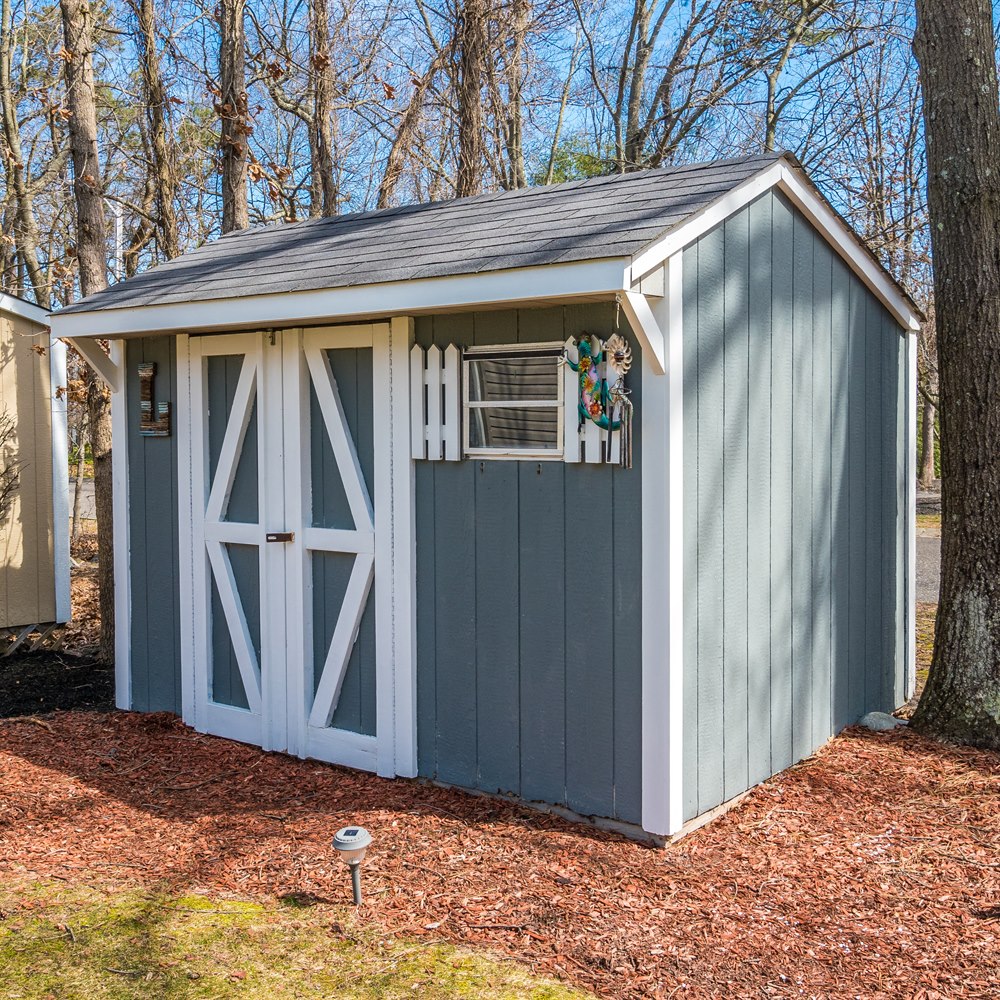
A mid-range shed is a real building rather than a container: wood construction, a proper foundation, a full-size door, windows for natural light, and finish quality that suits the house. A 12 by 16-foot wood-framed shed with a loft, double doors, and a window runs $2,500 to $4,500 for the unit plus $1,500 to $2,500 for a concrete slab and installation. A 12 by 20-foot shed with treated wood siding, a shingle roof, and site-built construction runs $5,000 to $8,000 all in. (For more on this, see Prefab vs. Site-Built Sheds: Which Is Right?.)
These are built on site rather than delivered complete, which allows flexibility in size and layout. The payoff is headroom for an adult to work comfortably and room for both storage and a workbench, plus a weather-tight structure you can add shelving and organization to. This is the tier where a shed stops reading as a utility object in the yard and starts complementing the house, which matters if it will be visible from the patio or the street.
Custom Shed or Workshop: $8,000 to $15,000 or More
A custom shed is designed to specific dimensions for a specific use: insulated walls and ceiling, an electrical panel and outlets, HVAC from a mini-split or window unit, finished interior walls, a workbench, and built-in storage. A 16 by 24-foot custom workshop with a concrete slab, electrical, insulation, and finished interior runs $12,000 to $25,000. Projects that add plumbing and full climate control go higher still.
Structures at this level require building permits and are assessed for property tax in most jurisdictions. That is a real cost of ownership worth confirming with your assessor before you build.
Foundation, Electrical, and Permits
Gravel pad: $150 to $400. A level, compacted gravel bed 4 to 6 inches deep. The simplest option and appropriate for prefab sheds.
Concrete piers or blocks: Concrete or plastic blocks at each corner and mid-span. Faster to install than a slab and adjustable for level. Suited to light prefab units.
Concrete slab: $800 to $2,500 for a 10 by 12-foot slab. The most permanent choice, giving a clean flat floor and anchoring the structure against wind. Required for any workshop with power equipment that must be bolted down.
Electrical: $800 to $2,500 to run a subpanel from the home’s main panel, depending on the distance of underground conduit and the subpanel size. A full electrical rough-in with outlets, lighting, and fixtures runs $1,500 to $3,000. The work needs a licensed electrician and an electrical permit. A 60 to 100-amp subpanel handles most woodworking tools; a 20-amp circuit is enough for a storage shed with lighting only.
Permits: Most jurisdictions require a permit above a size threshold, commonly 100 to 200 square feet, and some exempt sheds under 120 square feet. The permit confirms the shed meets wind load, setback, and fire code requirements, and some municipalities also cap total accessory structure coverage relative to lot size. An unpermitted shed may have to be disclosed at sale or removed. Call the building department before buying any shed over 100 square feet.
Budgeting the Complete Project
The structure price understates the full project cost by 25 to 60 percent in most cases. A prefab shed quoted at $2,500 typically lands at $3,200 to $3,800 complete with a gravel pad, delivery, and permit. A custom workshop quoted at $10,000 for the structure typically lands at $12,000 to $14,000 with a concrete slab, electrical rough-in, permit fees, and site preparation. The items most often left off a first-look quote are foundation, delivery and site access, and permit fees, which together add $1,000 to $3,000 on a mid-range project. (For more on this, see Shed Foundation Options: Gravel, Concrete, and Piers.)
Decide on material type, approximate size, and whether you need electrical and insulation before you call anyone. Those three decisions narrow the $1,500 to $15,000 range to a window a site visit can refine. Then ask two or three contractors for itemized quotes covering every component, not just the structure, and confirm who is handling the permit.
A shed built to quality standards on a proper foundation serves the property for 15 to 20 years. Amortized across that span, even a $6,000 custom shed with electrical costs $300 to $400 per year of service, which is why total ownership cost is the better frame than purchase price when choosing between tiers.
Frequently Asked Questions
$1,500 to $15,000 or more, averaging $5,000. A prefab storage shed delivered and installed runs $1,500 to $4,000, a mid-range site-built shed with a foundation runs $4,000 to $8,000, and a custom workshop with electrical, insulation, and a finished interior runs $8,000 to $15,000 or more.
$1,500 to $4,000 including installation. An 8 by 10-foot vinyl or metal shed runs $800 to $1,500 for the unit plus $300 to $700 for delivery and installation. A 10 by 12-foot wood-framed prefab runs $1,500 to $3,000 for the unit plus $500 to $800 to install. Expect standard sizes, limited interior height, no insulation, and no electrical.
$8,000 to $15,000 or more for insulated walls and ceiling, an electrical panel and outlets, HVAC, and a finished interior. A 16 by 24-foot custom workshop with a concrete slab, electrical, insulation, and finished interior runs $12,000 to $25,000. These structures require building permits and are assessed for property tax in most jurisdictions.
A gravel pad at $150 to $400 is the simplest option, a level compacted bed 4 to 6 inches deep, and is fine for prefab sheds. Concrete piers or blocks at the corners and mid-spans install faster than a slab and adjust for level. A concrete slab costs $800 to $2,500 for a 10 by 12-foot shed, gives a clean flat floor, anchors the structure against wind, and is required for any workshop with equipment that must be bolted down.
Yes, and it is the most popular upgrade. Running a subpanel from the home's main panel costs $800 to $2,500 depending on the length of underground conduit and the subpanel size, and a full rough-in with outlets and lighting runs $1,500 to $3,000. The work requires a licensed electrician and an electrical permit. A 60 to 100-amp subpanel handles most woodworking tools; 20 amps is enough for lighting only.
Usually above a size threshold, commonly 100 to 200 square feet depending on the jurisdiction, and some areas exempt sheds under 120 square feet. The permit confirms the shed meets wind load, setback, and fire code requirements, and some municipalities also limit total accessory structure coverage relative to lot size. An unpermitted shed may need to be disclosed at sale or removed.
Vinyl and metal need no painting and resist rot, though metal can dent and vinyl can fade over 10 to 20 years. Wood framing with quality cedar siding looks best and lasts a long time but wants painting every 5 to 10 years. For a workshop, site-built wood framing is the most versatile, since it accepts insulation, electrical, and any interior finish at any dimension.
Electrical rough-in at $1,500 to $3,000, insulation for year-round use, a concrete slab instead of a gravel pad, custom sizing that requires on-site fabrication rather than kit assembly, and upgraded doors, windows, and finishes. Foundation, delivery, and permit fees alone add $1,000 to $3,000 to a mid-range project and are the items most often missing from a first quote.