Are Motorized Window Treatments Worth the Investment?
Motorized window treatments have moved from luxury-home-only to broadly available in the past 5 years, with prices decreasing significantly. Here is how to evaluate the decision.
What Motorized Window Treatments Cost
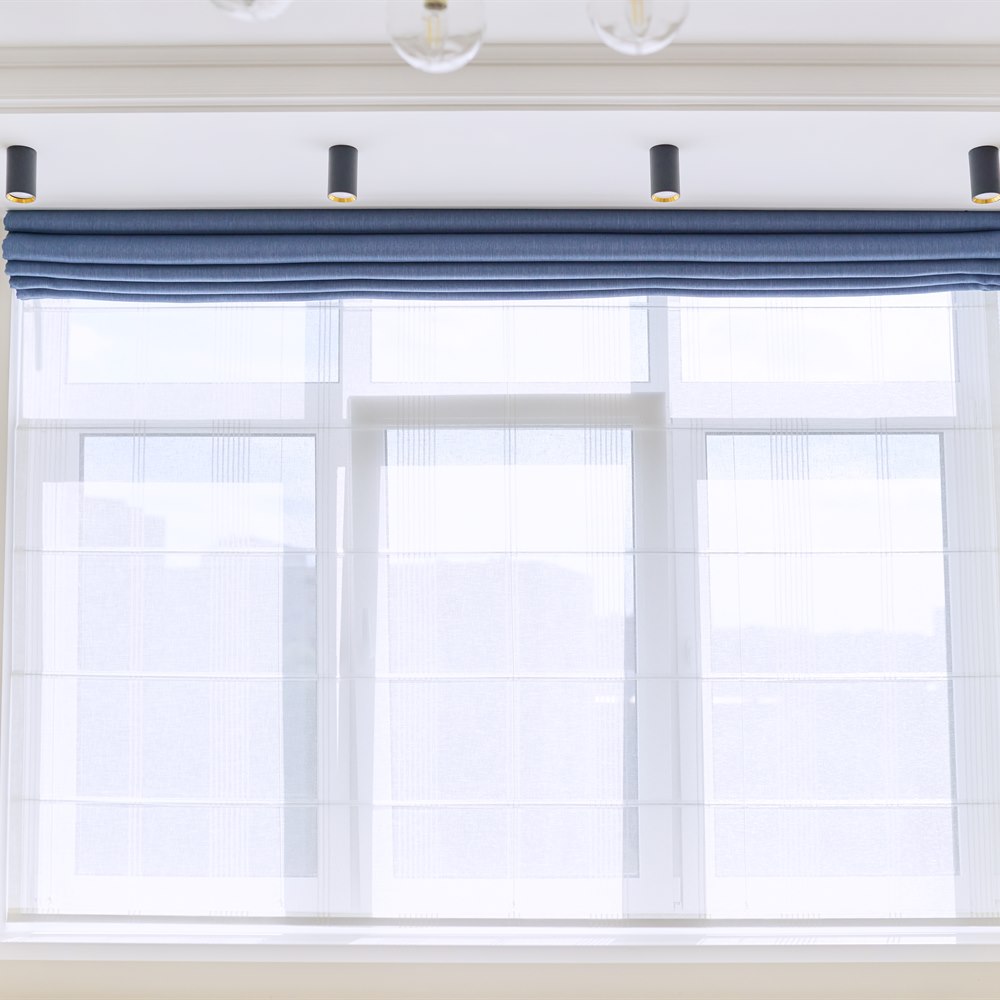
Motorized shades run $300 to $1,000 per window installed, with retailers quoting $220 to $1,300 for the shade itself depending on type — roller at the lower end, cellular in the middle, roman at the top. Motorization is not a line item added to a manual shade but a tier of its own: manual stock blinds and shades are $30 to $200 per window installed and custom ones $70 to $600, so the step up is a large one, and across a whole house it multiplies well past the $600 to $6,000 a whole home of eight to ten windows in manual blinds or shades costs. The primary cost drivers: whether the motor is battery-powered (lower installation cost, requires periodic battery replacement or recharging) or hardwired (higher installation cost, no maintenance, supports continuous operation).
Where Motorized Treatments Make the Most Sense
Hard-to-reach windows (a skylight, a high transom window, a two-story window in a great room): the strongest use case for motorization — manual operation of these windows is genuinely difficult or impossible without a ladder. Large windows (a 12-foot wide window in a great room): manually operating a heavy shade on a large window multiple times per day is fatiguing; motorization makes it effortless. Whole-house automation (multiple windows raised and lowered simultaneously on a schedule): saves significant time and provides consistent light management. Homes with a smart home system (Google Home, Amazon Alexa, Apple HomeKit): motorized shades integrate with the home automation system and can be controlled by voice or programmed into scenes. (For more on this, see Best Window Treatments for Each Room.)
When Motorized Treatment May Not Be Worth It
Standard-size windows in a bedroom or living room that are operated once or twice per day: the benefit is primarily convenience rather than necessity. A small home or apartment: the investment in motorization is hard to justify at $300 to $1,000 per window if only 4 to 6 windows are involved. The step from a $70 to $600 custom manual shade to a motorized one buys a lot of non-motorized convenience at that scale.
Working With a Contractor on This Project
Getting the right outcome on any home services project starts before the work begins. A few consistent practices make the difference between a smooth project and a frustrating one.
Get at least two or three quotes. A single quote gives you no basis for comparison. Two or three quotes reveal the market rate for the work, expose scope differences between bidders, and let you assess contractor communication quality before any commitment is made. The lowest bid is not automatically the best value if the scope is thin or the materials are underspecified.
Ask for licenses and insurance before work starts. Verify current general liability insurance and, for any work involving workers on your property, workers compensation coverage. Licensing requirements vary by state and trade; confirm the specific requirements in your jurisdiction. A licensed contractor who carries appropriate insurance protects both parties if something goes wrong during the project.
Get the scope in writing. A written proposal that specifies materials, labor scope, timeline, what is included (permits, cleanup, disposal), and warranty terms is the foundation of a professional engagement. Verbal agreements on any of these points invite misunderstanding. For any project over $500, written scope is non-negotiable.
Clarify the payment schedule upfront. A reasonable payment schedule ties major payments to project milestones: a deposit at signing, a payment at material delivery or project start, and a final payment at completion after a walkthrough confirms satisfaction. A contractor who requires full payment upfront before work begins is a red flag in any trade.
Making a Confident Decision
The information in this article is designed to help you ask better questions of the professionals you work with, evaluate their answers with more confidence, and understand the decisions involved in this type of home services project. It is not a substitute for professional assessment of your specific home.
Every home is different. Roof slopes, local weather, tree exposure, soil conditions, and existing system condition all affect what the right solution is for your specific situation. The general principles here apply broadly, but a professional who assesses your home in person will give you guidance that accounts for the details that general articles cannot.
When you are ready to move forward, getting at least two or three quotes from licensed, insured, local contractors is the most important practical step. It lets you compare approaches, assess contractor quality, and confirm that the solution proposed matches your specific situation and budget.
Window Treatment Cost at a Glance
Stock blinds (aluminum, vinyl, or faux-wood): $15 to $60 per window in material, DIY-installable, or $30 to $200 per window installed. Cellular shades: $40 to $150 per window in stock sizes and $70 to $600 per window installed when custom, the most energy-efficient treatment, reduces heat transfer 20 to 50 percent. Motorized shades: $300 to $1,000 per window installed, a separate tier rather than an upgrade. Woven wood (bamboo) shades: $40 to $150 per window in stock sizes. Plantation shutters: $200 to $900 per window installed, vinyl and composite at the bottom and solid wood at the top, moisture-resistant in composite and the most value-adding treatment; bay and specialty openings $800 to $2,000. Custom drapery panels: $250 to $1,000 per window in fabric, hardware, and fabrication, with installation often quoted separately. (For more on this, see How to Find a Good Window Treatment Professional.)
A whole-house project in plantation shutters: $3,000 to $15,000 installed, while a whole home of eight to ten windows in blinds or shades runs $600 to $6,000. Plantation shutters are the window treatment most consistently associated with added home value. Get 3 quotes specifying the exact product, mount type, and what is included in the installation price.
Cost figures on this page were checked against published pricing on August 27, 2026. How we source cost data.
Frequently Asked Questions
For hard-to-reach windows, large windows, and homes with a smart home system: yes. For standard-size windows in a home without smart home integration: the convenience benefit is real but the cost premium is significant -- motorized runs $300 to $1,000 per window installed against $70 to $600 for a custom manual shade. Evaluate based on the specific windows, how often they are operated, and whether the home has or will have a smart home system that the shades can integrate with.
A small motor is built into the shade's headrail (the horizontal mounting bracket). The motor raises and lowers the shade via a remote control, a wall switch, a smartphone app, or a smart home hub (Google, Alexa, Apple HomeKit). Battery-powered motors: rechargeable via USB every 6 to 12 months (or replaceable batteries). Hardwired motors: connected to a low-voltage wire run through the wall to a transformer -- no battery maintenance, but requires an electrician to run the wire.
Lutron (Serena shades): the most widely installed motorized shade brand in the US, compatible with most smart home systems. Hunter Douglas (PowerView): a premium shade brand with strong smart home integration and a wide fabric range. Somfy: a motor manufacturer whose motors are used by many shade brands; the most widely used motorization technology. Budget options: Blinds.com and SelectBlinds both offer motorized shades at lower price points than Lutron or Hunter Douglas.
Retrofitting existing manual shades with a motor: possible in some cases (Somfy and other companies make retrofit motor kits for specific shade types). Most cost-effective: when the shades are relatively new and the motor retrofit fits the shade's dimensions. A shade that is significantly worn or of low quality: replacement with a new motorized shade is often more practical and cost-effective than a retrofit. Consult a window treatment specialist before purchasing a retrofit motor kit.
Battery-powered: easier and less expensive to install (no electrician needed), rechargeable or replaceable batteries every 6 to 12 months, appropriate for most residential applications. Hardwired: connected directly to low-voltage wiring in the wall, no battery maintenance, required for continuous commercial operation or for very large shades with high-cycle operation. For most residential installations: battery-powered is the more practical and cost-effective choice.