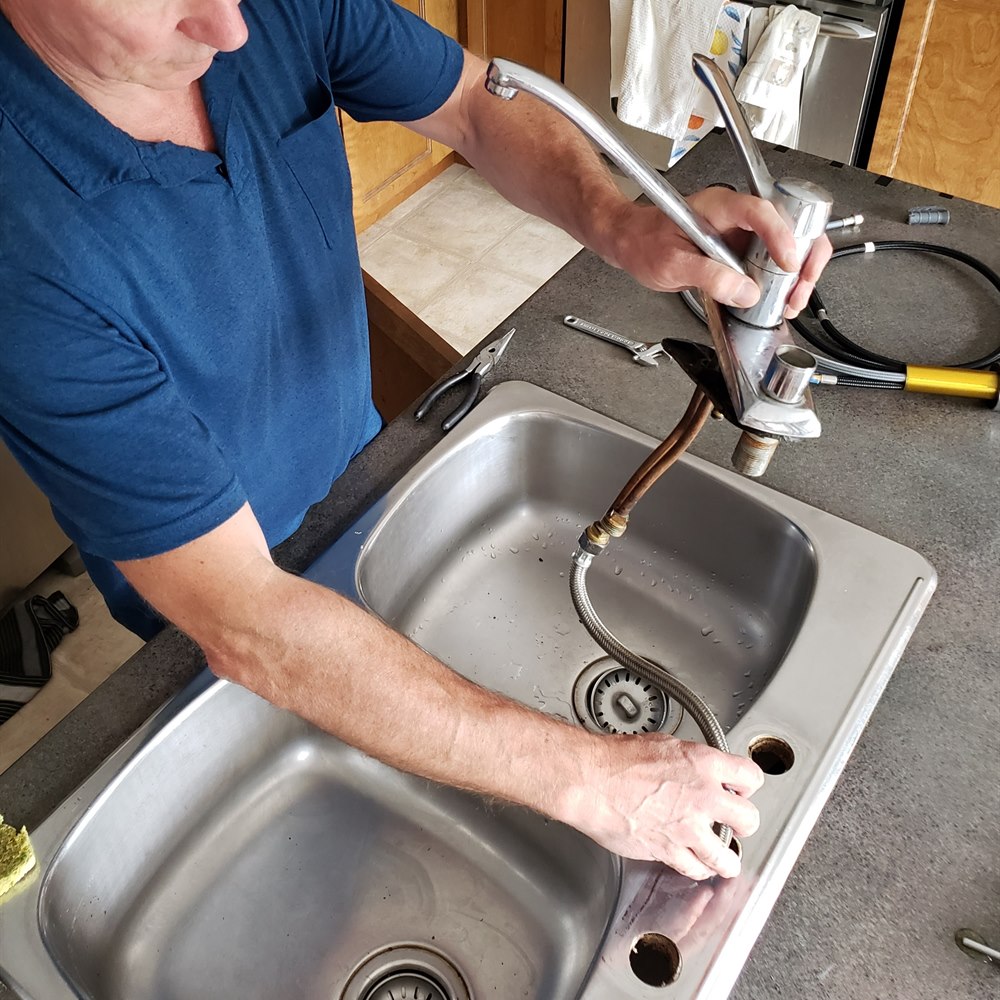
How Do You Choose the Right Replacement Faucet?
Start with your sink’s hole configuration — single-hole, centerset on a 4-inch spread, widespread at an 8 to 16-inch spread, or wall-mount — then choose a solid brass body over zinc die-cast, buy from a brand with a lifetime warranty such as Moen, Delta, or Kohler, and pick a finish you will still like in ten years. Replacing a faucet is a chance to upgrade both function and style, and these four checks are what separate one that lasts from one that does not.
Match Your Sink’s Hole Configuration
Faucets are designed for specific sink hole configurations: single-hole (one opening for the faucet), centerset (two handles on a 4-inch spread, often a single base plate covering 3 holes), widespread (two handles that install separately in three holes at 8 to 16-inch spread), and wall-mount (no deck holes, faucet comes from the wall). Measure the existing hole count and hole spacing before purchasing a replacement faucet must match your sink’s configuration or the sink must be modified (drilling additional holes is possible in some cases, others are not). (For more on this, see Questions to Ask Before Booking Faucet Repair.)
Choose Solid Brass Over Zinc Die-Cast
Solid brass body faucets are the most durable residential choice. The body does not corrode from the inside out, the threads remain intact through many service cycles, and the finish bonds more durably to brass than to zinc. Solid brass faucets are heavier you can feel the quality difference when handling them in the store. Major brands (Moen, Delta, Kohler, American Standard) offer solid brass construction across most of their product lines. Budget brands often substitute zinc die-cast to reduce price the savings are real upfront but the lifespan difference is significant.
Choose a Brand With a Lifetime Warranty
Moen offers a lifetime limited warranty. Delta offers a lifetime limited warranty. Kohler offers a lifetime limited warranty on most products. These warranties cover the finish, the function, and the parts if a covered faucet drips, the manufacturer replaces the cartridge for free (you pay installation). This is a meaningful value over the faucet’s 15 to 20-year lifespan. A faucet from a no-name brand with a 1-year warranty provides no such long-term protection. (For more on this, see Hidden Costs of Faucet and Fixture Installation.) EPA WaterSense estimates the average household wastes about 9,300 gallons a year to leaks, and a single dripping faucet more than 3,000 gallons.
Choose a Finish That Will Last
Brushed nickel and matte black are durable, hide water spots and fingerprints well, and have remained in style for decades. Chrome is classic, easy to clean, and extremely durable in solid brass constructions. Polished brass and oil-rubbed bronze show wear and water spots more prominently and require more maintenance. Avoid heavily layered faux finishes they chip over time and cannot be refinished. Choose a finish consistent with the rest of your plumbing fixtures if you want a coordinated look.
Working With a Contractor on This Project
Getting the right outcome on any home services project starts before the work begins. A few consistent practices make the difference between a smooth project and a frustrating one.
Get at least two or three quotes. A single quote gives you no basis for comparison. Two or three quotes reveal the market rate for the work, expose scope differences between bidders, and let you assess contractor communication quality before any commitment is made. The lowest bid is not automatically the best value if the scope is thin or the materials are underspecified.
Ask for licenses and insurance before work starts. Verify current general liability insurance and, for any work involving workers on your property, workers compensation coverage. Licensing requirements vary by state and trade; confirm the specific requirements in your jurisdiction. A licensed contractor who carries appropriate insurance protects both parties if something goes wrong during the project.
Get the scope in writing. A written proposal that specifies materials, labor scope, timeline, what is included (permits, cleanup, disposal), and warranty terms is the foundation of a professional engagement. Verbal agreements on any of these points invite misunderstanding. For any project over $500, written scope is non-negotiable.
Clarify the payment schedule upfront. A reasonable payment schedule ties major payments to project milestones: a deposit at signing, a payment at material delivery or project start, and a final payment at completion after a walkthrough confirms satisfaction. A contractor who requires full payment upfront before work begins is a red flag in any trade.
Making a Confident Decision
The information in this article is designed to help you ask better questions of the professionals you work with, evaluate their answers with more confidence, and understand the decisions involved in this type of home services project. It is not a substitute for professional assessment of your specific home.
Every home is different. Roof slopes, local weather, tree exposure, soil conditions, and existing system condition all affect what the right solution is for your specific situation. The general principles here apply broadly, but a professional who assesses your home in person will give you guidance that accounts for the details that general articles cannot.
When you are ready to move forward, getting at least two or three quotes from licensed, insured, local contractors is the most important practical step. It lets you compare approaches, assess contractor quality, and confirm that the solution proposed matches your specific situation and budget.
Ranges here are national ballpark figures, not quotes. Actual pricing varies by region, home condition, materials, and contractor. How we source cost data.